

Gut Microbiome Diet: What the New Research Actually Means for Your Plate
The Short Version
- Your gut microbiome predicts your blood sugar and triglyceride response to a meal better than your genetics do — that central finding from the PREDICT study reframes what eating well actually means.
- Specific bacteria species — including Akkermansia muciniphila and Faecalibacterium prausnitzii — are now linked to concrete cardiometabolic mechanisms through short-chain fatty acid production, not just vague gut health associations.
- A 2021 Stanford RCT published in Cell found that a high-fermented-food diet reduced 19 distinct inflammatory proteins in 10 weeks — a faster measurable shift than a high-fiber diet alone.
- Most probiotic supplements fail to colonize the gut in the majority of users; the more effective investment is yogurt, kefir, and kimchi eaten consistently over time.
- The 30-plants-per-week benchmark from the American Gut Project is achievable with normal home cooking once you count herbs, spices, whole grains, legumes, nuts, and seeds as plants — most people are closer than they think.
- Gut microbiome diversity is built by dietary patterns sustained over months, not single superfoods or short-term protocols — consistency and variety outperform intensity every time.
The gut microbiome has been a buzzword long enough that most of us have developed healthy skepticism toward it. The supplement aisle has been making vague "gut health" claims for years without much specificity. But research coming out of major nutrition labs over the past two years has changed the conversation — shifting from broad associations to specific mechanisms. Which bacteria matter, and why. What they are actually doing to your weight and metabolic health. Which foods shift gut composition in measurable ways, on a timeline that matters to a real person with a real refrigerator.
This is the gut microbiome diet made sense of. The findings don't require a dramatic overhaul of how you eat — they mostly confirm what good food culture has always known: variety, fermentation, whole plants. What the new science adds is the why. And the why turns out to be motivating rather than overwhelming.
What the New Research Found

What the New Research Found
The PREDICT study, a collaboration between King's College London, Harvard, and Stanford that tracked over 1,000 participants with continuous glucose monitors, blood fat testing, and detailed microbiome sequencing, produced a finding that stopped a lot of researchers short: gut microbiome composition predicted postprandial blood glucose and triglyceride spikes better than genetics did. Two people eating the exact same meal had dramatically different metabolic responses — and the key variable was their gut bacteria, not their DNA.
This doesn't make genetics irrelevant to nutrition. It means the ecosystem operating between you and your food is a much bigger factor in metabolic outcomes than most people — or most clinicians — previously assumed.
Specific bacterial species are now linked to specific outcomes. Akkermansia muciniphila, which lives in the gut's mucus layer, has been associated across multiple cohorts with healthier body weight, stronger gut barrier integrity, and improved insulin sensitivity. Faecalibacterium prausnitzii, one of the most abundant species in a healthy gut, produces butyrate — a short-chain fatty acid that feeds colon cells, reduces inflammation, and is linked to lower cardiometabolic risk. Bifidobacterium species, which flourish on dietary fiber, show consistent associations with improved carbohydrate metabolism and immune regulation.
The mechanism is becoming clearer. When gut bacteria ferment dietary fiber, they produce short-chain fatty acids — butyrate, propionate, and acetate. These compounds signal satiety hormones, regulate blood sugar, and appear to influence fat storage at the cellular level. That is not a vague "gut health" claim. That is a pathway from food to physiology.
Here is how gut microbiome diversity compares across dietary patterns, based on data from the American Gut Project and related population studies:
If gut composition shapes metabolic responses more than genetics, the question stops being "what is the right diet for my body type?" and becomes something more interesting: what food environment does my gut ecosystem actually need to thrive?
The Foods That Shape Your Gut Microbiome

The Foods That Shape Your Gut Microbiome
Bacteria in your gut don't eat what you eat. They eat what you don't absorb — primarily fermentable dietary fiber, also called prebiotics. When you eat a bowl of lentil soup, your small intestine pulls out glucose and protein. What arrives at your colon are complex polysaccharides, resistant starches, and plant cell wall fibers. That is the bacteria's meal.
Different bacteria eat different fibers, which is why variety in fiber sources matters more than volume of any single one. Bifidobacterium species favor inulin and fructooligosaccharides (FOS), found in garlic, onions, leeks, and asparagus. Faecalibacterium prausnitzii thrives on pectin, found in apples and carrots. Resistant starch — in cooked-and-cooled legumes, potatoes, and underripe bananas — feeds a broad range of species. Feeding one type of fiber feeds one community of bacteria. Feeding many feeds many.
fermented foods operate differently. Where prebiotics feed existing bacteria, fermented foods deliver live cultures that interact with your gut ecosystem directly. A 2021 randomized controlled trial published in Cell from the Sonnenburg lab at Stanford compared two dietary interventions over ten weeks: a high-fiber diet and a high-fermented-food diet including yogurt, kefir, kimchi, kombucha, and fermented cottage cheese. The fermented food group showed significant increases in microbiome diversity — and a measurable decrease in 19 distinct inflammatory proteins, several associated with metabolic syndrome. The fiber group improved too, but the fermented food effect on inflammatory markers was faster and more pronounced.
The 30-plants-per-week benchmark comes from American Gut Project data across thousands of participants. People eating 30 or more different plant types per week had significantly more diverse microbiomes than those eating 10 or fewer. Crucially, "plants" in this context includes herbs, spices, whole grains, legumes, nuts, and seeds — not just vegetables. A pinch of cumin counts. A handful of walnuts counts. A different grain at dinner than at breakfast counts. The goal is achievable variety, not heroic produce consumption.
The goal isn't a perfect week — it's a food environment rich enough that the right bacteria have something to work with.
What gift does variety offer that no single superfood can? Resilience. A diverse microbial ecosystem, like a biodiverse forest, handles disruption better than a monoculture. When one species declines, others compensate. That redundancy is the actual asset — and it is built not by any one ingredient but by the cumulative texture of what you eat over time.
What the Microbiome Research Does NOT Mean
What the Microbiome Research Does NOT Mean
This is where the science and the marketing tend to part ways — and it is worth being direct about the gap.
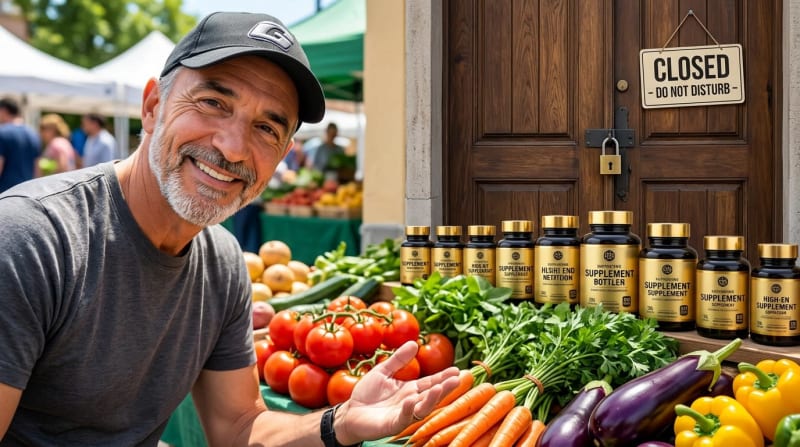
Probiotic supplements are not a reliable shortcut. A 2018 study from the Weizmann Institute of Science, using repeated intestinal biopsies rather than stool samples alone, followed participants who took a standard 11-strain probiotic supplement. The result was surprising: the gut ecosystems of most participants actively resisted the supplemental bacteria — a phenomenon the researchers called "colonization resistance." Whether a probiotic colonizes your gut depends heavily on your individual baseline microbiome, and the majority of supplement users in the study showed little to no lasting change in gut composition.
This doesn't mean probiotic supplements have no role — clinical evidence supports specific strains for antibiotic-associated diarrhea and certain IBS subtypes, and your doctor is the right person to assess whether supplementation makes sense for you specifically. But as a general daily wellness product, the evidence for lasting gut-ecosystem change is thin. The live cultures in a tub of yogurt have a better chance of producing measurable effects, and cost a fraction of the price.
No single food fixes your microbiome. The gut ecology with the strongest research support isn't built from any one ingredient — it's built from dietary patterns sustained over months and years. Consistent, varied, fiber-rich eating across seasons. This is frustrating news for anyone hoping that daily kombucha compensates for an otherwise narrow diet. But it is honest news. The microbiome responds to an ecosystem, not a transaction.
Watch also for diet culture co-opting this research to sell restriction. "Gut-healing protocols" that eliminate entire food groups, "microbiome resets" marketed as detoxes, elimination diets framed as evidence-based — these borrow the language of microbiome science without the science's actual conclusions. Reducing food variety in the name of gut health is the opposite of what the research recommends.
The question the research actually asks is not "what do I need to cut out?" It's "what have I been leaving off the plate?"
A Week of Gut-Friendly Eating Without Overthinking It

A Week of Gut-Friendly Eating Without Overthinking It
The 30-plants-per-week goal sounds large until you count what most people already eat. A typical week of home cooking — pasta with tomato sauce (tomatoes, garlic, onion, fresh basil), a stir-fry (broccoli, bell pepper, ginger, scallions), morning oatmeal with berries and seeds (oats, blueberries, flax, chia), and a couple of mixed salads — gets you close to 25 plants without any unusual effort. The gap is smaller than it looks.
Three everyday meals that naturally hit both the prebiotic and fermented food marks:
For breakfast, plain yogurt with live cultures topped with a sliced underripe banana, a tablespoon of ground flax, and whatever berries are in the fridge. That is four plant types, a fermented food, and prebiotic fiber — made in three minutes.
For lunch, lentil soup made with onion, garlic, carrot, and celery, with a slice of sourdough on the side. Five plant types and strong prebiotic fiber from the legumes and aromatics, with no specialty ingredients on the shopping list.
For dinner, sheet-pan vegetables — broccoli, bell pepper, zucchini, red onion — over brown rice or farro with tahini-lemon dressing and a small side of kimchi. Seven plant types, a second whole grain variety, and a fermented food to close out the day.
That is one day at 16 plants, with a fermented food at breakfast and dinner, and not a single specialized gut-health product in sight.
Simple purchasing habits that multiply plant count without complicating the grocery run: buy mixed salad greens instead of iceberg, mixed beans instead of one type, mixed nuts instead of one variety, herbes de Provence instead of just thyme. Each mix extends your week's diversity without extending your list or your budget.
The permission here matters: imperfect eating still moves the dial. A gut ecosystem that gets wide plant variety five days out of seven is doing better than one that gets a curated two-week protocol and then reverts. Consistency outperforms intensity. The bacteria respond to the overall food environment — not to the Tuesday you forgot the sauerkraut.
What would it look like to track your plant variety for just one week — not to judge the number, but to see what you're already doing well, and notice one easy addition that's been missing?
Content ID: vVQdmzdlV6vjTW45CMPCHIog
See an error? Tell us.
Keep Reading

What North Carolina's New Food Is Medicine Coalition Reveals About Building State Coalitions from Scratch

What the New FIMC Multi-State Evidence Report Reveals About FIM Cost Savings — and Why High-Acuity Patients Are the Key

Child Care Is the Largest Untapped FIM Delivery Platform — A New Report Shows What's Missing
Comments
Share with the Community