

What Is Food Is Medicine in New York State — And Could It Help You?
The Short Version
- New York State launched one of the most ambitious Food is Medicine programs in the country in January 2025, backed by over $7 billion in federal Medicaid funding through the NYHER 1115 Waiver.
- Nine regional Social Care Networks now cover every county in New York State, connecting Medicaid members to medically tailored meals, groceries, produce prescriptions, and nutrition counseling.
- A 2025 Health Affairs analysis found medically tailored meals are associated with a 47% reduction in hospitalizations and a 19.7% drop in healthcare costs — and were net cost-saving in 49 of 50 states.
- By mid-2025, 300,000 Medicaid members had been screened through the program, with 44% identified as having an unmet need — nutrition topping the list.
- All Medicaid members in New York are eligible to be screened annually; enhanced services like home-delivered meals require a qualifying chronic condition and confirmed unmet need.
- New York's Health Equity Reform Waiver expires in March 2027, and the Trump administration's reversal on 1115 waivers puts the entire program's future funding at risk.
Food is Medicine New York isn't a slogan. It's a $7 billion bet on a question that should have been answered decades ago: what if we actually paid for the food that keeps people out of the hospital?
Most of us grew up with a pretty clear picture of what healthcare looks like. A doctor's office. A prescription. Maybe a referral. What it almost never looked like was a box of groceries on your doorstep, or a bag of fresh produce from your local farmstand, covered by your insurance. That's changing — quietly, rapidly, and with consequences that could affect every New Yorker with a chronic condition or a household that's stretched thin.
In January 2024, the federal government approved New York's Health Equity Reform amendment to the state's Medicaid Section 1115 Waiver, unlocking over $7 billion to address the social conditions that drive disease — food insecurity first among them. The program launched operationally in January 2025. It is one of the most ambitious Food is Medicine initiatives in the country, and it's happening right here in New York State.
Here's what it actually is, what it covers, and how to find out if you qualify.
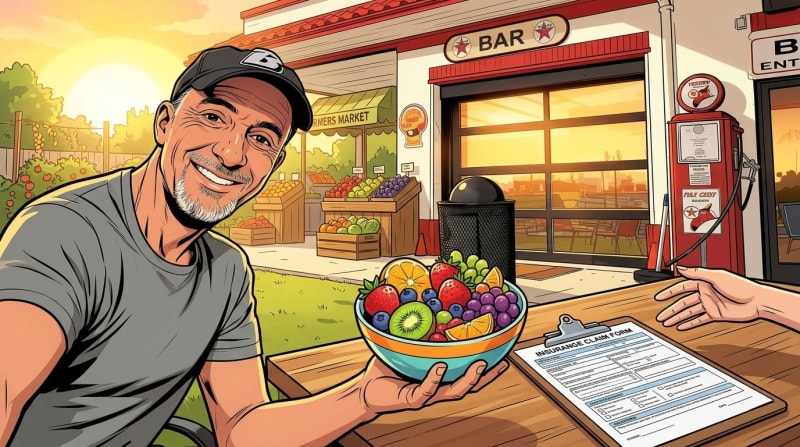
Food Has Always Been Medicine — We Just Stopped Paying for It
Food Has Always Been Medicine — We Just Stopped Paying for It
The phrase "food is medicine" sounds like something you'd read on a wellness blog. It is not a new idea. Hippocrates reportedly attributed a version of it to medicine itself. Every culture that has ever existed has understood, in some form, that what you eat shapes how you feel and how long you live.
What's new is the effort to make that understanding operational inside the American healthcare system — to turn the clinical knowledge that diet drives chronic disease into a reimbursable benefit, the same way a CT scan or a blood pressure pill is a reimbursable benefit.
According to the U.S. Department of Health and Human Services, Food is Medicine encompasses approaches that promote optimal health and reduce disease burden by providing nutritious food — with human services, education, and policy change — through collaboration at the intersection of healthcare and community. That's a formal way of saying: the healthcare system starts paying attention to what people actually eat, and then does something about it.
Diet-related diseases cost the U.S. healthcare system an estimated $1.1 trillion annually, according to the Rockefeller Foundation. Nearly half of American adults have a chronic disease. The vast majority of those conditions — heart disease, type 2 diabetes, hypertension, chronic kidney disease — are directly influenced by what people eat. The healthcare system has known this for a long time. The difference now is that some states are starting to act on it.
New York is leading that charge.
"Instead of a prescription for a pill or physical therapy, we're writing you a prescription for food." — Allyson Schiff, God's Love We Deliver
The Four Kinds of Food Is Medicine Programs

The Four Kinds of Food Is Medicine Programs
Food is Medicine is not a single program. It's a layered system of interventions, each targeting a different level of need. The NYS Food as Medicine Coalition — a statewide network of over 100 organizations — describes four main program types.
Medically Tailored Meals (MTMs) are the most intensive form. These are fully prepared, home-delivered meals designed by a registered dietitian nutritionist specifically for people living with serious chronic illness — HIV/AIDS, cancer, heart failure, kidney disease, serious mental illness. The meals aren't just healthy in a general sense; they're built around your specific condition and dietary needs. Think low-sodium meals for someone with heart failure, or high-protein, carefully portioned meals for a dialysis patient. You don't cook. You don't shop. The food shows up, already prepared.
Medically Tailored Groceries are a step down in intensity — unprepared food items preselected by a registered dietitian and sufficient to prepare nutritionally complete meals tailored to a specific diagnosis. Sometimes called pantry stocking, these are for people who can cook but need guidance and access to the right ingredients for their condition.
Produce Prescriptions are vouchers for free or discounted fresh produce, redeemable at participating retailers, farmers markets, and food suppliers. These tend to target people with or at risk of chronic conditions for whom food access itself is the primary barrier — not a lack of knowledge, but a lack of affordable, nearby options.
Nutrition Education and Counseling — typically delivered by a registered dietitian — rounds out most FIM programs. This includes one-on-one medical nutrition therapy, group classes, and cooking education. It's rarely a standalone program; it's the anchor that helps people actually use what they receive.
Each of these interventions sits at a different point on the spectrum from prevention to treatment. Produce prescriptions help people stay healthy. Medically tailored meals help people who are already seriously ill manage their condition and stay out of the hospital. Both are Food is Medicine. Both, in New York, are now covered by Medicaid.
What kind of access does your situation actually call for? That's worth thinking about before you talk to your doctor or navigator — because knowing the landscape helps you ask for the right thing.
What New York State Is Actually Doing

What New York State Is Actually Doing
New York's Food is Medicine push didn't come out of nowhere. It was built over years by a coalition of advocates, nonprofits, food banks, and researchers who made the case — loudly and persistently — that food insecurity and chronic disease were the same problem wearing two different faces.
The New York Health Foundation funded early coalition-building work beginning in 2022, bringing together over 100 stakeholders — nonprofits, managed care organizations, hospitals, clinicians, and state officials — consulting blueprints from Massachusetts and California that had already built FIM coverage into their Medicaid programs.
That work contributed directly to what became the New York Health Equity Reform (NYHER) 1115 Waiver, approved by the federal government on January 9, 2024, and operational as of January 2025. The waiver authorizes more than $7 billion in federal Medicaid funding to address health-related social needs — food insecurity, housing instability, transportation barriers — across New York State.
At the center of it are nine regional Social Care Networks (SCNs), which the New York State Department of Health funds with $500 million and charges with building the local infrastructure to make this work. Each SCN is a Lead Entity — an organization with deep regional roots — that contracts with hundreds of community-based organizations, food banks, healthcare providers, and social service agencies in its area.
The nine Lead Entities cover all 13 regions of the state, and knowing which one serves your area is the most direct way to find help. Healthy Alliance Foundation holds the largest geographic footprint, serving the Capital Region, Central New York, and the North Country — 19 counties from Albany north to the Canadian border, covering over 705,000 Medicaid members. Finger Lakes IPA covers Monroe, Ontario, Chemung, and 11 other Finger Lakes counties. Care Compass Collaborative serves the Southern Tier. Hudson Valley Care Coalition covers Westchester, Rockland, and five additional Hudson Valley counties. In New York City, Public Health Solutions — operating as WholeYouNYC — serves Manhattan, Brooklyn, and Queens, with 300+ partner organizations and 460 active programs. SOMOS Healthcare Providers covers the Bronx. The Staten Island PPS covers Staten Island. The Health and Welfare Council of Long Island serves Nassau and Suffolk counties. And the Western NY Integrated Care Collaborative covers Erie, Niagara, Chautauqua, and Cattaraugus counties in the western part of the state.
The mechanics are straightforward. A Medicaid member gets screened — at their doctor's office, at a community organization, or through an online self-screen — using a standardized 12-question assessment covering food security, housing, transportation, employment, and education. If they're identified as having an unmet need, a Social Care Navigator connects them with providers in their region delivering services, including food.
By mid-2025, 300,000 Medicaid members had been screened through the SCN program, and 44% were identified as having an unmet need — with nutrition at the top of the list.
On the delivery side, organizations across the state are already operating under the waiver. God's Love We Deliver — the New York City nonprofit that pioneered medically tailored meals during the AIDS crisis — and Rethink Food, which launched its 1115-funded MTM program in April 2025 covering all five NYC boroughs and Long Island, are delivering fully prepared meals to Medicaid members with qualifying conditions. Upstate, the Regional Food Bank of Northeastern New York has been delivering medically tailored grocery boxes to patients with diabetes twice a month via DoorDash, with monthly registered dietitian check-ins. In Saratoga Springs, Pitney Meadows Community Farm delivers biweekly boxes of locally grown produce — kale, carrots, garlic, apples, summer squash — to residents in low-income housing through a partnership with Saratoga Hospital's Community Health Center.
The scope is genuinely statewide. What it looks like on the ground in your region depends on which SCN Lead Entity serves your area and which community organizations are in their network.
Does the Science Back It Up?

Does the Science Back It Up?
It does — with nuance worth knowing.
The strongest evidence exists for medically tailored meals delivered to people who are already seriously ill. A landmark 2022 study published in JAMA Network Open, out of the Tufts University Friedman School of Nutrition Science and Policy, modeled what would happen if every eligible adult with a diet-sensitive condition received MTMs. The projections: roughly 1.6 million fewer hospitalizations and $13.6 billion in net healthcare savings in a single year.
A more recent April 2025 analysis in Health Affairs drew on eight published interventional studies and found that MTM provision was associated with a 47% reduction in annual hospitalizations and a 19.7% reduction in annual healthcare expenditures. In 49 of 50 states, MTMs were net cost-saving in the first year — meaning the meals paid for themselves and then some.
Real-world outcomes from program operators are consistent with those numbers. God's Love We Deliver's research compilation reports that their medically tailored meal clients experience 49% fewer inpatient admissions, 72% fewer skilled nursing facility admissions, and 70% fewer emergency department visits compared to those who don't receive meals. For heart failure patients specifically — one of the costliest patient populations in American healthcare — a peer-reviewed review found 16% fewer readmissions and an average 38-day shorter hospital stay, saving $234,096 per 100 patients in reduced readmissions alone.
The Rockefeller Foundation's March 2026 analysis — the most current large-scale modeling available — projected that scaling MTMs to all eligible patients nationally could save $23.7 billion annually and avert 2.6 million hospitalizations.
The honest nuance: the strongest evidence is for MTMs delivered to people with serious, already-diagnosed chronic illness. Evidence for produce prescriptions is promising but thinner. Evidence for medically tailored groceries is growing. Researchers are still working to establish the right dose, duration, and target population for each intervention type.
But "emerging" doesn't mean unproven. It means we're still learning how to optimize something that demonstrably works.
Who Qualifies — And How to Find Out

Who Qualifies — And How to Find Out
If you're on Medicaid in New York State, you are eligible to be screened. That's the starting point for everything else.
Under the NYHER 1115 Waiver, all Medicaid members — both Medicaid Managed Care and Medicaid Fee-for-Service — can receive an annual HRSN screening. The 12-question tool covers food security, housing, transportation, employment, and education. It takes a few minutes. It can happen at your doctor's office, at a community organization, or through an online self-screen via your regional SCN.
Screening alone doesn't automatically unlock enhanced services. For programs like medically tailored meals or medically tailored groceries, you generally need to meet all four of the following:
- Be enrolled in Medicaid Managed Care
- Have at least one unmet health-related social need confirmed through screening
- Be part of an enhanced population — typically people with significant chronic illness, pregnant women, children, or people experiencing housing instability
- Meet the specific clinical criteria for the service — MTMs, for example, typically require a serious chronic condition such as HIV, cancer, heart failure, diabetes, or serious mental illness, often with a recent hospitalization or clinical justification from a provider
The pathway is: screen → eligibility assessment, typically within 3–5 days of a positive screen → referral to a contracted service provider in your region → services delivered to you.
If you're not already connected to a provider who can screen you, you can self-screen through your regional Social Care Network. Use the Lead Entity list above to find the organization that covers your county, and start there.
If you're not on Medicaid, some Food is Medicine services are still reachable. God's Love We Deliver, the Regional Food Bank of Northeastern New York, Pitney Meadows, and many local food pantries and community health centers operate produce prescription and medically tailored grocery programs outside the Medicaid system — funded by grants, philanthropy, and federal nutrition programs. It's always worth asking your primary care provider or a local food bank what's available in your area.
What's at Risk — and Why This Moment Matters

What's at Risk — and Why This Moment Matters
There is a genuine threat to what New York has built, and it deserves to be said plainly.
In early 2025, the Trump administration announced it would no longer approve or renew Medicaid 1115 demonstration waivers. New York's Health Equity Reform Waiver expires in March 2027. For GLWD alone, roughly 40% of funding is tied to Medicaid reimbursements from the waiver. As GLWD's director of business development told Healthbeat, what happens after 2027 is "a very big question mark." The Regional Food Bank of Northeastern New York has committed to reaching as many Medicaid patients as possible over the next two years, knowing the window may close. Dozens of other providers across the state have built programs around funding streams that may not be renewed.
This matters not just for organizations but for the people depending on them. The 300,000 New Yorkers already screened, the tens of thousands receiving meals and groceries, the registered dietitians doing the work — their access is not guaranteed past 2027.
There is also a counter-story worth telling. Sixteen states, including New York, have approved or pending 1115 demonstrations covering nutrition interventions. The evidence keeps accumulating. The Rockefeller Foundation's 2026 analysis found that FIM programs could also unlock $45 billion in additional economic returns for states — because locally sourced food supports farms, supply chains, and local economies. Bipartisan support for food-based healthcare interventions has been quietly growing for years.
Food is medicine is not a partisan idea. It is a financially sound, clinically supported, profoundly human idea — the recognition that what people eat is healthcare, that a box of medically appropriate groceries delivered to someone with heart failure is as much a clinical intervention as the statin they pick up at the pharmacy.
What does it mean for a community when that idea finally gets funded — when the infrastructure exists to turn nutrition into a reimbursable benefit for the people who need it most? And what does it mean if that infrastructure disappears before it's had the chance to fully prove what it can do?
Content ID: zi0Q6de7V39wHUYw21bQM4Pa
See an error? Tell us.
Keep Reading
The 27.6 Million Child Food Is Medicine Program FIM Officers Aren't Tracking and Why H.R. 1 SNAP Cuts Could Unravel It
The Age-Two Cliff: What Tufts FIM Institute Research Means for How We Design Food Is Medicine Programs for Children
The Biggest Produce Prescription Program You Are Not Tracking: Why WIC Belongs in Every FIM State Officer Portfolio
Comments
Share with the Community