
Your Gut Bacteria May Be Driving Your Depression — Harvard Just Found the Missing Link
The Short Version
- Harvard researchers traced the first complete molecular pathway from a gut bacterium to depression-linked inflammation — Morganella morganii converts a common industrial compound (DEA) into a lipid that directly triggers IL-6 cytokine release.
- More than one-third of depression patients show poor or minimal response to SSRIs — the Harvard findings point toward a distinct inflammatory subtype that antidepressants were never designed to treat.
- About 95% of serotonin is produced in the gut, not the brain — when gut dysbiosis disrupts bacterial communities, tryptophan gets rerouted toward neuroinflammatory metabolites instead of serotonin synthesis.
- Fecal microbiota transplants from depressed humans induce depression-like behaviors in germ-free animals, confirming the gut drives the brain — causality runs in one direction, not both.
- Eating 30 or more different plant types per week is the most consistently evidence-backed intervention for improving gut microbiome diversity — variety matters more than any specific diet type.
The gut research coming out of Harvard last January was the kind of finding that makes you read the abstract twice. Not because it's hard to follow — though it is — but because it finally answered a question that has been hovering over gut-brain science for more than a decade. We knew that gut bacteria and depression were linked — the correlations showed up in study after study across populations. What we couldn't do was trace the molecular handshake: which specific bacterium, producing which specific molecule, triggering which specific immune response, leading to which specific shift in brain chemistry.
Now we can. And what's at the other end of that chain changes what depression even is for a meaningful subset of people. If you've been paying attention to how food affects the way you think and feel — this one is worth your full attention.
The Harvard Discovery: One Bacterium, One Pollutant, One Inflammatory Cascade
The Harvard Discovery: One Bacterium, One Pollutant, One Inflammatory Cascade
Researchers at Harvard Medical School traced a specific molecular pathway linking gut bacteria to depression-linked inflammation — and the precision of it is what sets this finding apart from everything that came before.
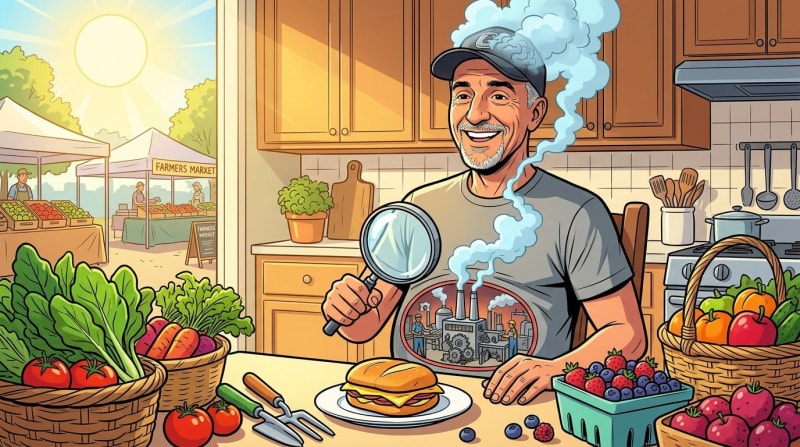
The bacterium at the center is Morganella morganii, a naturally occurring resident of the human gut. The team, led by chemical biologist Jon Clardy, found that when Morganella encounters diethanolamine — DEA, an industrial compound common in personal care products, herbicides, and manufacturing environments — it transforms DEA into a class of modified lipid molecules called MmDEACLs.
Those lipids then bind to immune receptors TLR1 and TLR2. When those receptors activate, the body releases interleukin-6 — IL-6 — a cytokine that genetic studies had already identified as independently linked to depression. The study was published in January 2025 in the Journal of the American Chemical Society, and it traces a complete causal chain: bacterium → environmental compound → modified lipid → immune receptor → inflammatory signal → depression-linked biology.
"DEA's metabolism into an immune signal was completely unexpected," Clardy told Harvard Medical School after publication. The finding doesn't just add a data point — it changes what the question is.
That shift matters clinically. A 2025 review in Frontiers in Immunology found that more than one-third of people diagnosed with depression have poor or minimal response to first-line antidepressants, including SSRIs and SNRIs. These may be the patients whose depression isn't primarily a serotonin deficiency — it may be rooted in an inflammatory process that SSRIs were never designed to touch.
Why This Is Different From What We Already Knew About Gut Health and Mood
Why This Is Different From What We Already Knew About Gut Health and Mood
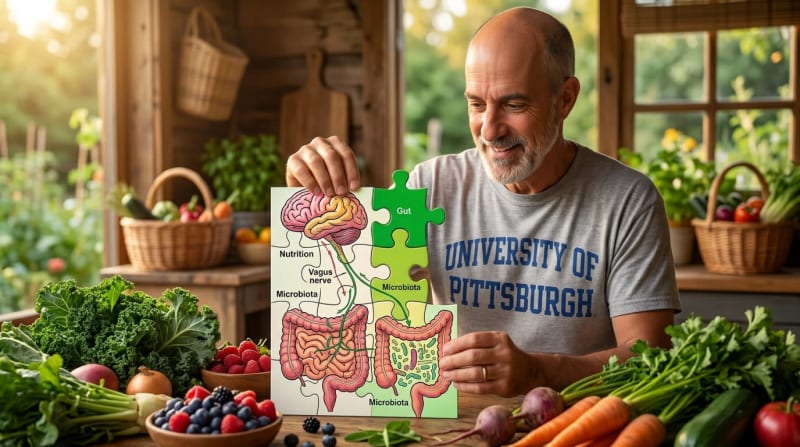
The gut-brain connection has been in the research literature for years. The problem wasn't that scientists doubted it — it was that they couldn't explain how it worked at the molecular level. Correlations without mechanism invite skepticism. The Harvard study closes that gap.
What this opens up is more specific than the general gut-brain story most people have encountered. DEA-modified lipids could serve as biomarkers — a diagnostic test that identifies patients for whom an immune-targeting approach would be more appropriate than a serotonin-targeting one. That's a different treatment decision rooted in different biology, and it has a real path toward clinical application.
Most people who don't respond to antidepressants are told their depression is "treatment-resistant." What the Harvard findings suggest is a more precise explanation: for some of those patients, they're not resistant to treatment. They're receiving the wrong treatment for the wrong mechanism. That distinction matters enormously — for clinicians, and for anyone who has watched a medication fail someone they love.
What does it mean when the most prescribed treatments for a condition miss one in three patients — not because those patients are uniquely hard to treat, but because we've been targeting a different system than the one causing the problem?
The Three Roads From Your Gut to Your Brain
The Three Roads From Your Gut to Your Brain
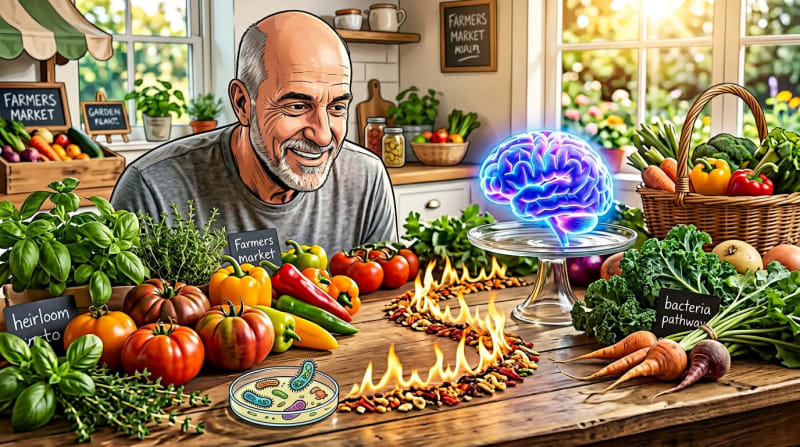
The Morganella mechanism is the newest piece, but it operates within a larger system of gut-to-brain communication that researchers have been mapping for years. Understanding all three pathways explains why the gut has such an outsized influence on mood — and why disrupting it has consequences that reach far beyond digestion.
The immune route — which the Harvard study illuminates most directly — involves gut bacteria producing signals that activate immune cells, triggering cytokine release. Cytokines like IL-6, TNF-alpha, and IL-1 cross the blood-brain barrier and directly disrupt neurotransmitter metabolism. Chronic inflammation has been linked with depression and contributes to many other diseases, and the gut is one of the most significant sources of that inflammatory load in the body.
The serotonin route is the one most people have heard about — but usually framed backwards. We're taught that serotonin is a brain chemical. The reality is that the vast majority of serotonin is produced in the gut, by enterochromaffin cells that receive direct signals from gut bacteria. Specific genera including Escherichia, Enterococcus, and Streptococcus are involved in gut serotonin synthesis. When dysbiosis disrupts the bacterial community, tryptophan — serotonin's building block — gets redirected toward the kynurenine pathway instead. That pathway produces neuroinflammatory metabolites. Less serotonin. More inflammation. Two problems from a single disruption.
The vagus nerve route runs bidirectionally between the gut and the brain — with roughly 80% of its fibers traveling upward, from gut to brain, not the other direction. Microbial metabolites produced in the gut can directly influence vagal signaling, affecting emotional regulation, stress response, and autonomic nervous system function. This isn't an indirect influence. It's a live communication channel that the gut microbiome participates in at every meal.
Three routes, one gut. The diversity of mechanism is why gut health has such an outsized influence on mood — it's not one thing affecting one other thing. It's an entire ecosystem influencing brain function through multiple simultaneous channels, continuously.
What Dysbiosis Actually Looks Like — and What Drives It

What Dysbiosis Actually Looks Like — and What Drives It
Dysbiosis is the clinical term for a gut microbiome that has shifted toward an imbalanced, inflammatory state. It's worth being specific about what that means — because the word appears everywhere in wellness content without much definition attached to it.
In depression specifically, research consistently shows reduced overall microbial diversity, elevated ratios of Firmicutes bacteria, and low levels of bacteria that produce short-chain fatty acids (SCFAs) — the metabolites that protect the gut lining, reduce systemic inflammation, and support the blood-brain barrier. When SCFA production drops, gut permeability increases. When gut permeability increases, more inflammatory signals reach circulation. When they reach circulation, they reach the brain.
The causal evidence is striking. A 2025 review in Frontiers in Immunology documented that fecal microbiota transplants from humans with depression can induce depression-like behaviors in germ-free animals. The gut microbiome, transplanted intact from someone with depression to an animal with no gut bacteria of its own, recreates the mood-related behavior. This isn't correlation. The gut is driving the brain.
What drives dysbiosis? ultra-processed foods and low dietary fiber deprive the SCFA-producing bacteria that protect gut integrity. chronic stress elevates cortisol, which directly alters microbial composition. Broad-spectrum antibiotics clear beneficial bacteria alongside pathogens. And — as the Harvard study now adds to this list — environmental exposure to compounds like DEA can create inflammatory metabolites from bacteria that might otherwise be benign.
The good news embedded in that list: most of what drives dysbiosis is modifiable. The diet part especially.
What You Can Actually Do: Diet and Lifestyle Interventions With Evidence Behind Them
What You Can Actually Do: Diet and Lifestyle Interventions With Evidence Behind Them
This is where the science gets practical — and the evidence here is more specific than most gut health content suggests.
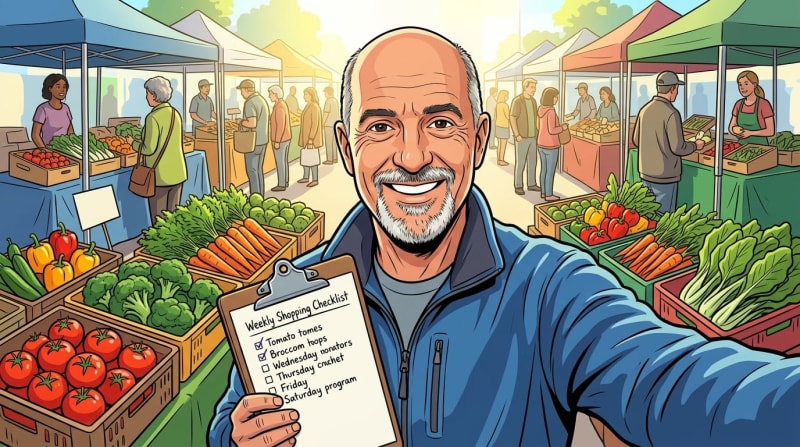
Dietary diversity — targeting 30 or more different plant types per week — is the single most evidence-backed intervention for improving microbial diversity. The American Gut Project, one of the largest citizen science microbiome studies ever conducted, found that people eating 30 or more different plant types per week had significantly higher gut microbiome diversity than those eating 10 or fewer — regardless of whether they also ate meat. Every plant type brings a different fiber structure, feeding different bacterial communities. Beans, seeds, herbs, and spices all count. Rotating your grains, adding a different vegetable each night, keeping a rotation of legumes — these are not dramatic changes. They add up across a week.
fermented foods have clinical trial support that most people don't realize exists. Research cited by Science magazine found that a high-fermented-food diet increased microbiome diversity and reduced inflammatory markers in as little as ten weeks. Kimchi, kefir, sauerkraut, miso, live-culture yogurt. The key is regular inclusion, not large quantities — a few forkfuls of sauerkraut several times a week contributes more than one large serving monthly.
Probiotic supplementation is more nuanced, and honesty matters here. Evidence from Science shows that probiotics can work through three mechanisms simultaneously: enhancing serotonin synthesis, suppressing neuroinflammation via IDO inhibition, and normalizing HPA axis hyperactivity. But strain specificity matters enormously. A probiotic that helps one person may not help another. Lactobacillus and Bifidobacterium genera have the strongest evidence base for mood-related outcomes. If you're approaching probiotics for mental health reasons specifically, looking at strain-level research rather than a generic multi-strain blend is worth the extra effort.
Prebiotics — the fibers that feed beneficial bacteria — also have emerging human evidence. A prebiotic intervention in veterans with PTSD showed modest but meaningful increases in SCFA-producing bacteria alongside reduced stress responses and trends toward decreased symptoms. One study, one population — but the signal is worth noting. Feeding the bacteria that feed your brain does something.
What would it look like in your kitchen, practically, to eat with the microbiome in mind? More plants. More variety. More fermented foods as a regular rhythm rather than a special occasion. The interventions that help the gut also happen to be the interventions that help everything else.
The Bigger Picture: Depression as an Inflammatory Condition

The Bigger Picture: Depression as an Inflammatory Condition
Depression affects approximately 280 million people worldwide, making it one of the leading causes of disability globally. At that scale, a treatment pathway that works specifically for the subtype current medications miss has enormous implications — not just clinically, but for how we understand what depression is.
The Harvard findings add molecular precision to what has been building as an emerging model in psychiatry: that depression, for some patients, is better understood as an autoinflammatory condition than a neurotransmitter deficiency. For those patients, targeting the immune system — or the gut bacteria producing the immune signals — may be more effective than targeting serotonin reuptake.
This is not an argument against antidepressants. For many people they work, and that matters. It's an argument that depression is not one uniform biological condition. The patients who don't respond to SSRIs deserve a biological explanation for why — and a treatment framework built on that biology rather than an assumption of uniformity.
"Chronic inflammation contributes to the development of many diseases and has been linked with depression."
— Harvard Medical School research team, via SciTechDaily
For anyone already paying attention to what they eat and how it affects how they feel — this research offers something specific. Gut-focused nutrition is not wellness theater. For a meaningful subset of people, the immune signals traveling from the gut to the brain are a more proximate cause of their depressive symptoms than anything happening in brain chemistry directly. The gut is upstream. The food is upstream of the gut.
That's not a small thing. That's a different map — and possibly a more useful one.
What would change for you, practically and daily, if you thought about your plate not just as fuel but as one of the most direct inputs into how your brain handles stress, inflammation, and mood?
Content ID: VM2phvX1mnqrv8x3o7vl2Bph
See an error? Tell us.
Keep Reading

What North Carolina's New Food Is Medicine Coalition Reveals About Building State Coalitions from Scratch

What the New FIMC Multi-State Evidence Report Reveals About FIM Cost Savings — and Why High-Acuity Patients Are the Key
Child Care Is the Largest Untapped FIM Delivery Platform — A New Report Shows What's Missing
Comments
Share with the Community