
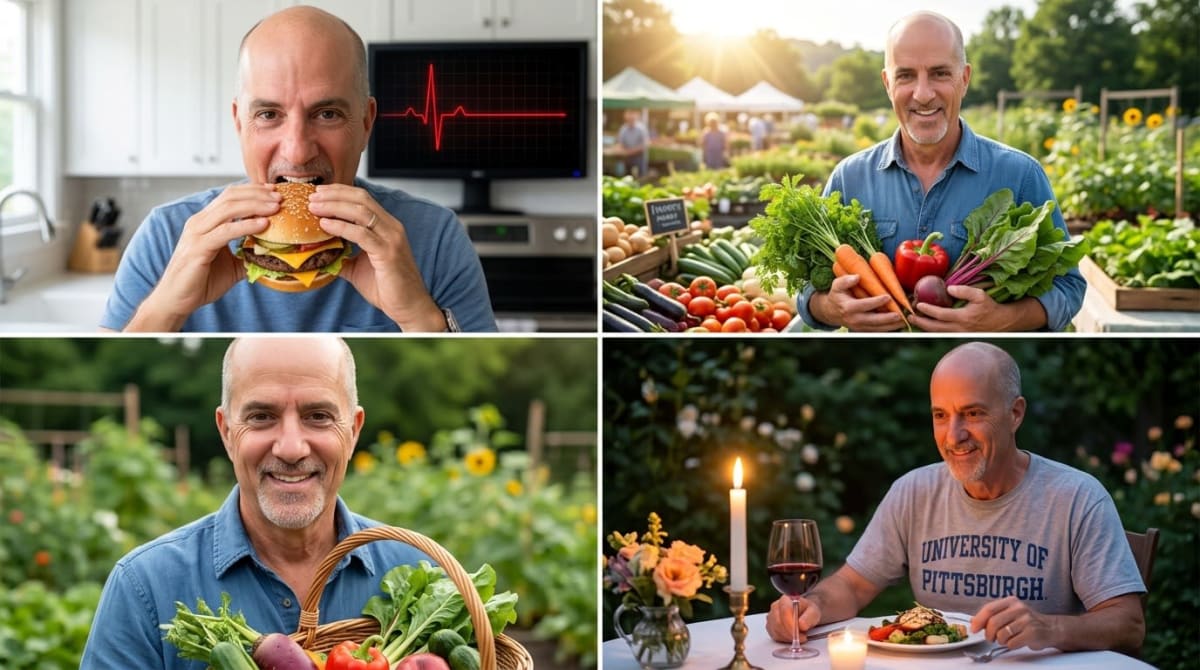
Ultra-Processed Foods and Heart Risk: What Two New Studies Are Telling Us Right Now
The Short Version
- People eating around nine servings of ultra-processed foods per day were 67% more likely to die from coronary heart disease or stroke compared to those eating about one serving per day, according to a study of 6,814 adults presented at the American College of Cardiology's 2026 Annual Scientific Session.
- The risk doesn't only spike at high intake — every additional daily serving raises the likelihood of a major cardiac event by more than 5%, meaning the damage accumulates gradually rather than appearing all at once.
- Two independent research teams published findings in two major journals in the same month, with Florida Atlantic University separately reporting a 47% higher heart attack or stroke risk among the highest ultra-processed food consumers.
- U.S. adults currently get about 53% of their daily calories from ultra-processed foods, according to the CDC's first-ever report on the topic — and even the age group with the lowest consumption, adults over 60, still clears 51.7%.
- The United States has no uniform legal or scientific definition of ultra-processed food yet, though the FDA, USDA, and WHO are all actively working to establish one, and the 2025–2030 Dietary Guidelines named industrial processing itself as a concern for the first time.
My Wake-Up Call Didn't Come From a Headline

My Wake-Up Call Didn't Come From a Headline
It came from H. Pylori.
A couple of years ago I was diagnosed with H. Pylori — the bacterial infection that quietly destroys your stomach lining — and the wonderful doctors cured me of the bacteria with antibiotics. But the antibiotics nuked my microbiome in the process. And somewhere along the way, my stomach lining had taken a serious hit. The result was gastritis — and if you've been through it, you know. Everything you eat becomes a negotiation. Your gut is raw, your energy is gone, and the distance between feeling okay and feeling terrible is exactly one wrong food choice.
Recovery pushed me toward something I hadn't done before: rebuilding from scratch. Real food. Simple ingredients. Nothing my gut had to fight to process. I started reading every label — not as a hobby, not as a wellness project, but because my body made it mandatory. And what I found in those ingredient lists — on foods I'd been eating for years, foods I thought were fine, foods marketed as healthy — genuinely shocked me.
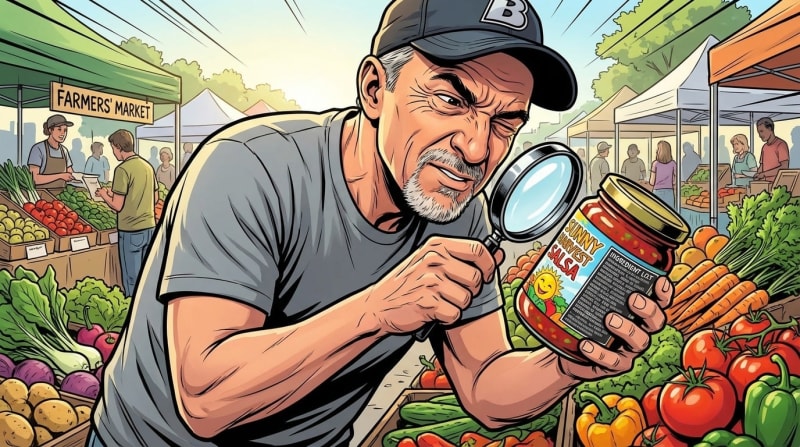
That experience changed how I eat. And the research coming out right now is confirming that my instincts were right.
In March 2026, two major studies landed in the same month. Both pointed to the same thing: the ultra-processed foods that dominate our grocery stores and our daily habits are quietly and measurably raising our risk of heart attack, stroke, and death. If you're over 50 and active, this is the conversation you need to be in.
Two Studies Just Changed the Conversation
Two Studies Just Changed the Conversation
The bigger of the two studies was presented at the American College of Cardiology's Annual Scientific Session in March 2026 and simultaneously published in JACC: Advances (Haidar et al., American College of Cardiology, 2026). Researchers followed 6,814 adults between the ages of 45 and 84 — none of whom had clinically apparent cardiovascular disease at the start — as part of the long-running Multiethnic Study of Atherosclerosis (MESA).
The findings were stark. People consuming around nine servings of ultra-processed foods per day were 67% more likely to die from coronary heart disease or stroke, or to experience a nonfatal heart attack, stroke, or resuscitated cardiac arrest, compared to those eating about one serving per day (Haidar et al., American College of Cardiology, 2026).
But here's the part that caught my attention — and should catch yours. The risk didn't just spike at high intake. Every additional daily serving increased the likelihood of a major cardiac event by more than 5% (Haidar et al., American College of Cardiology, 2026). That's not a cliff. It's a slope. Each serving adds to the load.
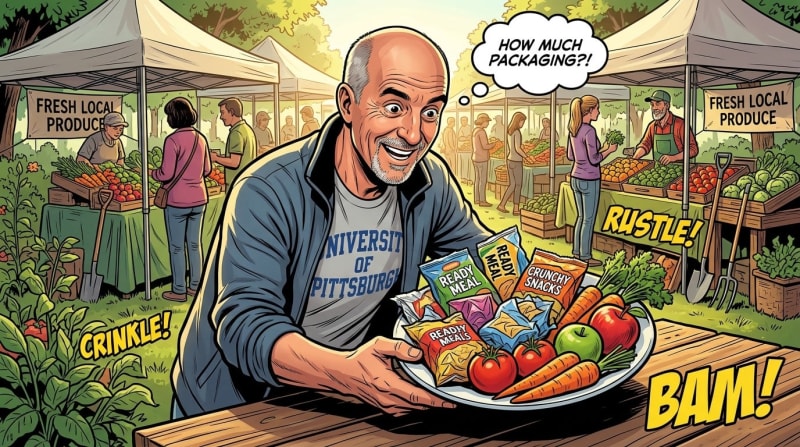
And the lead researcher, Dr. Amier Haidar, was direct about something important: the risk held regardless of how many calories you consumed per day, regardless of your overall diet quality, and even after controlling for common risk factors like diabetes, high blood pressure, high cholesterol, and obesity (American College of Cardiology, 2026). In other words, eating "pretty well" doesn't cancel out the UPFs that are sneaking into your day.
That was the ACC study. But it wasn't alone. Just weeks earlier, Florida Atlantic University researchers published their own findings in The American Journal of Medicine, showing that adults with the highest ultra-processed food intake had a 47% higher risk of heart attack or stroke compared to those who ate the least — again, after adjusting for other factors (Florida Atlantic University, ScienceDaily, 2026).
Two independent research teams. Two major journals. Same conclusion. Same month.
What Is Ultra-Processed Food, Exactly? (And Why Nobody Fully Agrees)

What Is Ultra-Processed Food, Exactly? (And Why Nobody Fully Agrees)
This is where it gets genuinely interesting — and a little frustrating.
There is no single, universally accepted definition of ultra-processed food. Not from the FDA. Not from the WHO. Not yet (FDA and USDA, Federal Register, 2025). That's not spin from the food industry — it's an honest acknowledgment from the scientific and regulatory community that the term, despite being everywhere, still lacks a precise legal or scientific definition everyone agrees on.
The dominant framework researchers use is called the NOVA classification system, developed by Brazilian nutrition researcher Carlos Augusto Monteiro and his team at the University of São Paulo (Monteiro et al., Public Health Nutrition, 2018). NOVA organizes all foods into four groups based not on nutrients, but on the nature and degree of industrial processing.

The Four NOVA Groups
Group 1 — Unprocessed or minimally processed foods. Fresh vegetables, fruit, plain meat, eggs, plain yogurt, frozen produce with no additives. These are foods as close to their natural state as possible.
Group 2 — Processed culinary ingredients. Olive oil, butter, salt, sugar, flour. Things you use in a kitchen to prepare food. Not meant to be eaten alone.
Group 3 — Processed foods. Canned beans, cheese, cured meats, freshly baked bread. Foods made from Group 1 ingredients with a few additives for preservation or flavor. Generally fine in context.
Group 4 — Ultra-processed foods. Industrial formulations made mostly from substances derived from foods — plus additives that exist specifically to make products more palatable, shelf-stable, and profitable. Emulsifiers, flavor enhancers, colorings, sweeteners, modified starches, protein isolates. If you couldn't make it in your kitchen from recognizable ingredients, it's likely Group 4 (NOVA classification, Open Food Facts).
The NOVA system specifically focuses on what was done to the food — not on calories or macros. A food can be ultra-processed and still be fortified with vitamins. A food can be high in fat and still be minimally processed. The classification is about industrial transformation, not nutritional content.
The Honest Caveat
Even the WHO has recently called for experts to develop a formal guideline on ultra-processed foods, with establishing a shared definition as the first order of business (Keller and Heckman, 2025). The FDA and USDA jointly requested public data in 2025 to help develop a uniform U.S. definition (FDA and USDA, Federal Register, 2025). And RFK Jr. has signaled that a federal definition will be announced as early as April 2026 (Food Safety Magazine, 2026).
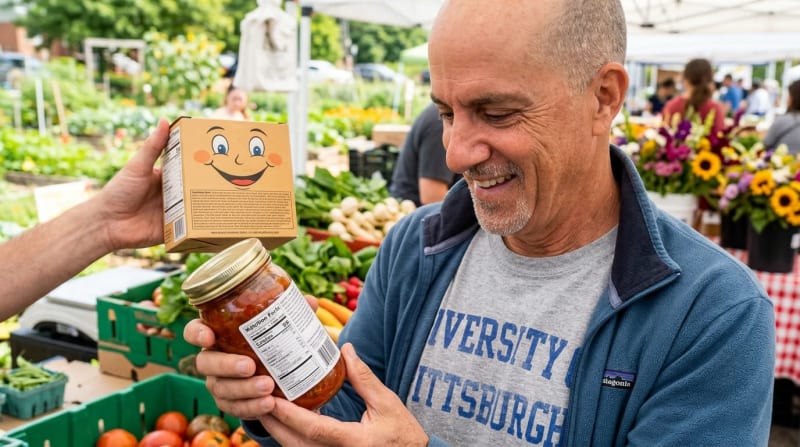
So the science is ahead of the policy. But the practical test most nutrition experts agree on is simple enough: flip the package over. If the ingredient list reads like a chemistry textbook — things you couldn't buy at a grocery store, couldn't picture in your kitchen, and can't pronounce — you're probably holding a Group 4 food (Harvard Health, 2022).
How Much Are Americans Actually Eating?
How Much Are Americans Actually Eating?
More than half. That's the short answer.
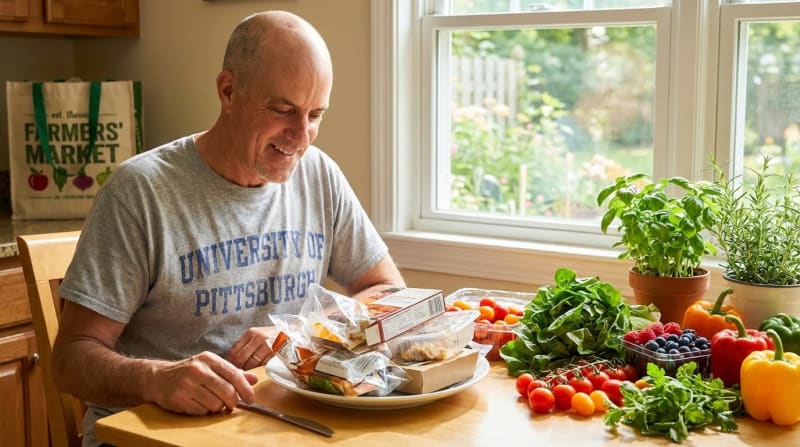
According to the CDC's first-ever report on the topic, U.S. adults were getting about 53% of their daily calories from ultra-processed foods between 2021 and 2023 (CDC, NCHS Data Brief No. 536, 2025). For adults over 60 — the age group with the lowest UPF consumption — the number was still 51.7% (CDC, NCHS Data Brief No. 536, 2025).
Let that land for a second. Even in the healthiest age group, more than half of daily calories are coming from industrially manufactured food products. This isn't a fringe behavior. It's the baseline.
The top sources driving those numbers? Sandwiches and burgers, sweet bakery products, savory snacks, sweetened beverages, and breads (CDC, NCHS Data Brief No. 536, 2025). Some of those are obvious. Some are not.
The Ones That Fooled Me
The Ones That Fooled Me
This is the section I wish I'd had before my gastritis diagnosis.
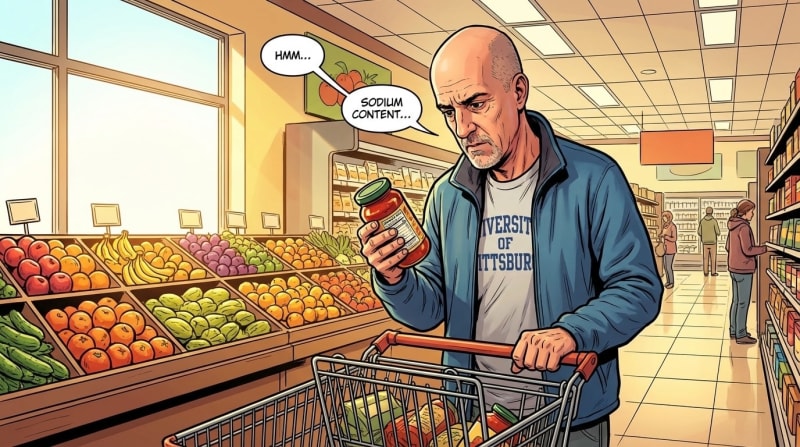
When I started reading labels obsessively — tracking every ingredient because my stomach made it mandatory — I was genuinely surprised by what showed up in foods I'd considered healthy or at least neutral. The packaging said one thing. The ingredient list said something else entirely.
Registered dietitians at Northwell Health describe this pattern well: these products are engineered to look nourishing, but the ingredient list often tells a different story (Northwell Health, The Well, 2025). Here are the categories most likely to fool people who are actually trying to eat well.
Flavored yogurt. Plain yogurt is legitimately healthy. But most fruit-on-the-bottom or "light" varieties are packed with as much sugar as ice cream, plus stabilizers like carrageenan and modified corn starch (Northwell Health, The Well, 2025). Harvard Health specifically names fruit-flavored yogurts as one of the most common ultra-processed foods people mistake for healthy choices (Harvard Health, 2022). The fix is easy: buy plain yogurt and add your own fruit.
Granola and granola bars. The word "granola" has a health halo that goes back decades. Many versions are puffed grains coated in industrial syrups and oils — closer to candy than to a whole grain (Northwell Health, The Well, 2025). Bars marketed as trail mix or protein snacks often contain maltodextrin, soy protein isolate, and sugar alcohols. Bars built from nuts, dates, and egg whites are a different story. Check the ingredient count: if it's over ten, be suspicious.
Protein shakes and meal replacement drinks. Products marketed specifically for fitness and recovery frequently undergo high levels of processing and contain a long list of additives (Newsweek, 2023). The protein is real. The rest of the ingredient list often isn't pretty.
Whole grain bread from the supermarket. Simple bread — flour, water, yeast, salt — is a Group 3 processed food. Mass-produced bread with added emulsifiers, preservatives, and dough conditioners is Group 4 (NOVA/Clean Eatz Kitchen, 2026). The word "whole grain" on the label doesn't tell you which one you're holding. The ingredient list does.
Breakfast cereal. Even the ones marketed as high-fiber or heart-healthy are almost universally ultra-processed. The whole grain gets pulverized, extruded into shapes, and then synthetic vitamins are added back in (various RDs, Body Network, 2025). Check for: whole grain listed first, at least 5 grams of fiber, less than 10 grams of sugar per serving.
Oat milk and plant-based milks. The minimalist carton and earth-tone branding suggest simplicity. But one oat milk might have 17 ingredients, most of them additives, while the one next to it lists three (Northwell Health, The Well, 2025). Both cost the same. Look for the shorter list.
Packaged deli meats. All of them are ultra-processed — every single one (Newsweek, 2023). If you eat deli turkey thinking it's a clean protein, you're eating a Group 4 food. Rotisserie chicken or whole roasted turkey sliced at home is a different category entirely.
Practical Swaps — Small Moves, Real Impact
Practical Swaps — Small Moves, Real Impact
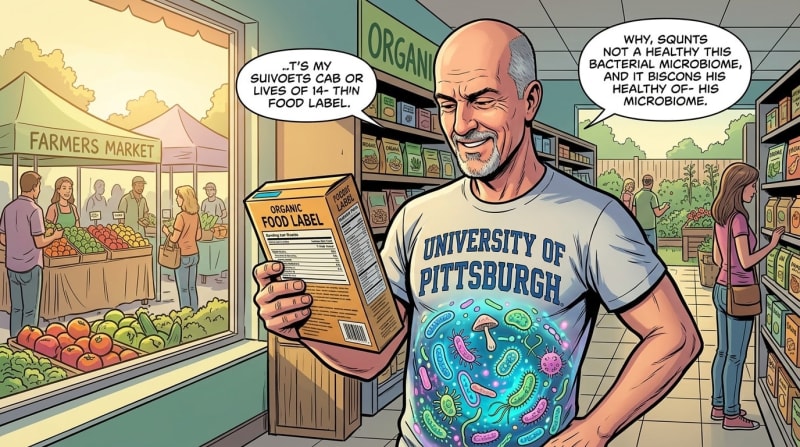
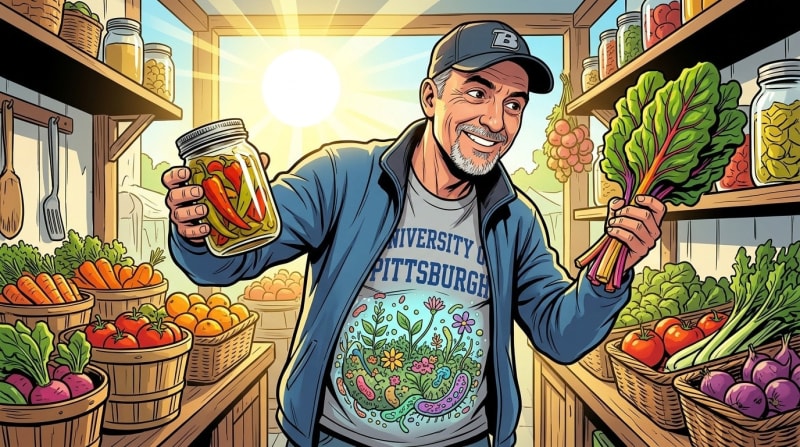
I'm not going to tell you to throw out your pantry. That's not how real, sustainable change works. But the research makes a compelling case for shrinking the UPF footprint gradually and consistently — and for those of us rebuilding gut health after illness or antibiotics, there's an extra layer of motivation. Research suggests that certain food additives common in ultra-processed foods, including emulsifiers and artificial sweeteners, may disrupt the gut microbiome — the very ecosystem many of us are working hard to restore (American Heart Association, Circulation, 2025). That's not a reason to panic. It's a reason to pay attention.
Swap flavored yogurt for plain. Get plain Greek yogurt and sweeten it yourself with berries, a drizzle of honey, or a little cinnamon. You cut the additives and most of the added sugar in one move. For anyone rebuilding their microbiome, plain yogurt with live cultures is also one of the most straightforward probiotic foods you can eat daily.
Make your own Overnight Oats This was one of my personal shifts during gastritis recovery — and one of the easiest habits I've kept. Rolled oats, water or plain milk, chia seeds, fruit. No additives. No emulsifiers. Gentle on the gut. ( I wrote about overnight oats specifically for people dealing with stomach issues — you can find it here on my blog.)
Read bread labels before you buy. Look for a short ingredient list. Sourdough made with just flour, water, salt, and starter is Group 3. Sprouted grain bread is typically cleaner than conventional whole wheat. If you see "datem," "calcium propionate," or "soy lecithin," you're in Group 4 territory.
Swap packaged snacks for whole food alternatives. Roasted nuts with nothing added, fresh fruit, plain crackers made from three recognizable ingredients. These exist and they're in every grocery store.
When you buy protein bars, check the ingredient list first. Bars built from oats, nuts, seeds, and dates are genuinely different from bars built on protein isolates and a long list of stabilizers.
Cook more things from recognizable ingredients. Not from scratch every night — that's not realistic. But a week of mostly Group 1 and Group 3 foods, punctuated by the occasional Group 4 convenience item, is fundamentally different from the 53% baseline most Americans are living at (CDC, NCHS Data Brief No. 536, 2025).
Why This Moment Is Bigger Than One Study

Why This Moment Is Bigger Than One Study
The ACC study got headlines because the numbers were dramatic. But the real story is that the science, the policy, and the politics are all converging right now in a way they haven't before.
The Dietary Guidelines for Americans 2025–2030 include sweeping new advice to avoid highly processed foods as a category — the first time any edition has named processing itself rather than specific nutrients like sodium or saturated fat (Food Safety Magazine, 2026). That's a meaningful shift in how the federal government is framing the problem.
At the same time, the FDA and USDA are actively working to establish a uniform federal definition of ultra-processed foods — the first time the U.S. government has attempted to formally define the category (FDA and USDA, Federal Register, 2025). RFK Jr. has said a federal definition will be announced as early as April 2026 (Food Safety Magazine, 2026). Whatever you think of the politics, that announcement will affect food labeling, school nutrition programs, and potentially federal purchasing guidelines.
And the WHO is moving in the same direction internationally (Keller and Heckman, 2025).
This isn't a fringe nutrition argument anymore. It's becoming official public health policy — driven by a wave of research that keeps pointing to the same conclusion.
What I Actually Do
What I Actually Do
I want to be straight with you: I'm not a perfectly clean eater. I travel, I eat at restaurants, I make trade-offs. Being semi-retired and active in Rochester doesn't insulate me from the same grocery store aisles everyone else walks through.
But the H. Pylori and gastritis experience changed something fundamental in how I relate to food. When the antibiotics that saved me from the bacteria also wiped out my microbiome, I realized that what I eat every single day is either rebuilding that ecosystem or quietly working against it. That made label reading feel less like a chore and more like basic respect for the recovery process.
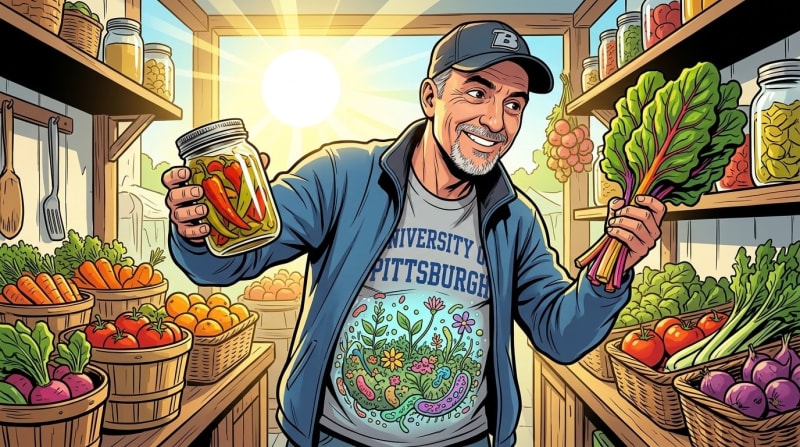
My practical habits now: I read ingredient lists before nutrition labels. If I can't picture the ingredient in a home kitchen, I put it back. I eat plain yogurt with live cultures every day — partly for the protein, mostly for the microbiome. I make my own oatmeal. I buy bread with short ingredient lists. I think of protein bars as occasional fuel rather than daily food. I cook more meals from recognizable ingredients than I did five years ago, and my gut notices the difference.
None of that is radical. But it moved me from the 53% baseline to something meaningfully different. And if the research is right — if every additional UPF serving adds more than 5% to your cardiac risk — then those small daily choices are compounding in your favor.
That's a community worth building together. If this changed how you think about your grocery cart, share it with someone who might use it.
Content ID: LkswBeDOyAFWBY1BVVLFuQdq
See an error? Tell us.
Keep Reading

What North Carolina's New Food Is Medicine Coalition Reveals About Building State Coalitions from Scratch

What the New FIMC Multi-State Evidence Report Reveals About FIM Cost Savings — and Why High-Acuity Patients Are the Key
Child Care Is the Largest Untapped FIM Delivery Platform — A New Report Shows What's Missing
Comments
Share with the Community