

Medically Tailored Meals Medicaid Evidence: What the Massachusetts Study Means for FIM Payers
The Short Version
- The Massachusetts MTM study is the first statewide Medicaid analysis large enough to make the ROI argument stick — 1,866 participants, 11 healthcare systems, three years of real-world data, published in Nature Medicine on June 2, 2026.
- 31% fewer hospitalizations and 20% fewer emergency department visits among MTM recipients — in a real Medicaid population, not a clinical trial cohort.
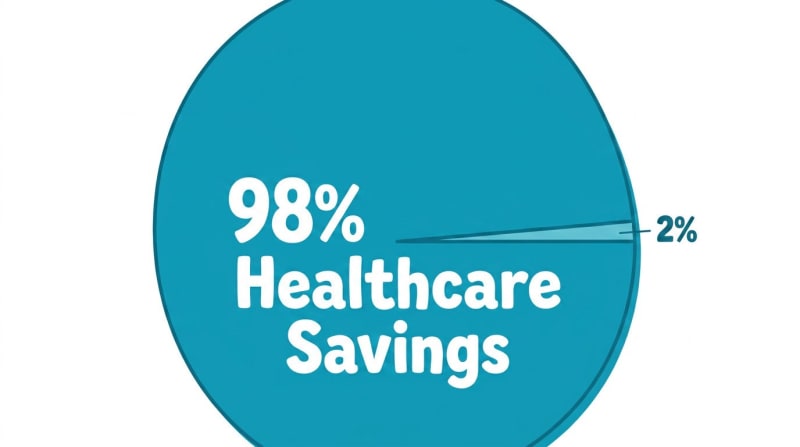
- $3,433 in per-person healthcare savings offset 98% of program cost; heart disease, chronic kidney disease, diabetes, and depression all showed net savings.
- The study has real limits: no randomization, all meals delivered by a single experienced Boston nonprofit, and results may not transfer cleanly to states with thinner provider infrastructure.
- At least a dozen states are already running MTM pilots — the CHCS Food Is Medicine State Officer Program launched in January 2026 to match that wave with funded, dedicated personnel for three years.
On June 2, 2026, a study landed in Nature Medicine that the Food is Medicine field had been building toward for years. The question was never really whether medically tailored meals helped people with serious illness eat better. The question was whether the healthcare system could justify paying for them — whether the outcomes were real enough, at scale, to move a Medicaid program from pilot to policy.
The answer is now in the data. Medically tailored meals Medicaid evidence exists at scale: 1,866 Massachusetts Medicaid members, 11 healthcare systems, three years of real-world outcomes. Hospitalizations dropped 31%. Emergency department visits dropped 20%. Per-person healthcare costs fell by $3,433 — nearly covering the full cost of the program itself.
"It's rare to find anything in medicine that both improves health and saves money."
— Dariush Mozaffarian, director of the Food is Medicine Institute at Tufts, Tufts Now, June 2026
What follows is a close read of what the study found, where the findings hold, where they require caution, and what the arrival of this evidence means for the dozen-plus states already mid-pilot.
What the Study Actually Found (And How It Was Designed)

What the Study Actually Found (And How It Was Designed)
The Massachusetts analysis, published in Nature Medicine on June 2, 2026, is the first statewide Medicaid analysis of medically tailored meals at this scale. Researchers at Tufts University's Friedman School of Nutrition Science and Policy compared health outcomes and costs for 1,866 Massachusetts Medicaid members who received MTM against a matched control group of similar eligible members who did not — drawing data from 11 healthcare systems across the state between 2020 and 2023.
The program itself was grounded in clinical practice, not controlled experiment. Participants received a registered dietitian consultation and approximately 10 medically tailored meals per week, with an average program duration of six months. All meals were delivered by Community Servings, a Boston nonprofit with decades of experience providing medically appropriate nutrition to people with serious illness.
To control for pre-existing differences between participants and controls — a central methodological challenge in any observational study — the research team applied propensity score matching and multiple additional statistical checks. Without randomization, observational research risks enrolling more motivated or already-healthier patients in the intervention group, inflating apparent benefits. The Tufts design worked specifically to minimize that risk.
The results across those 11 systems: 31% fewer hospitalizations and 20% fewer emergency department visits among meal recipients during the program period.
What makes this study different from earlier MTM research is the scope. Eleven healthcare systems. Three years. A real Medicaid population that wasn't curated for clinical trial eligibility. These numbers come from the messiness of actual healthcare delivery — which is exactly why payers should pay attention to them.
The ROI Case: $3,433 Per Person, 98% Cost Offset
The ROI Case: $3,433 Per Person, 98% Cost Offset
The utilization numbers tell the clinical story. The cost story is what moves policy.
According to the Tufts researchers, per-person healthcare costs declined by $3,433 among MTM recipients during the program period. Those savings offset 98% of the program's cost. For Medicaid payers who evaluate new benefits on cost-neutral or cost-saving grounds, that is the threshold number.
The breakdown of which conditions drove those savings is as important as the aggregate. Heart disease, chronic kidney disease, diabetes, and depression — all four showing net cost savings — are not rare diagnoses. They are the core of most high-cost Medicaid patient panels. Program designers looking for which populations to target first in a benefit design have a starting list.
Two additional findings in the cost data deserve attention from program planners. First, longer program participation produced larger improvements — consistent with what nutrition researchers have observed in other contexts, and a signal that short-duration pilots may systematically understate the long-term benefit. Second, receiving medically tailored meals did not reduce necessary primary care visits. That distinction matters for critics who worry that home-delivered meal programs might substitute for clinical contact rather than supplement it. The Massachusetts data does not support that concern.
What This Medicaid Evidence Means for States Running MTM Pilots

What This Medicaid Evidence Means for States Running MTM Pilots
At least a dozen U.S. states are currently rolling out medically tailored meal programs through Medicaid pilot projects. Many of those pilots were designed with the understanding that a robust evidence base would eventually arrive and shape the reimbursement conversation. The Massachusetts study is that evidence, and it arrives as the Centers for Medicare and Medicaid Services has been increasingly elevating nutrition as a driver of both health outcomes and healthcare cost.
For state health officials who have been watching the FIM space carefully, the internal policy debate now shifts. The question changes from "does this work?" to "how do we justify not doing it?" That is a different negotiation — and a more productive one for program advocates to be in.
Dariush Mozaffarian, director of the Food is Medicine Institute at Tufts and a lead voice behind the study, has been direct about what the findings imply beyond Massachusetts: "It should be a no-brainer to extend similar programs to patients in other states and covered by other health insurance programs, such as Medicare and employer-based insurance." The Massachusetts Medicaid context provided the data. The principle — that people with serious illness who receive adequate, condition-appropriate nutrition use the healthcare system less expensively — generalizes across payer type.
What does your state's pilot need to show before it can credibly move toward coverage? The Massachusetts benchmark is now available for comparison.
What the Study Cannot Tell You (Limitations for Program Planners)

What the Study Cannot Tell You (Limitations for Program Planners)
Any program planner who takes this study seriously should also take its limits seriously. They are real, and they shape how the findings can be applied.
The study was observational, not randomized. Participants were not randomly assigned to receive meals — they enrolled through standard program referral, and the control group was constructed through statistical matching. That matching is methodologically sound, but unmeasured differences between recipients and non-recipients could affect results in ways the analysis could not fully eliminate. This is the honest ceiling on what a non-randomized study can prove.
All meals were delivered by Community Servings, an established Boston nonprofit with deep clinical integration and decades of operational experience in medically tailored nutrition. The outcomes may reflect not just the food, but the consistency, quality control, and healthcare-system relationships that a mature provider delivers. States without established nonprofit MTM infrastructure, or those contracting with newer or less clinically integrated providers, should not assume identical results. If your state's meal provider capacity doesn't yet match what Community Servings brings to the table, what does your program design need to do differently to close that gap?
The study population was Massachusetts Medicaid members with serious illness. The findings may not generalize directly to populations that are healthier, more economically stable, or served under benefit structures that differ substantially from Massachusetts Medicaid. These cautions belong alongside the strong results — not as reasons to delay action, but as the honest frame within which to apply them.
The Capacity Question: States Need Staff, Not Just Data

The Capacity Question: States Need Staff, Not Just Data
Evidence is necessary. It isn't sufficient.
Many state Medicaid agencies that want to move on findings like this one lack the internal capacity to do it. Food is medicine programs require sustained coordination across the health department, the Medicaid office, community-based meal providers, and clinical partners. That coordination requires someone whose full-time job it is — not a task absorbed into an existing portfolio.
In January 2026, the Center for Health Care Strategies launched the Food Is Medicine State Officer Program to address exactly this gap. Participating states receive funding to hire and support a dedicated FIM state officer for three years — not just a salary line, but training, technical assistance, and a peer learning network across other states working through the same policy questions in parallel.
The program is backed by the Food Is Medicine Impact Fund, a joint initiative of The Rockefeller Foundation and Builders Vision, hosted by RF Catalytic Capital. That's philanthropic infrastructure calibrated specifically to the evidence gap being closed by studies like this one — a recognition that the data has arrived and the limiting factor is now state capacity to act on it.
Three years of funded capacity. The Massachusetts ROI numbers as benchmark. A national peer network of states working through the same questions. The infrastructure has arrived to match the evidence.
What would your state's FIM program look like in three years if a dedicated officer had been in place since January? For some states, that question is no longer hypothetical.
Content ID: uPGNVHdbI3J4lGYDLpmh7844
See an error? Tell us.
Keep Reading

What North Carolina's New Food Is Medicine Coalition Reveals About Building State Coalitions from Scratch

What the New FIMC Multi-State Evidence Report Reveals About FIM Cost Savings — and Why High-Acuity Patients Are the Key

Child Care Is the Largest Untapped FIM Delivery Platform — A New Report Shows What's Missing
Comments
Share with the Community