

What Ultra-Processed Food Does to Your Gut — And How Fast It Recovers
The Short Version
- Measurable microbiome shifts happen in as few as five days on a high-UPF diet — the damage is faster than most people expect, and so is the recovery.
- Emulsifiers like carboxymethylcellulose, found in most packaged bread, flavored yogurt, and processed snacks, have been shown to thin the gut mucus layer in controlled human trials — triggering an inflammation cascade that extends well beyond the digestive tract.
- Approximately 57–60% of daily calories consumed by American adults come from ultra-processed NOVA Group 4 foods, making the ingredient list a more useful screening tool than the nutrition panel.
- The 2021 Stanford fermented foods study (Wastyk et al., Cell) found that six weeks of consistent fermented food consumption significantly increased microbiome diversity — giving recovery a concrete, achievable timeline.
- Partial microbiome recovery begins within two to four weeks of dietary change; occasional UPF in an otherwise fiber-rich diet causes minimal long-term disruption — the microbiome is more resilient than the fear around this topic suggests.
- The 80/20 approach is supported by the evidence: reducing UPF from 60% to 30% of daily calories, adding one legume meal and one fermented food per day, moves the microbial needle without requiring perfection at every meal.
Your gut bacteria have been paying attention to everything you ate this week. According to a wave of research that has landed since 2020, the microbiome shifts that follow a high ultra-processed-food diet happen in days — not months, not years. That same speed cuts both ways. The rapidity that makes ultra-processed food damaging is the same rapidity that makes recovery real and measurable. What the research actually shows is more specific and more hopeful than the general "eat less processed food" advice most of us have absorbed over the years. Here is what it says.
What Counts as Ultra-Processed Food (NOVA Classification)

What Counts as Ultra-Processed Food (NOVA Classification)
The word "processed" gets used loosely in nutrition conversations, and that looseness makes the research harder to apply. The framework most researchers use is the NOVA classification system, developed by epidemiologist Carlos Monteiro at the University of São Paulo. NOVA divides all foods into four groups based on the nature and extent of industrial processing — not on calorie counts or macronutrient profiles.
NOVA 1 covers unprocessed and minimally processed foods: fresh vegetables, plain legumes, eggs, fish, plain meat. NOVA 2 covers processed culinary ingredients: olive oil, flour, salt, butter — things that require extraction or minimal processing but are not eaten alone. NOVA 3 covers processed foods: canned tomatoes, fermented cheeses, smoked fish, foods made with a small number of identifiable ingredients. NOVA 4 — ultra-processed — is where the meaningful line sits.
Ultra-processed foods are industrial formulations made largely from substances extracted from foods, plus additives that serve a technological or sensory function. What distinguishes them is not simply salt or sugar, but the presence of ingredients that appear in no home kitchen: emulsifiers like carboxymethylcellulose (CMC) and polysorbate 80, modified starches, artificial colorings, flavor enhancers, anti-caking agents, and thickeners designed to extend shelf life and improve texture. According to research compiled by the Harvard T.H. Chan School of Public Health, approximately 57–60% of daily calories consumed by American adults come from NOVA Group 4 foods.
Here is how those calories break down across the four groups:
The ingredient list is the more useful signal than the nutrition panel. A product can carry "good source of fiber" on the front and still contain four emulsifiers, two stabilizers, and a flavor system. The label tells you about macronutrients. The ingredient list tells you about the formulation — and it is the formulation that the microbiome research is tracking. Flavored yogurts, most packaged deli meats, plant-based meat alternatives, most protein bars, instant flavored oatmeal, and packaged breads with more than five or six ingredients all qualify as NOVA 4. This is not a junk-food-versus-health-food distinction — it is a question of what the formulation contains and what those ingredients do downstream.
What does your ingredient list tell you about the foods you reach for most often?
What UPF Does to Your Gut Bacteria

What UPF Does to Your Gut Bacteria
The gut microbiome — the roughly 38 trillion bacteria, fungi, and other microorganisms living in your digestive tract — is not a passive bystander. It metabolizes dietary fiber, produces short-chain fatty acids that feed and protect the gut lining, regulates immune signaling, and communicates bidirectionally with the central nervous system. Its health depends on diversity: the more species present and the more varied their metabolic functions, the more resilient the system is to disruption.
Ultra-processed foods work against that diversity through at least two mechanisms. The first is absence: UPFs are low in the dietary fiber that gut bacteria require to produce butyrate and other short-chain fatty acids that protect the gut lining. The Harvard Nutrition Source consistently documents the association between dietary fiber from minimally processed sources and microbiome diversity — remove the substrate and the species that depend on it decline. The second mechanism is more direct.
Controlled human trials by Chassaing and colleagues, published in Gastroenterology, showed that carboxymethylcellulose — one of the most commonly used food emulsifiers — thinned the mucus layer separating gut bacteria from the gut wall. That mucus layer is not incidental architecture. It is the physical barrier that prevents bacterial translocation, the process by which gut microbes cross into the bloodstream and trigger systemic immune activation. When it thins, a cascade follows: increased intestinal permeability (often called leaky gut), entry of bacterial lipopolysaccharides into circulation, and a systemic inflammatory response that research has linked to metabolic disease, cardiovascular disease, and depressive symptoms.
The diversity loss in high-UPF diets is consistent across studies. Species that thrive in a fiber-rich environment — Bifidobacterium, Lactobacillus, and Faecalibacterium prausnitzii — decline under UPF-heavy eating patterns. F. prausnitzii is worth naming specifically: it is among the most abundant butyrate producers in a healthy human gut, and its decline has been consistently documented in inflammatory bowel disease. High-UPF diets appear to recreate some of those microbial conditions in otherwise healthy people. The inflammation that follows is not dramatic or sudden — it is low-grade, systemic, and cumulative.
The Timeline: How Fast Damage Happens
The Timeline: How Fast Damage Happens
This is where the research tends to surprise people. The changes are not slow.
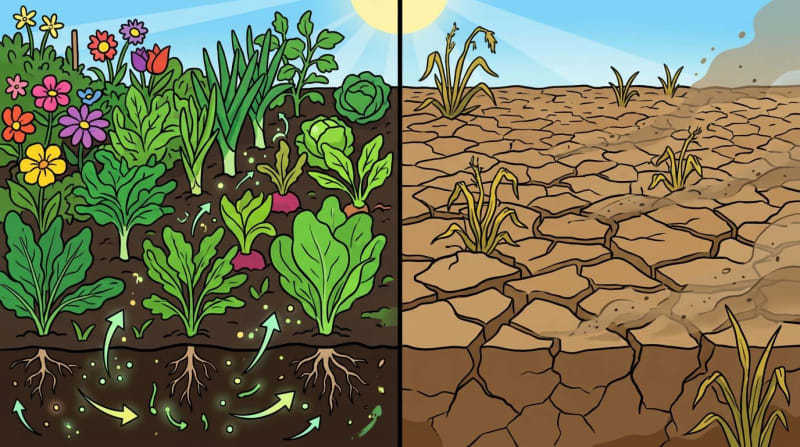
Multiple studies, including research tracked through ScienceDaily's nutrition and health database, show measurable shifts in microbiome composition in as few as five days on a high ultra-processed-food diet. That is not a slow erosion over months — it is a rapid ecological shift, more like changing the nutrient conditions in a garden bed than gradually depleting soil over a decade.
The compounding effect is where the pattern becomes more nuanced. Occasional ultra-processed food — a fast-food meal, a bag of chips, a packaged snack a few times a week — appears to produce minimal long-term microbiome disruption in people who otherwise eat a varied, fiber-rich diet. The microbiome is resilient to infrequent insults when the baseline environment is healthy and the bacterial populations have a strong substrate to return to. Daily UPF consumption is a different equation. When ultra-processed food accounts for more than half of daily calories consistently, the fiber-fermenting species that depend on plant material as their substrate gradually lose competitive territory. The species that can tolerate or even exploit the low-fiber, high-additive environment are not typically the ones associated with good health outcomes.
Individual variation matters considerably here, and the research is honest about it. As documented through systematic reviews on Examine, microbiome response to the same dietary intervention can vary by a factor of five or more between subjects. Identical diets, meaningfully different microbiome trajectories. Existing microbiome baseline, genetics, sleep, stress levels, medication history — particularly antibiotic exposure — all influence how quickly disruption happens and how severe it is. This is not a reason for fatalism. It is a reason to treat any general timeline as a range rather than a fixed schedule, and to pay attention to your own signals rather than calibrating against someone else's experience.
What does your gut tell you — literally — about the weeks when processed convenience food fills most of the plate?
Recovery: How Quickly Your Gut Bounces Back

Recovery: How Quickly Your Gut Bounces Back
The recovery story is the one the research ultimately points toward — because what it shows is more actionable than the damage narrative alone.
Partial microbiome recovery in controlled studies typically begins within two to four weeks of sustained dietary change. That is the window where fiber-fermenting species begin to increase their populations again as dietary fiber returns to the diet and gives them substrate to work with. The recovery is not always complete within that window — which bacterial populations rebound and how quickly depends on which species were present before the high-UPF period, how long that pattern was in place, and what the replacement diet actually contains.
The bacteria that recover fastest tend to be the fast-growing, fiber-dependent generalists — Bifidobacterium species in particular respond relatively quickly to increased prebiotic fiber intake. Faecalibacterium prausnitzii is slower. It is an anaerobic specialist that requires a stable, reduced-oxygen environment and consistent fiber supply to re-establish competitive populations. Full recovery of microbial diversity often extends beyond four weeks, and some research suggests the trajectory continues for months in people who maintained a high-UPF pattern for years.
Here is what the Stanford fermented foods study adds to the picture. A 2021 study published in Cell by Wastyk et al. randomized 36 healthy adults to either a high-fiber diet or a high-fermented-food diet for ten weeks. The high-fermented-food group — consuming kimchi, kefir, kombucha, plain yogurt, and other fermented foods consistently — showed a significant increase in microbiome diversity over six weeks that the high-fiber group did not match in the same timeframe. Immune markers associated with systemic inflammation also declined in the fermented food group.
"The microbiome is more dynamic than the fear around this topic suggests. The window to recovery is shorter than most people expect — and what you add to your diet matters as much as what you remove."
This is not a reason to choose fermented foods over fiber — they appear to work best together. It is a reason to understand that fermented foods are a high-leverage recovery tool, not just a general wellness choice. Six weeks is a concrete and achievable timeline. It is a number you can actually hold.
One more thing the research makes clear: full restoration does not happen with a single dietary change. The microbiome appears to have something like ecological memory — suppressed populations can return, but the rate depends on whether the food conditions allow them to compete again. The encouraging version of that finding is simple: if you feed them, they tend to come back.
Practical Swaps That Move the Needle

Practical Swaps That Move the Needle
Most households already do some of this well. The goal is not rebuilding from zero — it is identifying the highest-leverage shifts and making those two or three moves consistently. The research does not require perfection. It requires consistency on the variables that matter most.
The 80/20 approach holds up across the evidence. Reducing ultra-processed food from roughly 60% of daily calories to 30% produces meaningful microbiome improvements without requiring that every meal be cooked from scratch. Two or three scratch-cooked meals a week — built around legumes, whole grains, and fermented foods — changes the microbial substrate enough to move the needle. That is the finding worth carrying into a real kitchen.
Here are five swaps with the highest impact-to-effort ratio, grounded in what the research identifies as the most disruptive UPF ingredients and the most beneficial replacements:
1. Flavored yogurt → plain, full-fat yogurt with your own fruit. Most flavored yogurts qualify as NOVA 4 despite the probiotic marketing. Plain unsweetened yogurt with live cultures is a genuinely fermented food that contributes directly to the recovery mechanisms the Stanford study identified.
2. Packaged bread with more than six ingredients → sourdough or a bakery loaf. Real sourdough is made with flour, water, salt, and a bacterial starter — no emulsifiers, no shelf-life extenders. The fermentation itself produces organic acids that create a different gut environment than a stabilized packaged loaf.
3. Add one legume-based meal per week, then two. Lentils, chickpeas, and black beans are among the most fiber-dense, microbiome-supporting foods available and among the least expensive. A pot of lentil soup made on Sunday becomes three meals. That one habit shifts the fiber baseline meaningfully.
4. Replace one ultra-processed snack daily with a whole food. An apple with nut butter, a boiled egg, a handful of mixed nuts — the specific choice matters less than the pattern. One swap removes one set of additives and adds one source of fiber or fermented benefit.
5. Add one fermented food daily, rotated across the week. Kimchi, sauerkraut, kefir, miso, plain yogurt, tempeh. The Stanford study used variety and consistency — rotating fermented foods rather than relying on one source appears to contribute more to diversity than any single fermented food alone.
The question worth sitting with is not whether any given meal is perfect — perfectionism about food is its own kind of harm, and it is not what the research points toward anyway. The question is whether the baseline conditions in your gut are ones where the beneficial species can compete. That is a different framing than clean eating, and it puts the goal somewhere achievable: not perfection, just enough fiber and enough fermented food often enough that the ecosystem has what it needs to do its work.
What would it look like to think of two or three meals this week not as tests to pass, but as chances to feed something genuinely alive — a colony of organisms that responds to what you give it, recovers when conditions improve, and turns out to matter more to your health than any single nutrient ever did?
Content ID: Zb4SqAuBPH4pcm1DTZqVwFIo
See an error? Tell us.
Keep Reading

What North Carolina's New Food Is Medicine Coalition Reveals About Building State Coalitions from Scratch

What the New FIMC Multi-State Evidence Report Reveals About FIM Cost Savings — and Why High-Acuity Patients Are the Key

Child Care Is the Largest Untapped FIM Delivery Platform — A New Report Shows What's Missing
Comments
Share with the Community