
Beans, Lentils, and Blood Pressure: What a Major New Study Found
The Short Version
- A major 2026 global analysis found regular legume consumption reduces the risk of developing high blood pressure by nearly 30 percent — a finding that held across multiple distinct populations worldwide.
- Potassium is the primary mechanism: one cup of cooked white beans delivers over 1,000mg of potassium, helping the kidneys counteract sodium's blood pressure-raising effects toward the AHA's 3,400mg daily target.
- Rinsing canned beans removes roughly 40 percent of their added sodium, making canned and dried legumes equally effective for cardiovascular health — the difference is convenience, not benefit.
- Lentils cook in 20 minutes without soaking and absorb any flavor you build around them, making them the easiest entry point for adding meaningful legume servings to a regular week.
- In Rochester, the Public Market, Wegmans bulk sections, Aldi's sub-dollar canned beans, and Foodlink's SNAP-matching program at farmers markets make legumes among the most accessible cardiovascular foods in the region.
There's a bag of dried lentils in most American pantries. It's been there a while. It'll probably stay there a while longer — unless something shifts.
Here's something that might shift it: a major global analysis published in May 2026 found that eating beans, lentils, chickpeas, and soy foods regularly reduces the risk of developing high blood pressure by nearly 30 percent. If you've heard people say that beans lower blood pressure, the research behind that claim just got a lot stronger. The finding matters especially because high blood pressure affects nearly half of all American adults, drives an enormous share of cardiovascular disease, and typically requires lifelong medication to manage once it sets in.
The solution might already be sitting in your pantry. Or at the Public Market. Or for about a dollar a can at the grocery store.
What the Study Found
What the Study Found
The global analysis, reported by ScienceDaily in May 2026, examined the relationship between legume consumption — beans, lentils, chickpeas, soybeans, and related foods — and the incidence of high blood pressure across multiple populations worldwide. The scope matters: when the same relationship holds across varied populations eating different overall diets, the signal is real, not a regional artifact.
The headline number — a nearly 30 percent reduction in hypertension risk — is meaningful in the context of what we already know about dietary interventions for blood pressure. The DASH diet, one of the most studied approaches for blood pressure management, is built in significant part around exactly these foods. The 2026 analysis adds to a growing body of evidence that legumes specifically are doing cardiovascular work that earlier research only hinted at.
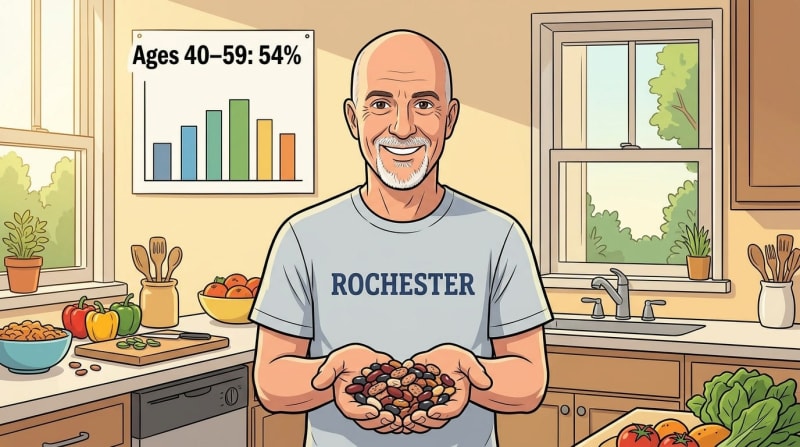
To understand who this matters to most, consider the baseline. According to the CDC, hypertension rates climb sharply as Americans age — and they start much earlier than most people expect.
A nearly 30 percent reduction in risk across those numbers isn't an abstract statistic. For someone in their 40s — where more than half of American adults have already crossed into hypertension territory — it represents a real shift in trajectory, achievable through food choices that don't require a prescription or a specialist referral.
How Much You Need to Eat and Which Legumes Count
How Much You Need to Eat and Which Legumes Count
One of the most practical questions any study like this raises is threshold: how much, and how often? The research points to regular inclusion across the week — not daily perfection, but consistent presence in the diet.
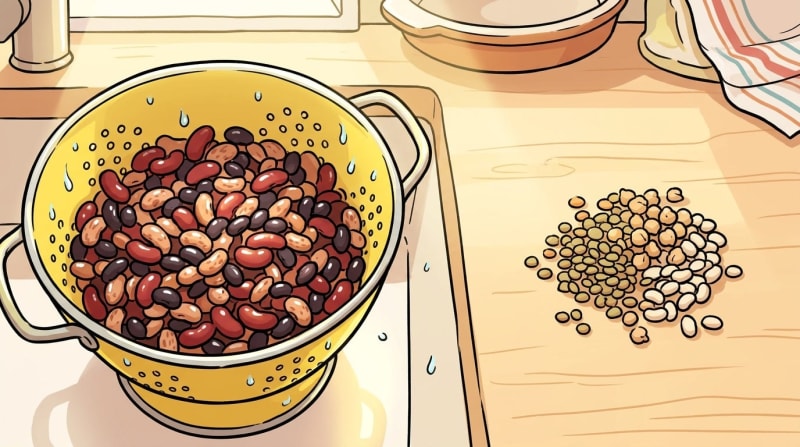
All of the major legume families qualify: black beans, kidney beans, cannellini, navy beans, pinto beans, lentils in all their varieties, chickpeas, soybeans, edamame, and split peas. Peanuts are technically legumes but are generally studied separately and have a meaningfully different nutritional profile — stick to the list above when thinking about blood pressure specifically.
On the dried versus canned question: the health benefit is equivalent. Canned beans are pre-cooked, shelf-stable, and require nothing more than a rinse. Dried beans are cheaper per serving and give you more control over sodium. Either one works. If sodium intake is a particular concern — which it usually is when blood pressure is the topic — rinsing canned beans removes roughly 40 percent of their added sodium content, according to a review from the Harvard T.H. Chan School of Public Health. The choice isn't canned versus dried. It's legumes versus not.
What's the starting point for most Americans? National consumption data suggests average legume intake sits well below what most dietary guidelines recommend. The gap between where most people are and where the research points isn't enormous — but it is real, and it's closable without a significant lifestyle overhaul.
Why Beans Lower Blood Pressure

Why Beans Lower Blood Pressure
The mechanism isn't mysterious. Legumes are among the highest whole-food sources of potassium available — and potassium is one of the most well-documented nutrients for vascular health. Where sodium raises blood pressure by prompting the body to retain fluid, potassium does the opposite: it signals the kidneys to excrete it. The American Heart Association recommends 3,400mg of potassium daily for most adults — a target most Americans fall considerably short of.
One cup of cooked lentils delivers over 730mg of potassium. White beans are extraordinary — over 1,000mg per cooked cup, according to the USDA FoodData Central database. That's a meaningful share of the daily target from a single side dish.
Magnesium works alongside potassium to support normal blood vessel function, and legumes are a solid source of that as well. Fiber — 15 to 16 grams per cooked cup in lentils and split peas, per USDA data — feeds the gut microbiome, which produces short-chain fatty acids that reduce systemic inflammation and improve vascular responsiveness. These mechanisms stack. Legumes aren't hitting one lever for blood pressure; they're hitting several at once.
There's also a displacement effect worth naming explicitly. When a lentil dish replaces a processed meat dish, you're not just adding potassium and fiber — you're also removing a significant source of sodium and saturated fat. The benefit compounds through subtraction as much as through addition. That's worth naming, because it changes how you think about the trade-off. You're not adding a constraint. You're gaining ground on two fronts at once.
Simple Ways to Add More Legumes to Your Week
Simple Ways to Add More Legumes to Your Week
The question isn't whether legumes work. The question is how to actually eat more of them without overhauling your cooking or your week.
Start with what doesn't require a new recipe. A can of chickpeas or white beans added to a soup you're already making doesn't change the dish — it adds heft, protein, and potassium without changing the structure of the meal. Same with a salad: a handful of rinsed kidney beans on a salad you were already building is not a new food. It's an addition that takes about fifteen seconds.
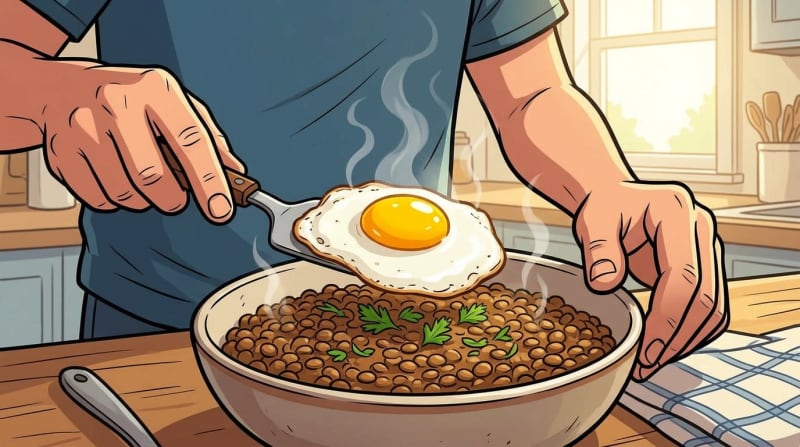
Lentils are particularly entry-friendly because they don't require soaking, cook in 20 to 25 minutes, and absorb whatever flavors surround them. A pot of green or brown lentils simmered with garlic, olive oil, and whatever vegetables are in the refrigerator is a weeknight dinner. Add a fried egg on top if you want protein coming from two directions at once.
Hummus counts. Edamame counts. The bar for entry here is genuinely low.
"The legumes are already there. The recipes are already in our heads. The shift is smaller than it sounds."
What meal do you already make every week where beans or lentils would belong naturally? That's the place to start — not somewhere ambitious, not a new cuisine, not a significant investment of time. Start there, and see what one change actually feels like over a month.
Where to Find Affordable Legumes in the Rochester Area
Where to Find Affordable Legumes in the Rochester Area
This is where Rochester has a genuine advantage. Access to affordable legumes here is better than in most mid-sized American cities, and the options run from deeply budget-friendly to remarkably fresh.
The Rochester Public Market — open Tuesdays, Thursdays, and Saturdays year-round — carries dried beans, lentils, and chickpeas from multiple vendors at prices that typically undercut grocery chains. The Saturday market draws the broadest range of bulk dried goods throughout the year and into the cooler months when fresh produce thins out.
Wegmans has an excellent bulk section and a store-brand canned bean line priced well below national brands. Their dried lentil and bean selection is reliably stocked year-round. Store-brand canned chickpeas and black beans cook identically to anything twice the price — this is a category where brand doesn't matter.
Aldi is worth naming directly: canned black beans, chickpeas, lentils, and kidney beans typically run under a dollar per can, making it among the lowest prices in the region for any whole-food protein source.
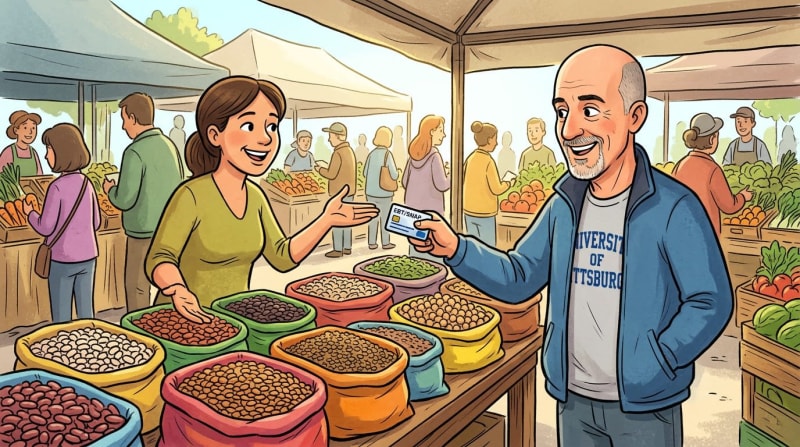
Foodlink, Rochester's regional food bank and food access organization, operates SNAP-matching programs at participating area farmers markets. SNAP dollars spent on qualifying foods at those markets are matched, effectively doubling purchasing power. If you or someone in your household is navigating food access challenges, Foodlink's community health education programs can connect you with these resources directly.
Legumes are already among the most affordable sources of protein on any grocery shelf. The gap between their cost and that of animal proteins is substantial.
A nearly 30 percent reduction in hypertension risk, sitting on a shelf at a dollar a can. What would it look like if that knowledge were as widely shared as the food itself is widely available? That's a question worth bringing to the table — and one Rochester already has most of the infrastructure to answer.
Content ID: tWQXcAm0TT0xfA12v74aeoV2
See an error? Tell us.
Keep Reading
What North Carolina's New Food Is Medicine Coalition Reveals About Building State Coalitions from Scratch

What the New FIMC Multi-State Evidence Report Reveals About FIM Cost Savings — and Why High-Acuity Patients Are the Key
Child Care Is the Largest Untapped FIM Delivery Platform — A New Report Shows What's Missing
Comments
Share with the Community