
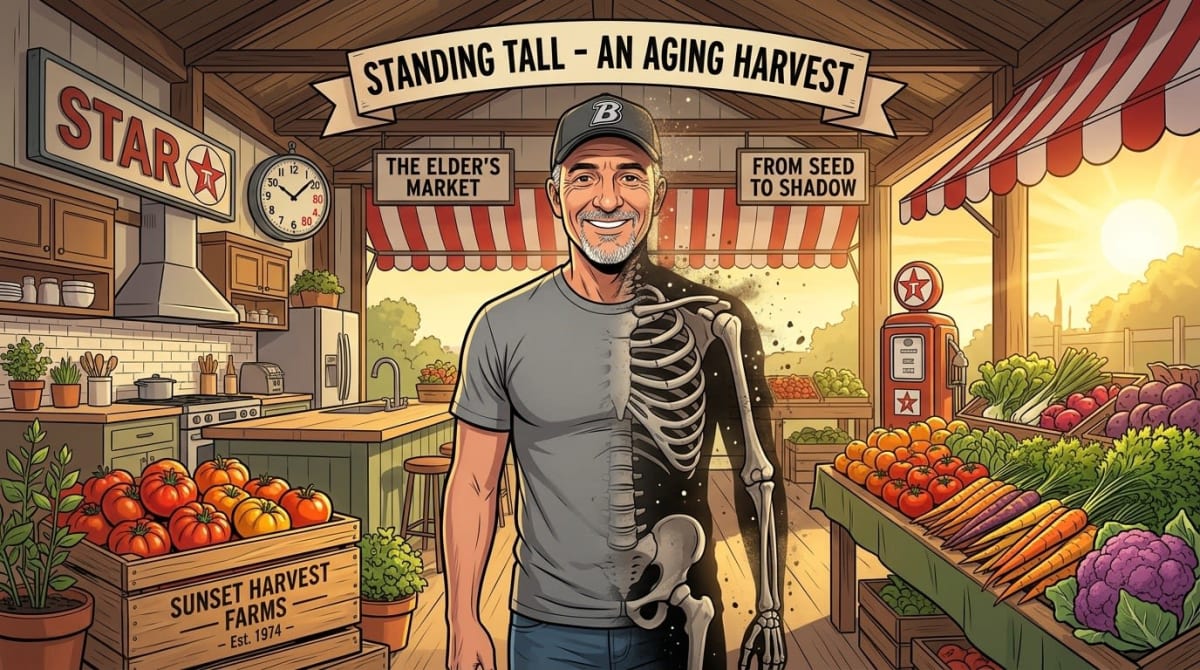
The Protein Problem After 50: Why You Need More Than You Think (And How to Actually Get It)
The Short Version
- The standard protein recommendation of 0.36 grams per pound of body weight was built to prevent deficiency in young adults, not to preserve muscle in an aging body — and the European Society for Clinical Nutrition and Metabolism says healthy older adults need at least 0.45 to 0.55 grams per pound daily, with higher targets for those managing illness or serious physical stress.
- After 50, skeletal muscle loss compounds quietly: people with limited physical activity can lose 30 to 50 percent of their total muscle mass and strength between ages 50 and 80, according to a 2024 review in Critical Reviews in Food Science and Nutrition.
- Aging muscle develops what researchers call anabolic resistance, meaning it needs a higher threshold of the amino acid leucine — around 3 grams per meal alongside 25 to 30 grams of total protein — to trigger the same muscle-building response that younger adults get from smaller amounts.
- Most older adults hit that protein target only at dinner; breakfast and lunch routinely deliver just 15 grams of protein and under 2 grams of leucine, leaving two out of three meals too low to drive meaningful muscle synthesis.
- A cup of cooked lentils delivers around 18 grams of protein with zero saturated fat, no gastric irritants, and more fiber than most Americans get in a full day — and pairing beans with whole grains across the day covers the amino acid gaps that individual plant proteins leave on their own.
The Number You've Been Told Is Wrong

The Number You've Been Told Is Wrong
The standard recommendation — 0.36 grams of protein per pound of body weight per day — was established using nitrogen balance studies conducted mostly on young adults. It was designed to prevent deficiency, not to preserve muscle in an aging body that is actively working against you. The European Society for Clinical Nutrition and Metabolism recommends that healthy older adults consume at least 0.45 to 0.55 grams per pound of body weight daily — and up to 0.68 grams per pound for those managing illness or acute physical stress (ESPEN Workshop on Protein Requirements in the Elderly, 2013). At 175 pounds, that's 80 to 95 grams a day. At 200 pounds, closer to 90 to 110. If you're doing regular strength training or coming back from a health challenge, you want the higher end.
Most people over 50 are eating nowhere near it — not because they're careless, but because the old number is still what's printed on nutrition labels and repeated by doctors who haven't revisited the literature lately.
What Sarcopenia Actually Means for You
What Sarcopenia Actually Means for You
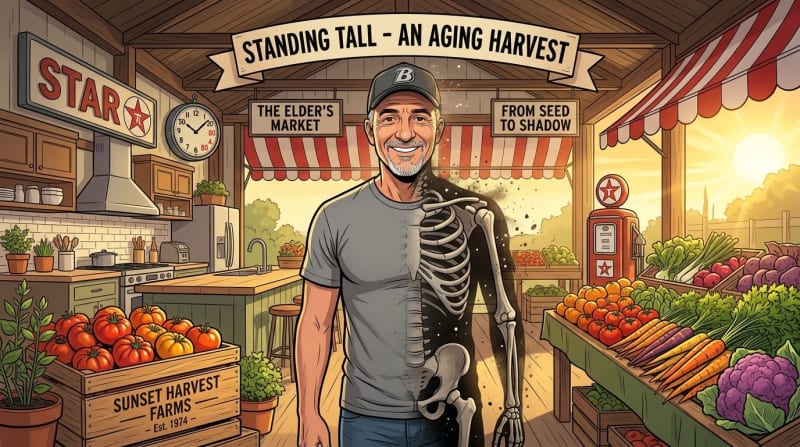
Sarcopenia is the clinical term for age-related muscle loss. After 50, the body loses roughly 0.5 to 1 percent of skeletal muscle mass per year, with strength declining about 1.5 percent annually through your 50s and accelerating to around 3 percent per year after 60 (Frontiers in Nutrition, 2025). Those numbers don't sound alarming in isolation. They compound. Between the ages of 50 and 80, people with limited physical activity can lose 30 to 50 percent of their total skeletal muscle mass and strength (Critical Reviews in Food Science and Nutrition, 2024).
The practical consequences aren't abstract. Reduced muscle mass means slower metabolism, less stability, longer recovery from injury, and declining functional independence over time. It affects how you move on a pickleball court, how you carry a foil kit down to the water, how your body holds up on a long travel day. Protein is not the only factor — sleep, strength training, and hormones all play roles — but dietary protein is the one lever you have direct, daily control over.
What does it feel like to realize you've been under-fueling your own muscle for years, not through negligence but because the guidance was wrong? That's worth sitting with.
The Leucine Factor: Why Quality Matters as Much as Quantity

The Leucine Factor: Why Quality Matters as Much as Quantity
Not all protein triggers the same response in older muscle, and this is where the science gets genuinely useful. The mechanism behind muscle protein synthesis in aging adults depends heavily on an amino acid called leucine. Leucine directly activates the mTORC1 signaling pathway in skeletal muscle — essentially the molecular switch that tells your body to build rather than break down. In younger adults, this switch is fairly sensitive. In older adults, research has established what scientists call "anabolic resistance" — the muscle becomes less responsive to normal levels of amino acids and requires a higher threshold of leucine to trigger the same synthesis response.
International guidelines recommend a leucine intake of 3 grams at each of three main meals, together with 25 to 30 grams of total protein, as the target to counteract loss of lean mass in older adults (Frontiers in Nutrition, 2020). That 25 to 30 gram figure applies most cleanly to high-quality animal protein, which carries roughly 10 percent leucine by composition. Plant proteins typically run closer to 8 percent, meaning you need slightly more volume — or smarter combining — to reliably cross the threshold from beans and lentils alone. Most older adults hit the target only at dinner, when they tend to concentrate their protein intake. Breakfast and lunch routinely fall short, delivering around 15 grams or less and less than 2 grams of leucine — below what aging muscle needs to respond fully (Frontiers in Nutrition, 2021).
Research published in the American Journal of Physiology found that elderly subjects showed no significant increase in muscle protein synthesis from a lower-leucine amino acid mixture, but did respond normally when leucine content was increased (American Journal of Physiology, 2006). The takeaway is not to obsess over leucine as a supplement — it's to build meals that deliver enough total protein to cross the threshold, consistently, three times a day.
For plant-based eaters, this is practical rather than complicated. A full cup of lentils paired with Greek yogurt at lunch, or a black bean bowl with eggs and whole grains at breakfast, gets you there without engineering anything. We already eat this way — we just haven't been thinking about it in these terms.
The Meat Problem Nobody Talks About Honestly
The Meat Problem Nobody Talks About Honestly
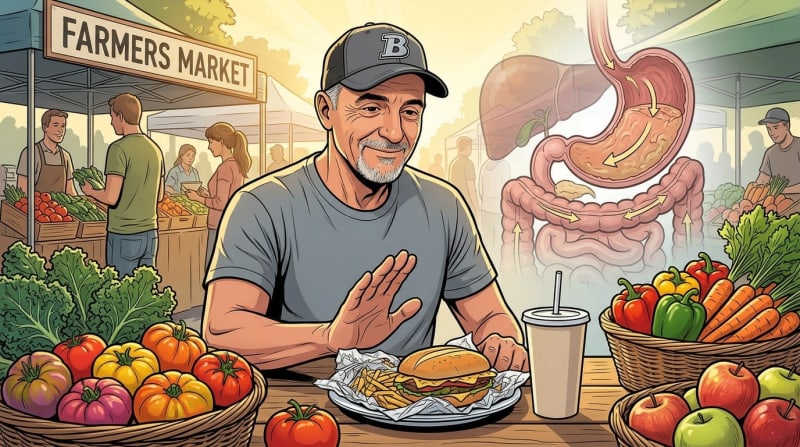
Reducing meat makes sense for a lot of reasons. saturated fat is a legitimate cardiovascular concern. For anyone managing gastritis or gut inflammation, fatty red meat is genuinely difficult — it slows gastric emptying, is high in the kinds of fats that promote gastric acid secretion, and can aggravate an already irritated stomach lining. A household moving away from meat-centered meals is making a reasonable, evidence-supported choice.
Gastritis also creates a secondary protein problem that rarely gets discussed. When the stomach lining is inflamed, its ability to produce stomach acid and intrinsic factor — the compounds needed to properly break down and absorb protein and key nutrients like B12 — is compromised. People with gastritis may struggle to absorb nutrients precisely when their diet is also being restricted (Oshi Health, 2026). That means the gap between how much protein you're eating and how much your body is actually using can be wider than the label suggests.
The proteins that tend to be easiest on an inflamed stomach lining are lean, low-fat, and minimally spiced: cooked lentils, well-cooked beans, eggs, Greek yogurt, and soft fish. Fried foods, fatty red meat, and heavily spiced dishes slow gastric emptying and require more acid to break down — the opposite of what an irritated lining needs.
But here's what the shift-away-from-meat advice leaves out: most plant-based foods that naturally replace meat in a weekly rotation — pasta, roasted vegetables, grain bowls built around rice — don't carry meaningful protein on their own. You can eat well and generously and still come in 30 or 40 grams short of where you need to be. About 30 percent of men and 50 percent of women over 71 under-consume protein foods — and that's before accounting for any intentional reduction of meat (Journal of Gerontology, 2023). The gap is real, and it doesn't close by accident.
The Bean Answer
The Bean Answer
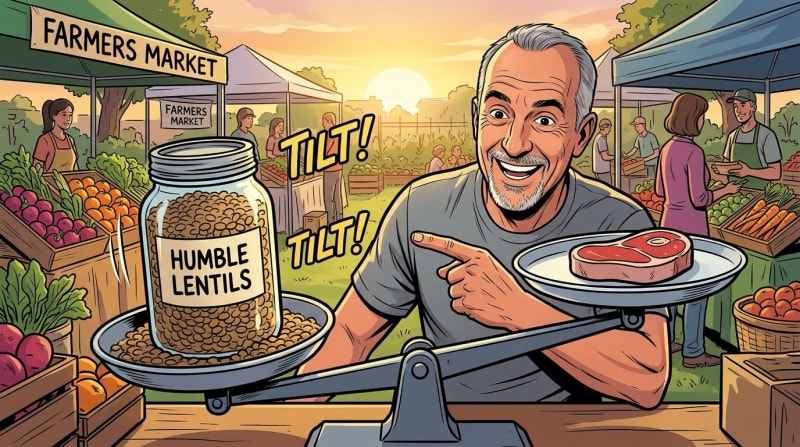
Beans and lentils are where the gap actually closes, and they're more capable than most people realize. A cup of cooked lentils delivers around 18 grams of protein — roughly equivalent to three eggs, with zero saturated fat, no gastric irritants, and more fiber than most Americans get in a full day (USDA FoodData Central). Black beans come in around 15 grams per cup. Chickpeas, the base of hummus, land at about 15 grams per cup as well.
Pulses as a category contain roughly 21 to 25 percent protein by dry weight — nearly double the protein density of cereals (European Food Information Council). And unlike red meat, beans and lentils are anti-inflammatory rather than pro-inflammatory, making them one of the few high-protein foods that actively support rather than challenge a healing gut.
Lentils have a particular advantage for anyone with a sensitive stomach. They don't require soaking, cook in 20 minutes, and are lower in the fermentable fibers that cause bloating in some people with gut sensitivity. Red lentils cook down completely and disappear into soups and sauces — useful when texture is a concern during a flare. Green and brown lentils hold their shape and work well in grain bowls or as a base in place of ground meat.
Hummus deserves more credit than it gets as a protein vehicle. Two tablespoons is a snack; four tablespoons with vegetables or whole grain crackers starts to move the needle. Pairing beans with whole grains — rice and lentils, corn tortillas and black beans, whole wheat bread and hummus — provides a complete amino acid profile that covers what individual plant proteins lack on their own. Variety across the day handles it naturally. You don't need to engineer this at every meal.
What would it look like to treat beans the way you've always treated meat — as the anchor of the plate, not the side?
A Week of Bean-Forward Protein
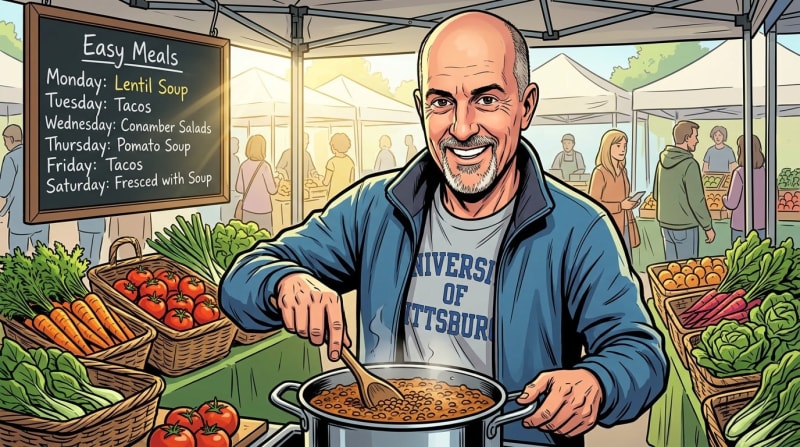
A Week of Bean-Forward Protein
Knowing the numbers is one thing. Building a weekly rotation that actually delivers them is another. Here is what a practical bean-forward approach looks like in real meals, without tracking apps or supplement stacks.
Lentil bolognese replaces ground beef almost invisibly in a pasta sauce — a full cup of green or brown lentils simmered with tomato, garlic, and herbs delivers 18 grams of protein per serving, and the texture holds up. Batch cook a double portion on Sunday and it covers two weeknight dinners.
Black bean bowls — rice, roasted vegetables, black beans, a spoonful of Greek yogurt in place of sour cream — land at 25 to 30 grams of protein per meal when the beans are portioned generously and the yogurt is full-fat Greek. Add a fried or poached egg and you're at or above the threshold in a single meal.
Lentil soup is the workhorse of the rotation. Red lentils dissolve completely, making the soup smooth enough for a gut in recovery. A full pot made with 2 cups of dry lentils, low-sodium vegetable broth, carrots, and cumin yields roughly 6 portions at 18 to 20 grams of protein each. Freeze half.
Hummus as a meal anchor rather than a dip — spread thick on whole grain toast with roasted vegetables and a poached egg — delivers 20 grams before the egg. Most people treat hummus as an afterthought. Used intentionally, it does serious work.
A black bean protein bar as the 3pm solution. We make our own — black beans, oats, and dates to sweeten — and a batch on Sunday covers the whole week. If you're buying them, read the label. The bar category has exploded in the last few years and the quality range is enormous. Sugar content and additive lists on commercial bars can quietly undermine what you're trying to do. Look for whole food ingredients, minimal added sugar, and a protein source that isn't primarily dairy-based if your gut is still healing. The convenience is real. So is the need to know what's actually in them.
Making It Add Up Across a Day

Making It Add Up Across a Day
The goal isn't tracking every gram. It's building a daily pattern where protein is present at every meal rather than concentrated at dinner — which is how most people eat. Research shows the body handles 25 to 30 grams of protein per meal more effectively than a single large serving later in the day, regardless of total daily intake (NIH, PMC, 2015). Spreading intake across three meals gets you more anabolic benefit from the same total amount.
A day that works: Greek yogurt with breakfast gets you 15 to 20 grams without effort. A lunch built around lentil soup or a black bean bowl adds another 20 to 25. A dinner with a bean-forward dish — lentil bolognese, chickpea curry, white bean and vegetable stew — adds 20 more. A black bean bar in the afternoon fills the gap. You're at 80 to 90 grams without tracking, without supplements, and without going back to the foods that were causing problems.
The shift away from meat doesn't have to mean a protein deficit. It just requires knowing which plant foods actually carry the load — and deciding to build around them the same way you'd build around anything else worth getting right.
We already have the ingredients. We already know how to cook. The only thing left is putting the pieces together in a way that serves us as well at 60 as it did at 30 — and probably better.
Content ID: JHM3UCcCJhsowMqQkZmEDfd5
See an error? Tell us.
Keep Reading

What North Carolina's New Food Is Medicine Coalition Reveals About Building State Coalitions from Scratch

What the New FIMC Multi-State Evidence Report Reveals About FIM Cost Savings — and Why High-Acuity Patients Are the Key

Child Care Is the Largest Untapped FIM Delivery Platform — A New Report Shows What's Missing
Comments
Share with the Community