
Is Grilling Bad for You? What the New PAH Research Actually Says About Your BBQ
The Short Version
- The May 2026 study confirmed what the chemistry has long suggested: PAH formation in grilling is real, measurable, and highest when fat hits open flame — but it exists on a spectrum shared by every high-heat cooking method, not grilling alone.
- Marinating in dark beer or citrus before grilling reduces PAH formation by 53–88%, making a simple marinade one of the most effective and lowest-effort risk-reduction moves available to a home cook.
- Charcoal grilling produces roughly twice the PAHs of gas grilling — a real and quantifiable trade-off that lets you make an informed choice rather than a worried one.
- A separate May 22 clinical trial found adults who ate 6–7 oz of beef daily for a full month showed no worsening in blood sugar control, complicating the blanket red-meat warning at intake levels higher than most moderation guidelines suggest.
- The blackened char crust is where PAH concentration peaks — most of the practical risk reduction from better grilling habits comes from how you handle that one variable, not from abandoning the grill entirely.
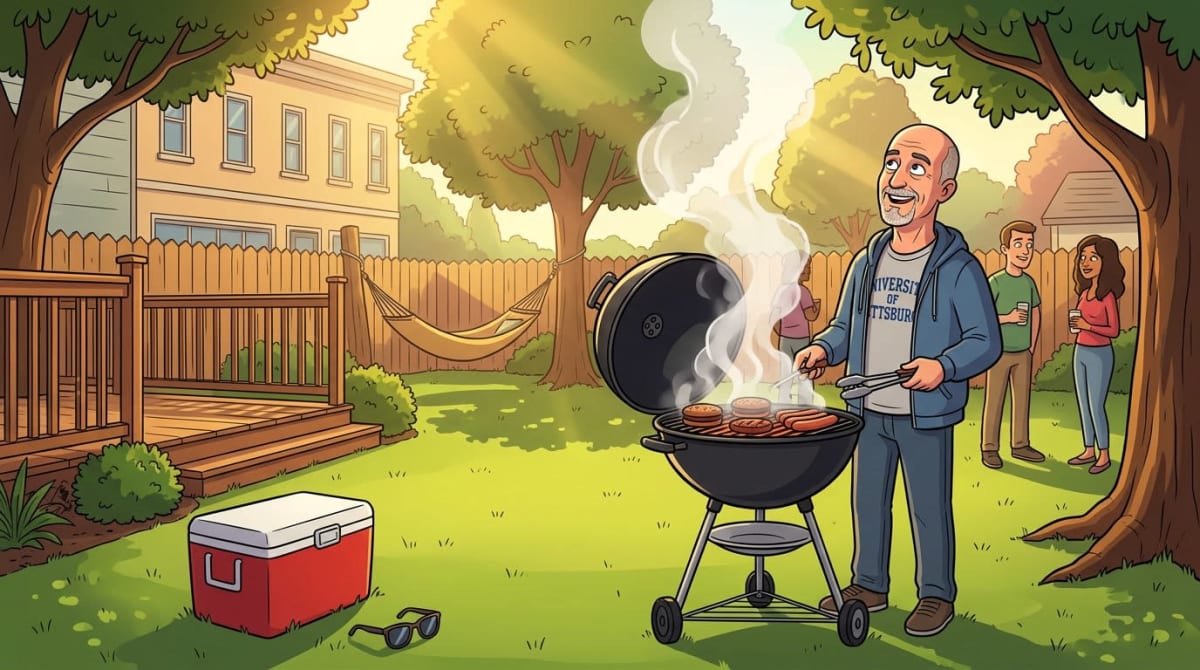
Memorial Day weekend smells like smoke and possibility. Somebody's backyard, somebody's charcoal going, somebody's cooler full of cold drinks — it is one of the few rituals that actually delivers what it promises.
And then, every year around this time, the question gets asked again: is grilling bad for you?
This year, there is actual new evidence to work with. On May 22, 2026, researchers published new measurements of polycyclic aromatic hydrocarbon (PAH) levels across four cooking methods — grilling, roasting, smoking, and frying. The same week, a separate clinical trial published findings on daily beef consumption and blood sugar control that complicated some conventional wisdom in a direction most people didn't expect.
Here's what the science actually says — and what it means for your Memorial Day grill.
What Are PAHs and How Do They Form on Your Grill
What Are PAHs and How Do They Form on Your Grill
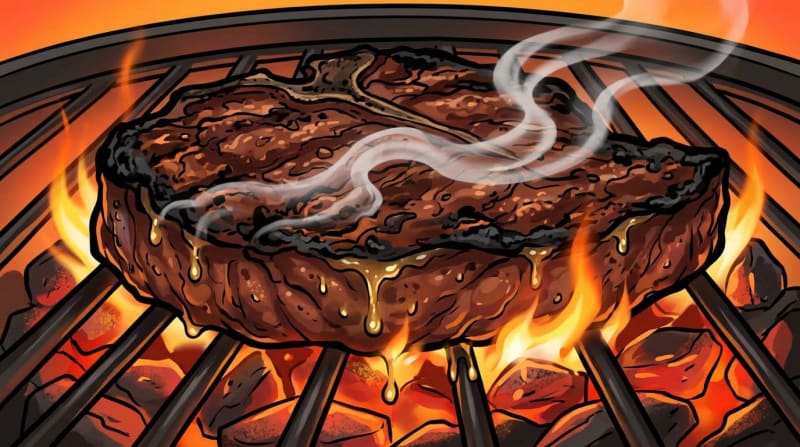
PAHs — polycyclic aromatic hydrocarbons — are a family of chemicals formed when organic matter burns incompletely. They show up in car exhaust, cigarette smoke, forest fire residue, and yes, grilled food. According to the National Cancer Institute, PAHs form in food through two primary mechanisms: fat dripping onto hot coals or flame, creating smoke that deposits back onto the food's surface, and direct pyrolysis — the thermal breakdown of proteins and sugars in the charred crust itself.
That char — the dark, slightly crunchy edge of a well-cooked steak or chicken thigh that grill lovers often fight over — is where PAH concentration is highest. This is not a minor footnote. It is the central fact of the chemistry, and it shapes every practical intervention available to a home cook.
The May 2026 study confirmed what the literature has been building toward: PAH formation is not unique to grilling. Roasting, smoking, and pan-frying all produce PAHs. What differs is the mechanism, the concentration, and how much actually ends up in the food you eat. The European Food Safety Authority's comprehensive review of PAH contamination in food has documented this pattern across dozens of study cohorts — charcoal grilling generates the highest concentrations because open-flame contact with fat drip is maximized.
Here is what established research tells us about relative PAH formation across cooking methods:
The shape of this pattern matters more than any individual number. Charcoal and smoking occupy a meaningfully different tier than oven roasting or even gas grilling. That gap is where your practical choices live.
What the New Research Actually Found
What the New Research Actually Found
The May 2026 study added contemporary measurement precision to what has been an evolving body of evidence. The key confirmation, as reported by ScienceDaily, was that direct flame contact with fat remains the highest-yield PAH generator among common home cooking methods — and that practical interventions measurably change the outcome.
This framing matters because older epidemiological studies that raised concerns about grilling were often examining populations with extreme, high-frequency, high-char consumption patterns — not someone grilling on summer weekends. The International Agency for Research on Cancer classifies benzoa]pyrene — the PAH most associated with cancer risk in humans — as a Group 1 carcinogen. That classification describes the compound's [carcinogenicity. It does not describe the exposure level from a typical cookout.
Most things carry some level of risk at sufficient dose and frequency. The question that actually matters is: at what amount and how often does exposure become meaningful for someone living a normal life?
What genuinely shifted in the May 2026 data was the confirmation that method choices create real, measurable differences in PAH levels — not theoretical ones. The variables within a home cook's control produce outcomes that can actually be quantified. That's the useful part. And it's exactly what the next section is for.
Five Ways to Reduce PAH Exposure Without Giving Up the Grill
Five Ways to Reduce PAH Exposure Without Giving Up the Grill
The research, read honestly, is not a verdict against grilling. It is a map of the variables you control. Here is what those variables actually do.
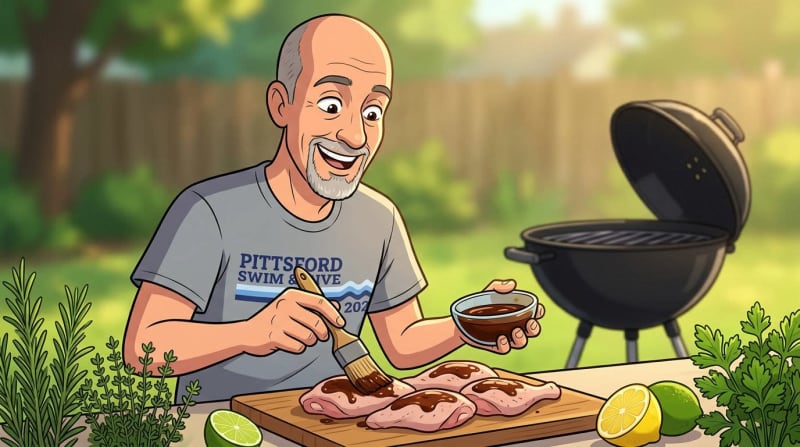
Marinate. This is the single biggest lever available to a home griller. A 2008 study published in the Journal of Agricultural and Food Chemistry found that marinating chicken in beer before grilling reduced PAH formation by 53–88% depending on beer type — dark beers outperformed light beers, likely due to higher antioxidant content from hops and roasted malt. Research on citrus and herb marinades found reductions up to 90% for specific PAH compounds. The mechanism is antioxidant interference with the PAH formation pathways in the charred surface.
These are not marginal improvements. They are near-elimination of the risk premium associated with charred grilling — for something most people are already doing anyway, for flavor.
Flip frequently. The American Institute for Cancer Research recommends frequent turning as a practical grilling modification. Flipping every 60–90 seconds instead of once per side reduces the time any single surface spends in sustained contact with intense heat, which directly limits char accumulation and PAH formation. It also, not incidentally, produces more evenly cooked meat.
Know the gas vs. charcoal trade-off. Gas grilling produces roughly half the PAHs of charcoal grilling, primarily because fat drip does not contact open flame in the same way. If you love charcoal — for the smoke, the flavor, the ritual — that is a legitimate preference with a real and quantifiable trade-off. Neither choice is morally superior. Knowing the difference is just useful.
Trim visible fat and use a drip pan. Less fat means less drip, which means less PAH-carrying smoke depositing back onto the food surface. Trimming visible fat before grilling and using a drip pan to catch rendered fat are low-effort adjustments with a documented compounding effect when combined with marinade and flipping practice.
Treat the char as optional. The blackened crust is where PAH concentration peaks. Cutting it off before eating, or simply not grilling to that level of char on high-frequency sessions, removes a significant portion of actual PAH intake. This is the hardest adjustment for people who specifically love the char. It is also the one with the clearest and most direct effect on what ends up in your body.
The compounding effect is the real story. A marinated, frequently-flipped, trimmed piece of chicken on a gas grill represents a genuinely different PAH exposure than an unmarinated, once-flipped, fatty cut on charcoal with no pan. Same category of meal, meaningfully different outcome.
The Beef and Blood Sugar Study That Dropped the Same Week
The Beef and Blood Sugar Study That Dropped the Same Week
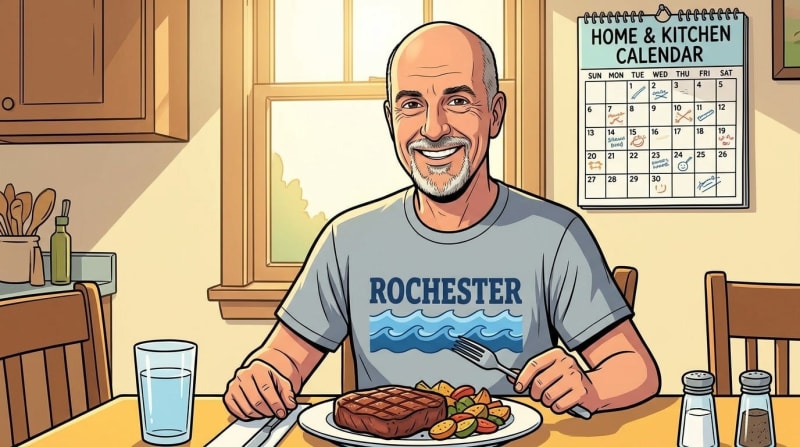
On May 22 — the same day as the PAH study — a separate clinical trial published findings that complicated a different piece of conventional health advice. Adults who ate 6–7 ounces of beef daily for a full month showed no worsening in blood sugar control.
To be precise about what this finding says and doesn't say: this is one trial, one population, one month. It does not overturn the broader literature on red meat and metabolic health. What it does do is challenge the blanket narrative that red meat predictably worsens blood sugar — and it does so at a daily intake amount that exceeds most moderation guidelines.
For people who grill beef regularly through a summer that might peak at several sessions per week, this is genuinely worth knowing. The conversation about red meat and long-term health is more nuanced than either advocates or critics tend to present in a headline.
The trial participants consumed substantially more beef daily than most guidelines frame as moderate, and blood sugar control did not worsen over a month. That is a real finding, and it belongs in the picture — alongside, not instead of, the fuller body of evidence on red meat and long-term cardiovascular and metabolic health.
Is Grilling Bad for You? Here's the Honest Bottom Line

Is Grilling Bad for You? Here's the Honest Bottom Line
Grilling is not a health crisis. That is the honest read of the evidence, including the new May 2026 research.
It is, accurately, a dose-and-method question. The chemistry is real and well-understood. The interventions available to a home cook are genuinely effective — not marginally, but substantially. Marinate in something acidic or beer-based. Flip frequently. Trim fat. Use a drip pan. Consider gas when the flavor difference doesn't matter to you. Treat the char as the optional part it actually is.
None of that requires giving up the grill. It requires knowing what you're working with and making a few small choices before the food goes on.
What gets lost in every annual grilling-and-cancer story cycle is what the grill actually is: a gathering place. The food is the medium, not the point. The point is the backyard filling up with people who otherwise wouldn't have had a reason to show up on a random Saturday afternoon. The neighbors, the kids running through the yard, the conversation that only happens when everyone has something to do with their hands while they talk.
More knowledge about the chemistry doesn't have to mean more anxiety at the meal. It can mean a slightly different prep routine that makes the whole experience both more enjoyable and genuinely lower-risk. That is the gift the research actually offers — not a warning, but a set of tools that let you show up more fully to something that was already good.
"The science gives us tools, not verdicts. What to do with the backyard is still entirely up to you."
What does a summer weekend look like when you're showing up with a little more knowledge and a little less worry? That version of the cookout is already available — and the grill is already in the garage.
Content ID: ook8GOVE0NAhahaQMaCQmGyC
See an error? Tell us.
Keep Reading

What North Carolina's New Food Is Medicine Coalition Reveals About Building State Coalitions from Scratch

What the New FIMC Multi-State Evidence Report Reveals About FIM Cost Savings — and Why High-Acuity Patients Are the Key

Child Care Is the Largest Untapped FIM Delivery Platform — A New Report Shows What's Missing
Comments
Share with the Community