

Your Body Already Makes GLP-1: The Foods and Habits That Boost It Naturally
The Short Version
- The Mediterranean diet reduced cardiac risk by 30 percent in landmark research including the PREDIMED trial, outperforming GLP-1 medications, which reduced that risk by only 20 percent.
- Most American adults consume roughly 17 grams of fiber per day — about half the recommended amount — even though fiber is the single most powerful natural trigger of GLP-1 production.
- Eating vegetables before carbohydrates, not just alongside them, measurably raises GLP-1 levels and lowers post-meal blood glucose, according to a 2022 study.
- Taking 30 minutes to eat instead of rushing through a meal in 5 leads to greater GLP-1 secretion, because the hormone needs time to reach the brain and signal fullness.
- Natural GLP-1 responses peak around 59 picograms per milliliter, while even the lowest Ozempic dose produces semaglutide levels in nanograms — roughly a thousand times higher — so the honest case for food isn't speed, it's long-term health outcomes.
The Hormone Everyone Is Talking About

The Hormone Everyone Is Talking About
GLP-1 — glucagon-like peptide 1 — is a hormone your gut produces after you eat. Its job is to signal fullness, slow digestion, stimulate insulin release, and tell your brain to stop eating. It is, in the most literal sense, your body's natural "I'm full" message.
The drugs you've heard about — Ozempic, Wegovy, Mounjaro — work by mimicking this hormone and, crucially, by preventing the enzyme that normally breaks GLP-1 down within minutes from doing its job. The result is a sustained fullness signal that your body's own production can't maintain on its own. That's why the medications work so well for weight loss.
But here's what gets lost in the drug conversation: your body is already producing GLP-1 every time you eat. The question is whether what you eat — and how you eat it — is giving that system the inputs it needs to work well.
Fiber First

Fiber First
Fiber is the single most powerful natural trigger of GLP-1 production. When fiber reaches the gut, the bacteria living in your intestines ferment it and produce short-chain fatty acids — compounds like butyrate and acetate that directly stimulate GLP-1 release. More fiber, more fuel for that process.
The foods that deliver this most reliably are beans and legumes, vegetables, whole grains like oats and barley, nuts, and seeds. According to research published in The Conversation by nutrition researchers in January 2026, fiber is the most notable nutrient that can significantly increase GLP-1 — and eating at least one fiber-rich food at every meal is a practical target worth aiming for.
Most Americans fall far short. According to the Institute of Medicine and Academy of Nutrition and Dietetics, women should be getting 25 grams of fiber daily and men 38 grams. The average American adult consumes only about 17 grams per day — roughly half the recommended amount. Closing that gap is one of the highest-leverage nutritional moves available — and it costs nothing.
Healthy Fats and Protein
Healthy Fats and Protein
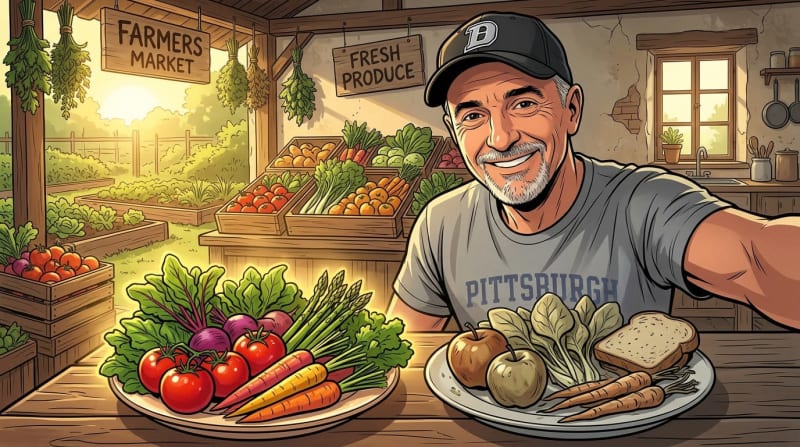
Monounsaturated fats are the second major dietary trigger for GLP-1. Olive oil and avocados are the clearest examples. Research reviewed by Ohio State's nutrition team consistently shows that these fats increase GLP-1 release and slow stomach emptying — which extends the fullness signal after a meal. Saturated fats, like those in butter and red meat, don't produce the same effect.
Protein also triggers GLP-1 — along with other satiety hormones — which is one reason high-protein meals tend to feel more satisfying. Eggs are a particularly well-studied example: a 2010 study by Ratliff et al. found that a week of daily egg breakfasts resulted in lower plasma glucose, reduced energy intake, and lower post-meal blood glucose compared to a bagel breakfast matched for total calories.
Fermented foods — yogurt, kefir, sauerkraut, kimchi — support the gut microbiome that makes GLP-1 production possible in the first place. A healthy gut microbiome is the infrastructure the whole system runs on.
How You Eat Matters as Much as What You Eat
How You Eat Matters as Much as What You Eat
This is the part of the GLP-1 conversation that rarely makes it into the drug ads, and it may be the most immediately actionable.
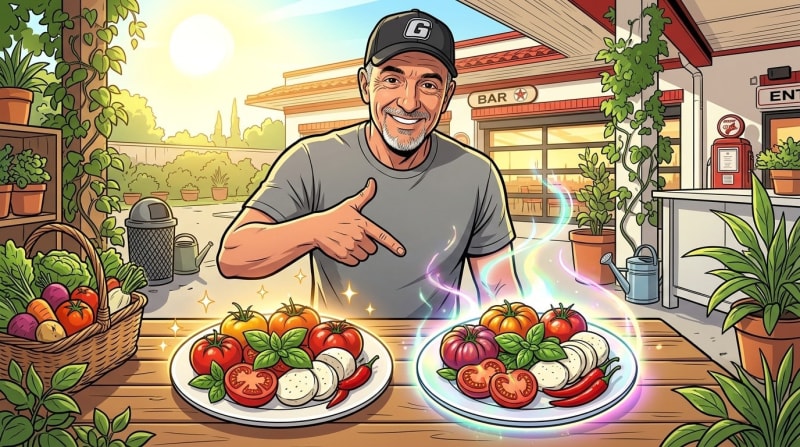
The order in which you eat your food changes how much GLP-1 your body produces. A 2022 study found that eating vegetables before carbohydrates significantly raised GLP-1 levels and lowered post-meal blood glucose compared to eating carbohydrates first. Starting your meal with a salad, vegetables, or a protein source before reaching for bread or rice is the same food — different order, measurably different hormonal response.
Eating speed matters too. Research cited by Ohio State's dietitians suggests that taking 30 minutes to eat, rather than rushing through a meal in 5, leads to greater GLP-1 secretion. The hormone needs time to signal the brain. Putting utensils down between bites, chewing thoroughly, eating without screens — these aren't just mindfulness platitudes. They're giving your body's satiety system time to do its job.
Timing also plays a role. GLP-1 follows a circadian rhythm, with higher levels during daytime hours. Eating earlier in the day, during daylight hours, tends to support stronger GLP-1 signaling than eating late at night.
The Honest Comparison — and Why It Still Matters
The Honest Comparison — and Why It Still Matters
Let's be clear about what natural approaches can and can't do. GLP-1 medications produce far higher and more sustained hormone levels than food ever will. The natural GLP-1 response from even a well-constructed Mediterranean-diet meal peaks at around 59 picograms per milliliter of blood serum. The lowest dose of Ozempic produces semaglutide levels measured in nanograms — a thousand times higher. If substantial weight loss is the goal, food alone will work more slowly than medication.
But here is the finding that reframes the whole conversation. When researchers compared the Mediterranean diet against GLP-1 medications on long-term cardiovascular outcomes — the measure that actually determines how long and how well you live — the dietary approach outperformed the drugs. The Mediterranean diet reduced the risk of cardiac events by 30 percent, drawing on landmark research including the PREDIMED trial. GLP-1 medications reduced that risk by 20 percent.
Weight loss will always be faster with medications. For overall health, the food-first approach is superior.
This is not an argument against GLP-1 drugs for people who need them. It's an argument for understanding what your body is already equipped to do — and giving it the inputs that let it do that work. The fiber, the olive oil, the avocado, the meal order, the slower pace at the table — these aren't consolation prizes for people who won't take medication. They're the foundation that makes any approach to metabolic health more effective.
What would it mean to trust that your body's own chemistry is more capable than the drug conversation suggests?
Content ID: xjp8dBtm1IjUrLCYb9IFDBJf
See an error? Tell us.
Keep Reading

What North Carolina's New Food Is Medicine Coalition Reveals About Building State Coalitions from Scratch

What the New FIMC Multi-State Evidence Report Reveals About FIM Cost Savings — and Why High-Acuity Patients Are the Key
Child Care Is the Largest Untapped FIM Delivery Platform — A New Report Shows What's Missing
Comments
Share with the Community