

Nitrates in Your Drinking Water and Dementia Risk: What the New 54,000-Person Study Found
The Short Version
- A 54,000-person Danish study followed for up to 27 years found that nitrates from drinking water raised dementia risk at concentrations as low as 5 mg/L — well below the US EPA limit of 10 mg/L and the EU limit of 50 mg/L.
- Nitrates from vegetables showed the opposite effect: participants eating the equivalent of one cup of baby spinach daily showed measurably lower dementia risk over the study period.
- The source of nitrates — not the total amount — is what determines the health outcome; vegetable nitrates arrive with antioxidants and polyphenols that convert them into brain-protective nitric oxide.
- Rochester residents on the city's municipal system (fed primarily from Hemlock Lake) face low water-nitrate risk; those on private wells should get a simple $20–$40 nitrate test.
- Arugula, baby spinach, celery, and beets are among the highest vegetable nitrate sources — everyday ingredients, not supplements — and the Brighton Farmers Market runs Sundays through November with SNAP/EBT accepted.
A new study from Denmark is quietly rewriting how we should think about nitrates in drinking water and their effects on long-term health — and it starts with a distinction most nutrition advice has overlooked. Researchers at Edith Cowan University, following more than 54,000 adults for up to 27 years, found that the source of nitrates matters more than the total amount. Nitrates from vegetables were associated with lower dementia risk. Nitrates from drinking water showed the opposite effect — at concentrations well below what current regulations flag as unsafe. Same compound, opposite outcomes.
That's the kind of finding that shifts the conversation. Not away from nitrates, but toward them — toward understanding what the food we already eat is doing.
What Are Nitrates and Why Does the Source Matter?
What Are Nitrates and Why Does the Source Matter?
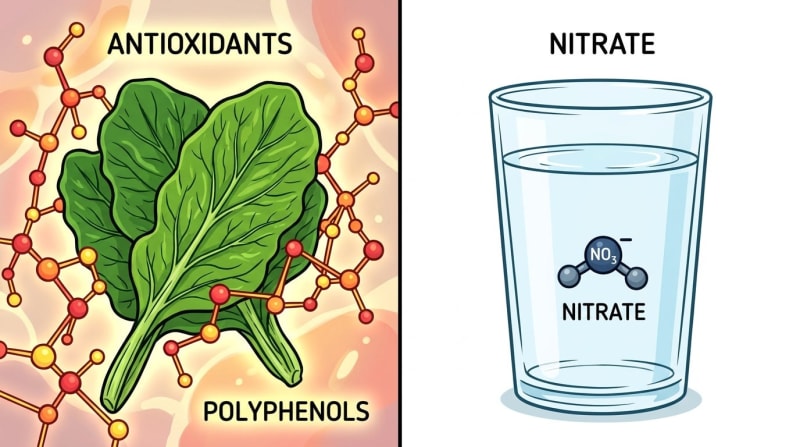
Nitrates (NO₃⁻) are nitrogen-oxygen compounds that occur naturally throughout the environment. Your body encounters them from three main directions: vegetables, where they form as plants draw nitrogen from the soil; drinking water, where they can enter through agricultural runoff and fertilizer leaching; and processed meats, where they're added as preservatives and color-fixers.
For years, health messaging around nitrates leaned negative — prompted largely by concerns about cured meats and nitrate-contaminated well water. The World Health Organization has long classified high nitrate concentrations in water as a health concern, especially for infants. There's an entire food labeling category — "uncured," "no added nitrates or nitrites" — built around consumer discomfort with the compound.
What this research suggests is that none of this is wrong, exactly — but it's incomplete. Vegetables don't just deliver nitrates. They deliver nitrates inside a matrix of antioxidants, polyphenols, and co-factors that appear to fundamentally change how nitrates behave in the body. Research has traced a specific pathway: dietary nitrates from vegetables get converted, via oral bacteria and stomach acid, into nitric oxide — a compound associated with healthy blood vessel function, circulation, and potentially cognitive protection. Water-sourced nitrates arrive without that matrix. So does the nitrate in a processed hot dog. The compound enters the body unaccompanied, and the effects differ accordingly.
Nutritional research has documented that vegetables account for the large majority of nitrate intake in most diets. Here is roughly where our nitrate exposure comes from, based on food composition research:
What would it mean to think of the spinach in your salad less as a side vegetable and more as a delivery system for something your brain specifically needs?
What the 54,000-Person Study Actually Found
What the 54,000-Person Study Actually Found
The Edith Cowan University study, conducted in partnership with the Danish Cancer Research Institute, followed 54,000+ Danish adults for up to 27 years. This is a longitudinal design — not a short-term intervention, but a multi-decade observation of how dietary and water exposures connect to dementia diagnosis over time. That design gives the associations real statistical weight.
The findings broke down across three nitrate sources:
Vegetable nitrates: Participants in the higher-intake ranges — roughly equivalent to one cup of baby spinach per day — showed measurably lower dementia risk over the study period.
Drinking water nitrates: Elevated dementia risk appeared at concentrations as low as 5 mg/L. The current EU regulatory limit sits at 50 mg/L. The US EPA Maximum Contaminant Level is 10 mg/L. The study is registering risk at a threshold that existing regulation doesn't treat as dangerous.
Processed meat nitrates: Also associated with increased risk, consistent with the broader body of research on cured and processed meats.
The contrast between regulatory thresholds and the study's risk threshold is worth sitting with:
Associate Professor Catherine Bondonno, who led the research, put it plainly: "Eating more vegetables and less red meat and processed meat is a sensible approach based on our findings."
That restraint — from a researcher who spent years on this data — is informative in its own right. She's not saying "avoid all nitrates." She's pointing at the source.
The Vegetables That May Protect Your Brain
The Vegetables That May Protect Your Brain
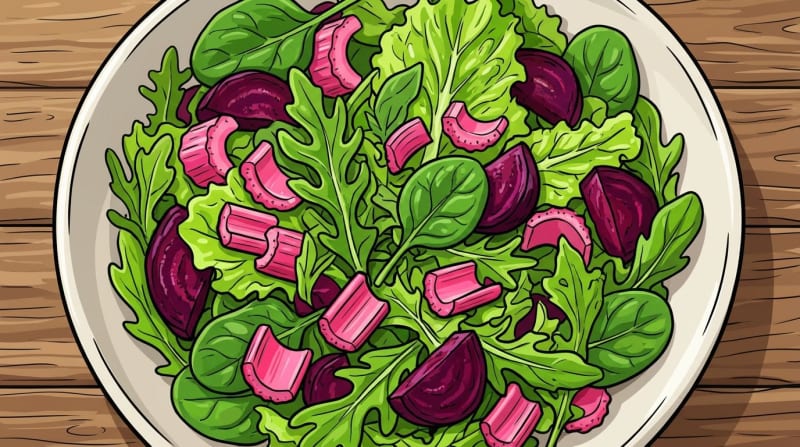
Baby spinach is the study's reference vegetable — roughly one cup daily as the protective threshold equivalent. But the category is wide.
Among the highest-nitrate vegetables, based on established food composition databases: arugula, baby spinach, celery, beet greens, and lettuce. These are everyday ingredients, not specialty supplements. They're things that anchor a salad, wilt into a pasta, or disappear into a smoothie without announcing themselves.
The mechanism connecting vegetable nitrates to brain health runs through nitric oxide production — the same pathway studied extensively in cardiovascular research. Work published in the journal Nitric Oxide and related literature documents how dietary nitrates from greens support blood vessel elasticity and blood flow to the brain. The co-factors — vitamins, polyphenols, and fiber that travel inside a leaf of spinach alongside the nitrate — appear to matter as much as the nitrate itself. Strip those out, and you lose the protection.
One cup of baby spinach per day clears the study's protective threshold on its own. A generous serving of arugula does the same. A half cup of roasted beets gets close.
The gift in this research isn't a new category of food. It's the confirmation that the vegetables most people already enjoy are doing something meaningful — and that more of them is a reasonable, accessible place to start.
What Rochester-Area Residents Should Know About Their Water

What Rochester-Area Residents Should Know About Their Water
Rochester's municipal water supply draws primarily from Hemlock Lake, a protected watershed in Livingston County that has long been considered one of the cleanest surface water sources in New York State. A small portion of the Rochester metro area draws from Lake Ontario, but Hemlock Lake is the dominant source for the city's system. New York State requires all municipal water providers to publish annual Consumer Confidence Reports — mailed to customers each year and available online — which include measured nitrate levels. For residents on the city's municipal system, historical nitrate readings have been well within US EPA limits.
The more directly relevant scenario is well water. Monroe County and its surrounding areas include significant agricultural land, and well water in farming regions can carry nitrate loads that municipal treatment systems don't face. Private wells are not subject to mandatory testing requirements — that responsibility falls entirely to the homeowner.
If your home uses a private well, a nitrate test is straightforward and inexpensive. The Monroe County Health Department can connect you to certified testing labs; tests typically run $20–$40. It's a small investment for information that a large longitudinal study now suggests matters for long-term cognitive health.
For those on municipal water in Rochester and other cities with tested public supplies, the more relevant action item from this research is on the plate, not the tap.
What to Do With This Information
What to Do With This Information
This is observational research — a study that tracks large populations over time and notes associations, not a randomized trial that proves causation. That's an important caveat, not a reason to dismiss the findings. A 54,000-person cohort followed for 27 years is meaningful data. The associations are consistent and directionally clear.
The actionable takeaway isn't complicated: more leafy greens, less processed meat, and a nitrate test if you're on a well.
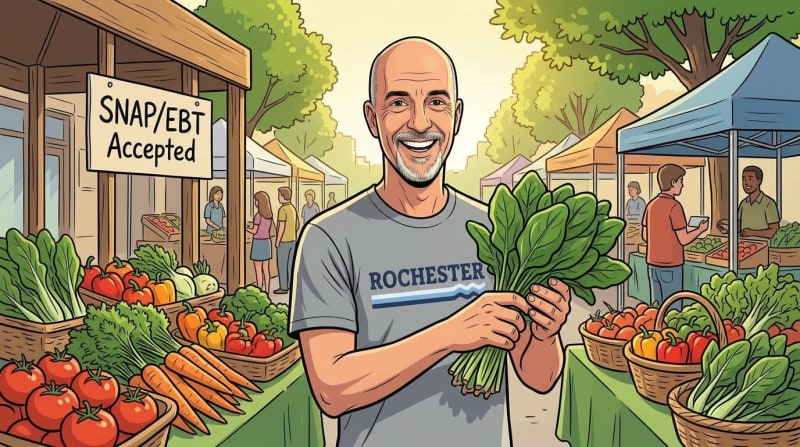
For those in the Rochester area, the Brighton Farmers Market runs every Sunday from 9am to 1pm through November 22, 2026, at 150 Sawgrass Drive — more than 50 vendors, with local produce that includes spinach, arugula, beet greens, and other high-nitrate vegetables. SNAP/EBT benefits are accepted with a $2 bonus for every $2 spent (up to $50 per day). Access to the protective foods this research highlights isn't restricted to specialty stores or high grocery budgets.
Here is how common vegetable servings compare to the study's protective threshold:
The vegetables at a Sunday morning market, the spinach in the freezer, the beets that are easier to roast than most people realize — these are already doing something. This research is just making the case for more of them, with more intention.
What would it mean to treat a bowl of greens not just as a healthy habit, but as an investment you're making in twenty years from now?
Content ID: M9C6NA5LJA6qpE9i4uHL1yuK
See an error? Tell us.
Keep Reading

What North Carolina's New Food Is Medicine Coalition Reveals About Building State Coalitions from Scratch

What the New FIMC Multi-State Evidence Report Reveals About FIM Cost Savings — and Why High-Acuity Patients Are the Key

Child Care Is the Largest Untapped FIM Delivery Platform — A New Report Shows What's Missing
Comments
Share with the Community