
The Biggest Produce Prescription Program You Are Not Tracking: Why WIC Belongs in Every FIM State Officer Portfolio
The Short Version
- WIC — the Special Supplemental Nutrition Program for Women, Infants, and Children — is the largest produce-prescription program in the US, delivering a defined fruit-and-vegetable cash benefit to nearly 7 million people annually.
- Only 56.1% of eligible individuals enrolled in WIC in 2023, leaving 5.2 million people with a legal right to this benefit unenrolled — a gap that ranges from 41.3% in Louisiana to 79.6% in Vermont.
- A proposed FY2027 budget cut would reduce WIC funding by $200 million and slice approximately 10% from the fruit-and-vegetable cash benefit — directly shrinking the produce prescription each enrolled participant receives.
- Every $1 invested in prenatal WIC services returns approximately $2.48 in lifetime medical, educational, and productivity savings — a ROI ratio that belongs on the first slide of any FIM budget presentation.
- For FIM state officers, closing the WIC enrollment gap is the highest-leverage produce-prescription expansion available: no new program, no new vendor infrastructure, no new appropriation required.
The largest food is medicine produce prescription program in the United States has been running for over fifty years. It currently serves nearly 7 million people — pregnant and postpartum women, breastfeeding mothers, infants, and children up to age five. It delivers a defined dollar benefit restricted to fresh fruits and vegetables, redeemable at authorized retailers in every state. Most FIM state officers, payers, and policy advocates know it by its initials: WIC — the Special Supplemental Nutrition Program for Women, Infants, and Children. What they may not have fully recognized is what WIC already is: the highest-enrollment produce-prescription infrastructure in the country, and a core lever in any serious FIM state portfolio.
WIC Already IS a Produce Prescription at Scale
WIC Already IS a Produce Prescription at Scale
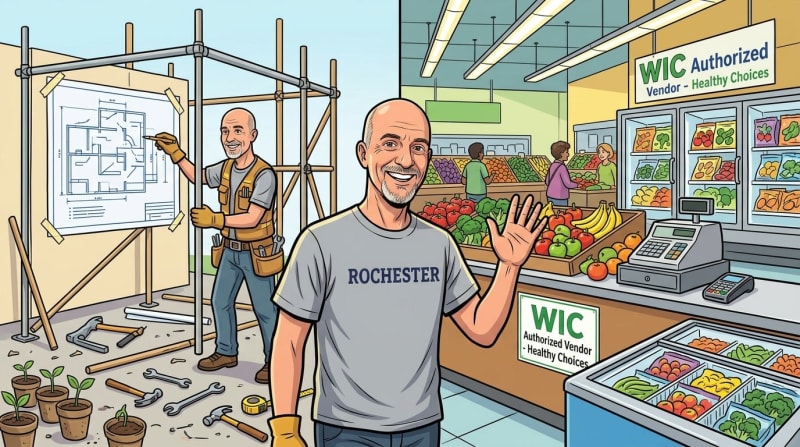
WIC's fruit-and-vegetable benefit — officially called the Cash Value Benefit (CVB) — works exactly the way a produce prescription does. Participants receive a defined monthly dollar amount. The benefit is restricted to fresh and frozen fruits and vegetables. It is redeemable at authorized vendors at the point of purchase, with no cash back and no substitution. The mechanism is structurally identical to produce-prescription programs that FIM state officers are piloting across the country today.
According to a June 2026 sign-on letter coordinated by FRAC, WIC currently serves nearly 7 million beneficiaries annually. The largest dedicated produce-prescription programs in the country reach tens of thousands of participants. WIC is operating at a scale those programs would need decades to approach.
Here is how the WIC-eligible population breaks down between those currently receiving benefits and those who qualify but are not enrolled:
FIM practitioners often build produce-prescription programs from the ground up — developing eligibility criteria, benefit structures, vendor authorization processes, and reporting systems. WIC has already solved every one of those problems. The infrastructure exists. The question is whether FIM portfolios are treating it as the program it already is.
The 5.2 Million Coverage Gap: WIC Outreach as a FIM Enrollment Lever
The 5.2 Million Coverage Gap: WIC Outreach as a FIM Enrollment Lever
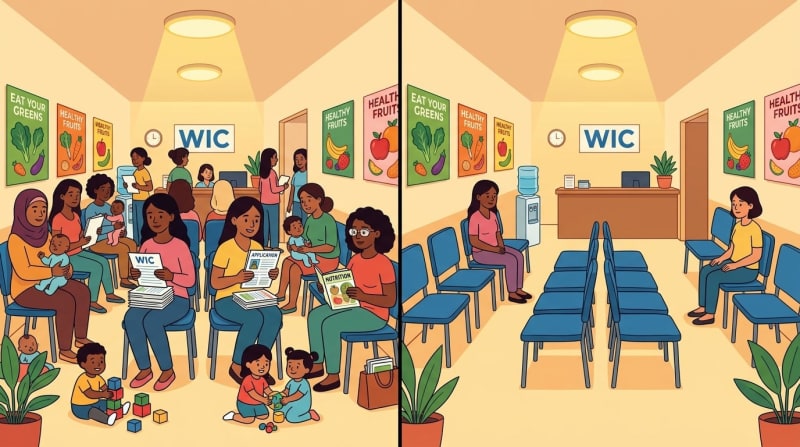
The most immediately actionable opportunity in WIC is not its design — it is its reach. According to FRAC's analysis of 2023 WIC participation data, only 56.1% of WIC-eligible individuals were enrolled that year. Approximately 5.2 million people who are eligible for WIC are not enrolled.
That gap varies enormously by state. Vermont reached 79.6% of its eligible population in 2023. Louisiana reached 41.3%.
The 38-point spread between Vermont and Louisiana reflects solvable problems: language barriers, transportation gaps, documentation requirements, stigma, limited clinic capacity. The federal appropriation already covers every eligible person who enrolls. This is not a funding gap — it is an outreach and policy gap.
For a FIM state officer, that reframing matters. Designing a new produce-prescription pilot for a hundred participants takes time, funding, and vendor infrastructure built from nothing. Partnering with a WIC agency on enrollment outreach reaches people who already have a legal right to this benefit, using infrastructure that already exists. The per-person cost of WIC outreach is a fraction of the per-person cost of standing up a new program.
What would it mean for your state's FIM outcomes if WIC participation moved 10 percentage points toward Vermont's ceiling?
The FY2027 Threat: A 10% Cut to the Fruit and Vegetable Benefit
The FY2027 Threat: A 10% Cut to the Fruit and Vegetable Benefit
WIC's status as the country's largest produce-prescription infrastructure does not make it invulnerable. A proposed FY2027 budget would provide $200 million less than the $8.2 billion enacted for FY2026. Embedded in that reduction is an approximately 10% cut to the WIC Cash Value Benefit — the fruit-and-vegetable benefit at the center of WIC's FIM relevance.
A 10% reduction to the CVB does not reduce WIC's enrollment. It reduces the dollar value of the produce prescription each participant receives. For a program already serving only 56% of its eligible population, a benefit cut compounds the problem: the people who are enrolled receive less fresh produce at the moment it matters most.
The advocacy response has been substantial. A June 2026 sign-on letter organized by FRAC gathered signatures from 344 national, state, and community-based organizations urging Congress to protect WIC's funding and preserve its fruit-and-vegetable benefit.
"WIC has been a bedrock of our nation's health for more than 50 years, and we cannot afford to weaken the program's reach or its benefits."
— Crystal FitzSimons, FRAC President, June 1, 2026
For FIM state officers and payers, this is not an external policy debate. WIC is a partner infrastructure. A cut to the CVB directly reduces the produce-prescription benefit the highest-need populations in your state receive. FIM portfolios that treat WIC as someone else's issue will feel that cut without having had a voice in preventing it.
The FIM ROI Case: What WIC's Numbers Show
The FIM ROI Case: What WIC's Numbers Show
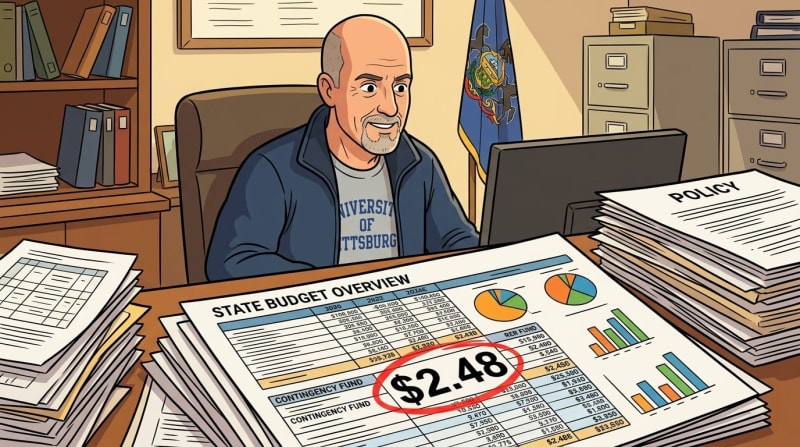
The cost-savings argument for WIC is as strong as anything in the FIM evidence base. FRAC's 2026 analysis puts the prenatal return at approximately $2.48 in medical, educational, and productivity savings over a child's lifetime for every $1 invested in prenatal WIC services.
That return compounds across millions of beneficiaries. Zoom further out: the Center for Health Care Strategies' July 2026 policy framework estimates that diet-related conditions drive over $1.1 trillion in annual healthcare costs nationally. WIC's fruit-and-vegetable benefit is not supplemental noise at the margins of that figure — it is a direct, evidence-backed intervention in the conditions that generate it.
CHCS also documents that FIM interventions combined with nutrition assistance programs have shown decreased emergency department utilization and lower downstream costs — the same evidence payers use to justify produce-prescription and medically tailored meal investments. WIC belongs in that evidence base, and the $2.48 return should be on the first slide of any FIM budget presentation.
What would it change in your payer relationships or legislative testimony if that number became a standard part of how your program makes the case for WIC?
What FIM State Officers Should Do Now
The coverage gap is a call to action, not a disclosure. Here is what acting on it looks like.
Audit your state's WIC participation rate. FRAC publishes annual state-level enrollment data on WIC participation. Find your number and compare it to Vermont's 79.6% ceiling. The distance between those two figures is the produce-prescription expansion that requires no new program to pursue.
Build co-enrollment pathways. The populations WIC serves — pregnant and postpartum women, young children — are often simultaneously enrolled in or eligible for Medicaid. WIC agencies and Medicaid plans operate in the same communities. Co-enrollment infrastructure exists in some states; in others, the pathway is open. Partnering with local WIC agencies on joint outreach creates a multiplier effect for both programs and moves the enrollment needle for people who already qualify.
Show up in the FY2027 appropriations conversation. The 344 organizations that signed FRAC's June 2026 letter represent a broad coalition — but FIM state officers and payer networks add a specific voice: the documented $2.48 ROI argument that WIC's fruit-and-vegetable benefit is not a line item to be trimmed, but a produce-prescription investment with a measurable return.
The 5.2 million people who are WIC-eligible and not enrolled are not waiting for a new program. They are waiting to be found. Who in your state is going to go find them?
Content ID: caRjU2r8CaFFeE5ivLNXM2hb
See an error? Tell us.
Keep Reading
What North Carolina's New Food Is Medicine Coalition Reveals About Building State Coalitions from Scratch
What the New FIMC Multi-State Evidence Report Reveals About FIM Cost Savings — and Why High-Acuity Patients Are the Key
Child Care Is the Largest Untapped FIM Delivery Platform — A New Report Shows What's Missing
Comments
Share with the Community