
The Farmers Market Trap: How to Use Farmers Market Vegetables All Week Long
The Short Version
- The farmers market trap has a name — the display effect triggers aspirational buying that doesn't survive contact with a real Tuesday dinner, and consumers account for 43 percent of all US food waste, more than farms, retail, and food service combined.
- Fresh farmers market produce is often more perishable than supermarket varieties, bred for flavor rather than shelf stability — buying the good stuff means committing to a plan before you go.
- Tomatoes, stone fruit, and basil should never go in the refrigerator; a jar of water on the counter keeps basil fresh 7 to 10 days while the fridge turns it black in two.
- Spinach begins losing nutrients within hours of harvest and can lose more than half its folate content within 8 days — buying local only delivers the nutrition if you cook it within the week.
- Three recipes absorb almost any combination of leftover vegetables without a separate grocery run: the grain bowl, the frittata, and the ten-minute stir-fry.
- The Brighton Farmers Market (Sundays 9am–1pm at 150 Sawgrass Drive through November 22) offers a dollar-for-dollar SNAP bonus up to $50 per visit, doubling the produce budget for households using EBT benefits.
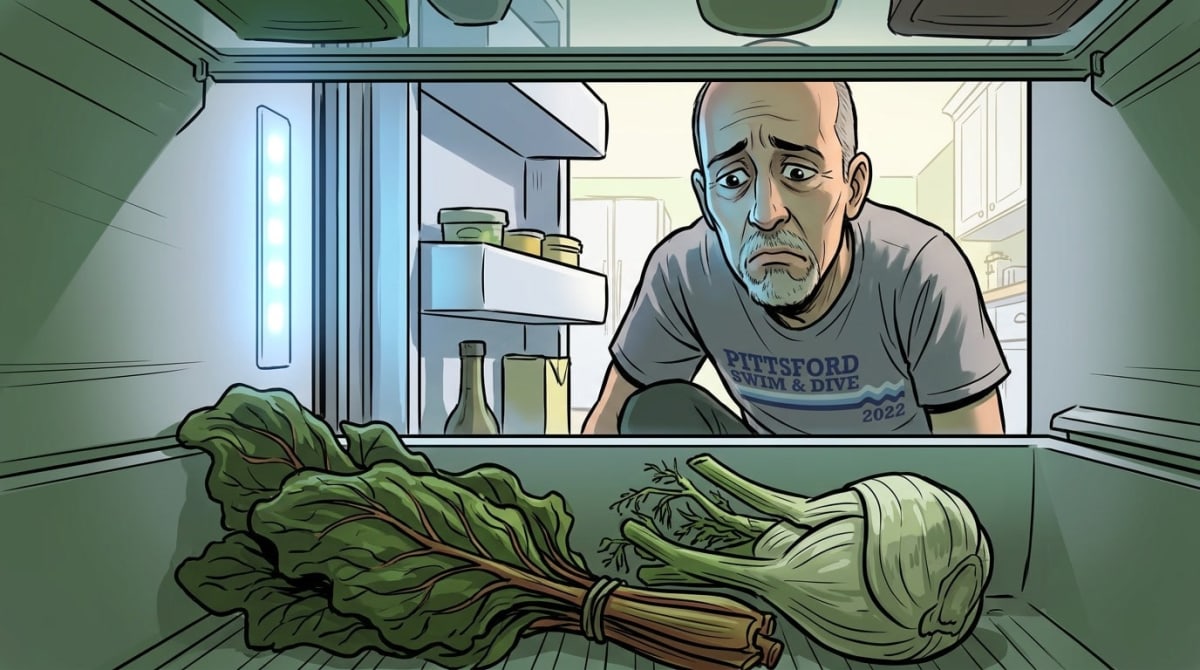
Most of us who shop at farmers markets know the pattern. You arrive on a Sunday morning when the tables are heaped and the vendors are easy to talk to and everything looks like what food is supposed to look like — tomatoes in colors the supermarket doesn't carry, herbs bundled thick and fragrant, zucchini so fresh it still has the flower attached. You leave with more than you planned. The week starts with good intentions. By Wednesday you are staring at a wilting bunch of chard and a fennel bulb you had real plans for sitting in the crisper drawer, quietly losing the argument with entropy.
This is the farmers market trap — and understanding what causes it changes how to use farmers market vegetables through the entire week, not just the first two days.
Why We Buy More Than We Use (And Why That Is Not Entirely Our Fault)
Why We Buy More Than We Use (And Why That Is Not Entirely Our Fault)
Food researchers call it the display effect. A well-organized farmers market doesn't just sell produce — it sells a vision of the week ahead. When you pick up a bunch of dinosaur kale, you're buying the version of yourself who makes a beautiful grain bowl on a Tuesday night. That version is real. It just has a lot of competition from the version of you who gets home at 6:30 and wants pasta.
The scale of this gap shows up in the numbers. According to the USDA Economic Research Service, Americans waste between 30 and 40 percent of the food supply. Consumer and household decisions account for the largest share of where that waste happens — more than farms, retailers, and food service combined, according to ReFED's 2021 food waste analysis.
The freshness illusion compounds things. Farmers market produce really is fresher than most of what you find at the supermarket — but fresh doesn't mean indestructible. A head of lettuce cut this morning and sold at a Sunday market begins its deterioration the moment it left the ground. Some farmers market varieties are actually more perishable than commercial ones, bred for flavor rather than shelf stability. Buying the good stuff means committing to using it.
The gap between what you intend to cook and what you actually cook on a Tuesday is not a character flaw. It's a planning mismatch. Fixing it starts before you go to the market, not after you get home.
Before You Go: A Different Way to Shop
Before You Go: A Different Way to Shop
The most useful shift is what I think of as the one-meal anchor method. Before heading to the market, identify one confirmed dinner — a real one, on a real night, with a real plan. Build the market list around that meal first. Everything else is a bonus.
This does two things. It guarantees a use for at least one substantial purchase. And it gives you a conversation anchor with vendors. "I'm making a stir-fry on Thursday — what's at its peak right now that would work?" is a much better question than "what looks good?" Farmers know their crops better than anyone. Most are glad to tell you what peaked this week, what will hold through the weekend, and what you should buy today because it won't be there next week.
As a general rule: buy as much as you want of things with long shelf lives — hardy root vegetables, winter squash, dried beans, garlic — and cap yourself at one bunch of anything fragile. Leafy greens, stone fruit, fresh corn, tender herbs: these need a plan within 48 to 72 hours or they are on borrowed time.
The question "will I actually cook this by Wednesday?" is more useful than "does this look beautiful?" Both are worth asking. Only one saves you from the Thursday night defeat.
Storage That Actually Works
Storage That Actually Works
The most common farmers market mistake is refrigerating everything. The refrigerator feels like the responsible choice. For a significant category of produce, it is exactly the wrong one.
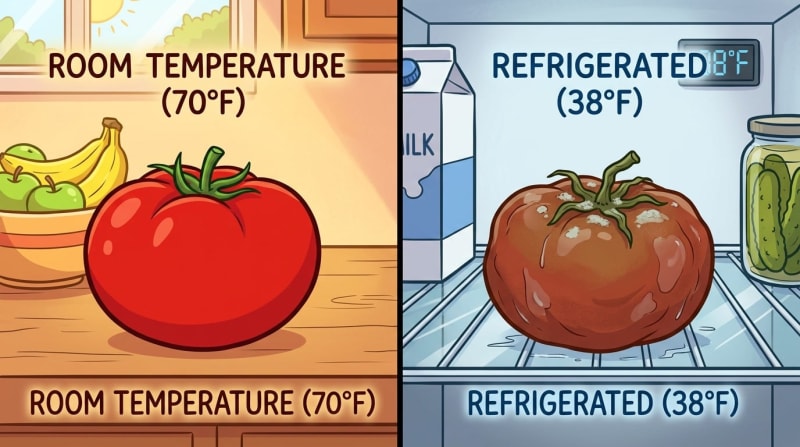
Tomatoes should never go in the refrigerator. Cold temperatures stop the ripening process and break down the aromatic compounds responsible for flavor. A tomato stored at room temperature is a completely different — and better — food than the same tomato stored at 38 degrees. Postharvest research from UC Davis confirms what any experienced cook suspects: cold damage to tomatoes is irreversible. Stone fruit — peaches, nectarines, plums — follows the same logic. Let them ripen on the counter, then refrigerate and use within a day or two after they reach peak ripeness.
Basil hates the cold. Store it like cut flowers: stem-end in a small jar of water at room temperature, away from direct sun. Treated this way, a bunch of basil lasts a week to ten days. In the refrigerator, it turns black within two days.
The freezer is the farmers market ally most people forget about. A glut of greens — kale, chard, collards, spinach — can be blanched and frozen in fifteen minutes. Blanching, a brief dip in boiling water followed by an ice bath, stops the enzymes that cause deterioration and preserves both color and nutrients. Once frozen flat on a sheet pan and transferred to bags, they keep for months and go directly into soups, smoothies, and cooked dishes without thawing. This is how a farmers market haul becomes a winter pantry.
For herbs with woody stems — thyme, rosemary, sage — wrap loosely in a slightly damp paper towel, seal in a bag, and refrigerate. Tender herbs like cilantro and parsley do well in the same jar-of-water method as basil.
What would your farmers market habit look like if storage became the first decision after unpacking the bags, not an afterthought?
How to Use Farmers Market Vegetables: The Weekly Rhythm That Closes the Loop
How to Use Farmers Market Vegetables: The Weekly Rhythm That Closes the Loop
The best system isn't a complicated meal plan. It's a single Wednesday habit.
Wednesday is your market produce check-in day. Open the crisper. Look at what you bought Sunday. Identify what needs to be used by Friday. That becomes the priority for the next two nights. Nothing else about the week needs to change.
Three recipes function as universal farmers market rescue moves because they absorb almost any vegetable in any combination:
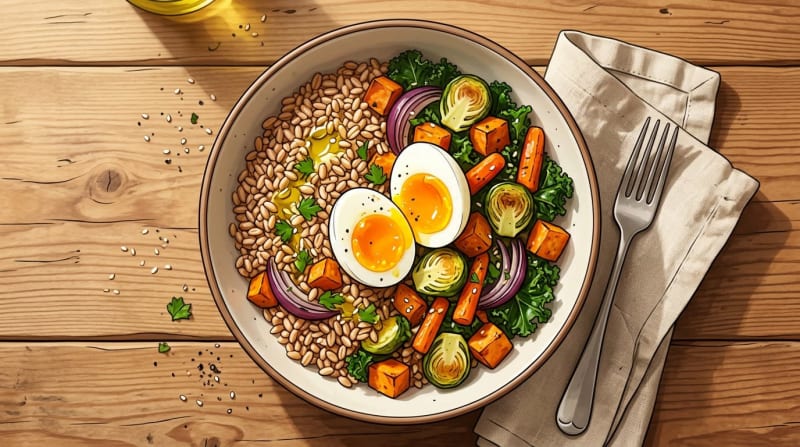
The grain bowl starts with a pot of farro, quinoa, or whatever grain you have on hand. Roast any vegetables that need using — at 400 degrees, nearly every farmers market vegetable roasts well and develops flavor it doesn't have raw. Add a soft-boiled egg, something pickled if you have it, a drizzle of tahini or good olive oil. The grain bowl works with five different vegetables or one. It never requires a separate grocery run.
The frittata is six eggs plus whatever is in the crisper. Sauté the vegetables first until they're tender and have some color, pour the beaten eggs over, finish under the broiler or in a 375-degree oven for eight minutes. It takes twenty minutes and holds well as lunch the next day.
The quick stir-fry is high heat, a splash of soy or fish sauce, garlic, and whatever you have cut into uniform pieces. Keep rice going in a rice cooker and a stir-fry is a ten-minute dinner. It is the fastest path from a wilting vegetable to an actual meal.
None of these recipes require the farmers market vegetable to be specific. They require it to be cooked. That's the entire point.
Buying local and cooking within the week isn't just about reducing waste — it's about getting the nutrition you paid for. Postharvest research from UC Davis shows that spinach begins losing nutrients within hours of harvest. Here is how folate retention declines under typical home storage conditions, based on postharvest science literature:
The produce that went into your body on Monday and the produce that went into the compost on Friday came from the same bunch. The difference is a Wednesday check-in and fifteen minutes.
The Brighton Farmers Market: What Is Worth Knowing Before You Go

The Brighton Farmers Market: What Is Worth Knowing Before You Go
If you're in the Rochester area, the Brighton Farmers Market is one of the community anchors worth building a Sunday around. The summer 2026 season runs Sundays from 9am to 1pm, April 26 through November 22, at the Golisano Institute at 150 Sawgrass Drive in Rochester.
The market accepts SNAP and EBT benefits — and it goes further than acceptance. For every two dollars spent in SNAP benefits, shoppers receive a two-dollar bonus check, up to fifty dollars per day. That program means a household using SNAP can effectively double the value of their local produce budget at the market. It's the kind of detail that doesn't always get highlighted, but it changes who gets to be part of the farmers market community.
On June 6, the market hosts a Fur-Ever Homes For All adoption fair with Girl Scout participation — a reminder that a farmers market is never only about produce. It's about what happens when a community decides to show up in the same place, on the same morning, through a whole season. The vendors who have been there every Sunday know what's at peak and they are glad to tell you. That conversation is part of what you're buying when you buy local.
The trap is real. So is the way out of it. What would it take to leave the market this Sunday with a plan that actually follows you home?
Content ID: CKdviImGNy2OnrS04lfvq010
See an error? Tell us.
Keep Reading
What North Carolina's New Food Is Medicine Coalition Reveals About Building State Coalitions from Scratch

What the New FIMC Multi-State Evidence Report Reveals About FIM Cost Savings — and Why High-Acuity Patients Are the Key

Child Care Is the Largest Untapped FIM Delivery Platform — A New Report Shows What's Missing
Comments
Share with the Community