
The Age-Two Cliff: What Tufts FIM Institute Research Means for How We Design Food Is Medicine Programs for Children
The Short Version
- U.S. children under two consume 2.7 servings per day of healthy plant-based foods — among the world's highest — then drop to 1.8 servings by adolescence, one of the steepest pediatric nutrition cliffs globally.
- This research comes from the Tufts Food is Medicine Institute itself, making the pediatric nutrition gap a direct signal about where the FIM field's next design work belongs.
- The decline concentrates in high-income countries, which rules out poverty as the driver and points to the food environment — school cafeterias, vending machines, peer norms — as where intervention leverage lives.
- Current FIM programs are built almost entirely for adults; the roughly ages-five-to-twelve window where the decline accelerates is the gap the field has not yet addressed.
- The CHCS FIM State Officer Program is building 10-state Medicaid FIM infrastructure starting January 2026, but pediatric mandates are largely unwritten — that is both the gap and the opening.
The finding stops you: American children under two eat better than almost anyone on the planet. According to research published July 2026 from the Tufts Food is Medicine Institute, U.S. infants consume 2.7 servings per day of healthy plant-based foods — placing them among the world's highest. By adolescence, those same children consume just 1.8 servings per day, falling to among the world's lowest globally.
That gap is the most important design signal for food is medicine pediatric programs that the FIM field has received in years.
What the Research Found: A Nutrition Cliff After Infancy

What the Research Found: A Nutrition Cliff After Infancy
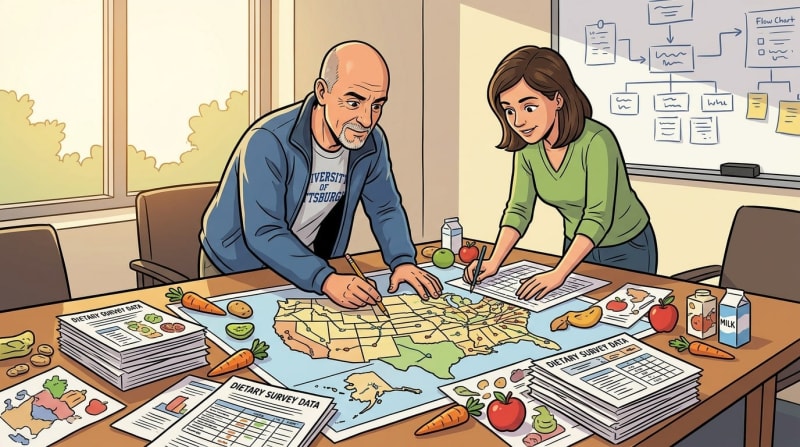
The Tufts FIM Institute study is built on an unusually strong evidentiary foundation. Researchers incorporated data from more than 1,200 dietary surveys across 185 countries, tracking consumption trends of five healthful plant-based food categories between 1990 and 2018 — 28 years of data and a near-global sample. The scope makes the finding hard to explain away as a local artifact.
What the data shows: U.S. children under two consume 2.7 servings per day of healthy plant-based foods. Between ages 2 and 19, that drops to 1.8 servings per day — a 33 percent decline across a single developmental window, taking children from among the highest intake rates globally to among the lowest.
Lead researcher Sydney Yearley, from Tufts' Clinical and Translational Science MD/PhD program, put the stakes plainly: "Dietary habits established during childhood can influence health throughout life, yet we found that consumption of healthy plant-based foods remains low among youth across the globe."
The children eating 2.7 servings a day before age two are doing something right. The research doesn't treat them as deficient — it treats what happens after age two as the problem worth solving. That framing matters for how FIM programs get designed.
Who Conducted It — and Why FIM Practitioners Should Pay Attention
Who Conducted It — and Why FIM Practitioners Should Pay Attention
This is not a general nutrition study that happens to have implications for food is medicine. It comes from the Food is Medicine Institute itself, at the Gerald J. and Dorothy R. Friedman School of Nutrition Science and Policy at Tufts University. The senior author is Dariush Mozaffarian, cardiologist and director of the Tufts FIM Institute — the field's central academic authority on program evidence in the United States.
That provenance changes the reading. When Mozaffarian's team publishes research on pediatric plant food intake, they are not publishing into a general nutrition conversation. They are publishing into the FIM field's own research agenda — signaling where the field's next design questions belong.
FIM practitioners who have spent the last several years building programs for adults — medically tailored meals for the chronically ill, produce prescriptions for seniors and pregnant individuals, food farmacies anchored in primary care — should read this as a signal that the Institute sees a pediatric gap. The benchmark data to document that gap now exists. What the field builds in response is the open question.
The Pattern That Distinguishes the U.S. from Other Countries
The Pattern That Distinguishes the U.S. from Other Countries
The cross-national dimension adds something that domestic nutrition studies can't provide. The age-related decline in healthy plant food intake is not a universal pattern — it is concentrated in high-income countries. Lower-income countries show different trajectories.
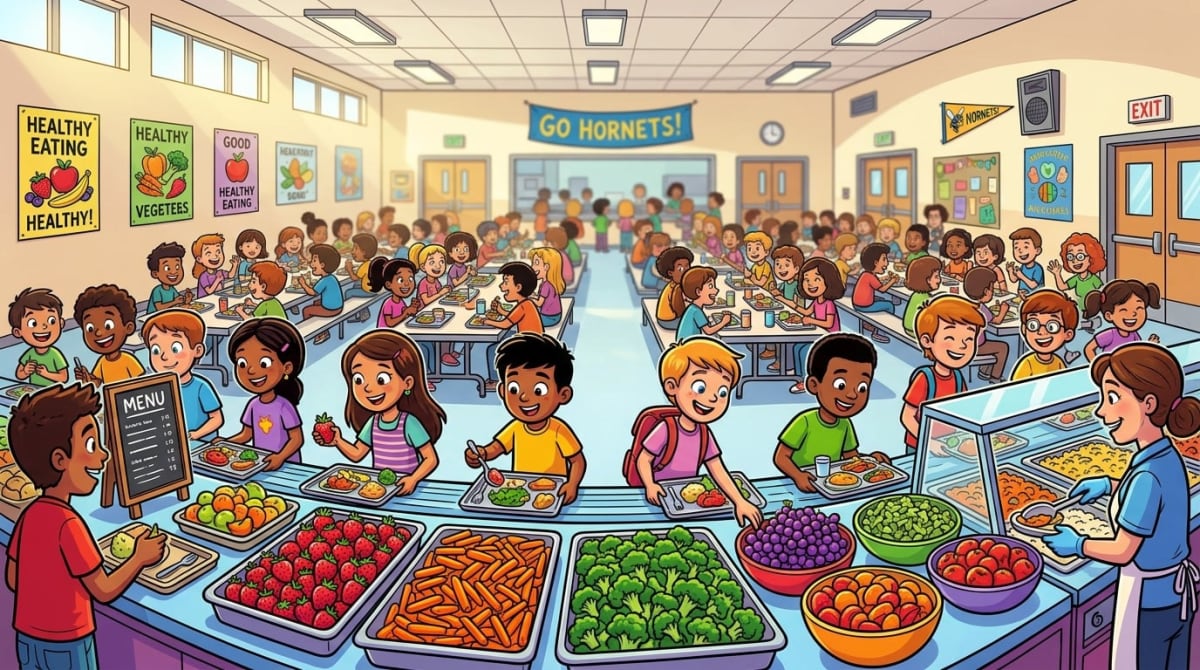
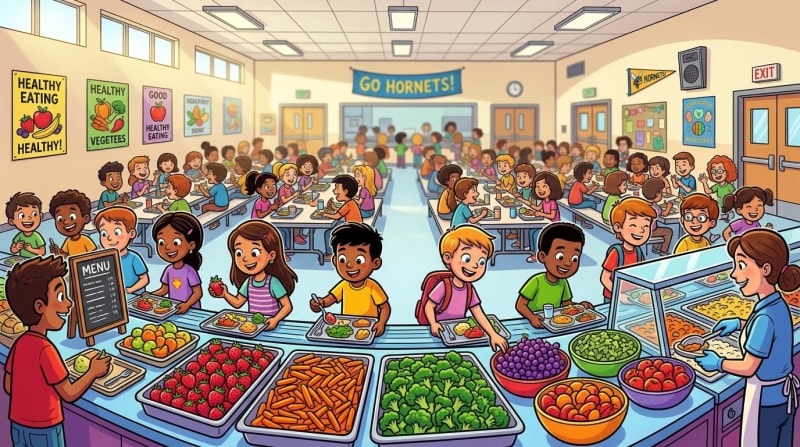
This rules out poverty as the primary driver of the U.S. adolescent decline. American families have more resources and more diverse food options than families in most of the countries that outperform the U.S. in adolescent plant food intake. What American school-age children also have — increasingly — is a food environment saturated with ultra-processed products: in vending machines, cafeteria lines, convenience stores, and social settings where peer norms around food form quickly and durably.
The decline happens somewhere between the high chair and the middle school cafeteria. The research doesn't pinpoint the exact inflection point — that's the next study. But the cross-national comparison tells us that the food environment, not the economic environment, is where the leverage lives. And food environments can be changed. That's the possibility this research opens.
"Our findings support the importance of identifying gaps and advancing solutions to advance the consumption of minimally processed, healthy plant-foods for children globally."
— Tufts Food is Medicine Institute research team
The Program Design Gap: Where Food Is Medicine Pediatric Programs Are Missing the Window
The Program Design Gap: Where Food Is Medicine Pediatric Programs Are Missing the Window
Here is the honest assessment: food is medicine pediatric programs, as a category, are significantly underdeveloped relative to what the Tufts data suggests the need is.
Current FIM interventions are built predominantly for adults. Medically tailored meals target chronically ill Medicare patients. produce prescription programs focus on seniors, people managing diabetes or hypertension, and pregnant individuals. The FIM evidence base — the trials that payers and policymakers cite when deciding whether to fund programs — is built almost entirely on adult populations.
If American children are eating well at age two and poorly by age eight, then the inflection point — the moment where FIM programs could intervene and hold the trajectory — falls somewhere in middle childhood. That is roughly ages five through twelve. That is the window that current FIM program portfolios are largely missing.
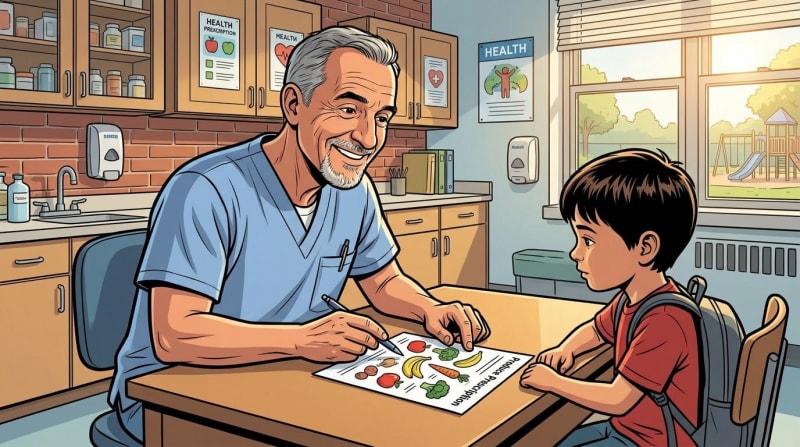
The design question gets specific fast: What does a produce prescription look like for a school-age child? Is it a benefit delivered to the family, or through the school? Who prescribes it — a pediatrician, a school nurse, a SNAP-Ed educator? Who pays — Medicaid, a state FIM fund, a school district wellness budget? The Tufts research gives the "why" for pediatric FIM. Program designers now need to build the "how."
Implications for State FIM Officers and Medicaid Payers

Implications for State FIM Officers and Medicaid Payers
The infrastructure for pediatric FIM is closer than it might look.
The CHCS Food is Medicine State Officer Program, launched in January 2026, is a three-year initiative funded by a $10 million Food is Medicine Impact Fund from the Rockefeller Foundation and Builders Vision. It is supporting up to ten states in hiring dedicated FIM leaders with the explicit goal of advancing food is medicine within Medicaid. These state officers are positioned to move FIM from pilots to lasting policy. Their pediatric mandate, however, is largely unwritten. That is both a gap and an opening.
WIC reaches families through a child's fifth birthday — covering the years when the Tufts data says American children are eating well. Then WIC ends. The National School Lunch Program provides food access to millions of children daily but lacks the clinical integration and prescription-model design that give FIM programs their distinctive evidence base. Summer EBT and SNAP-Ed programs occupy the gap — federally funded, reaching children in the critical age window, but not designed as evidence-based FIM interventions.
State FIM officers are uniquely positioned to map these connections. They sit at the intersection of Medicaid policy, public health infrastructure, and food access administration. A pediatric FIM scan — identifying which existing programs touch children between ages two and twelve and asking which of them could be redesigned or extended as FIM interventions — would be a concrete early deliverable for a state FIM office that is otherwise building adult program infrastructure.
What WIC hands children off to matters. What the school lunch program does with the following decade matters. State FIM officers who build a map of the pediatric handoff chain will be positioned to act when the field looks up and asks: what about the kids?
The Researchers' Call and What FIM Stakeholders Should Do With It
The Researchers' Call and What FIM Stakeholders Should Do With It
The Tufts FIM Institute team was explicit: the findings "support the importance of identifying gaps and advancing solutions to advance the consumption of minimally processed, healthy plant-foods for children globally."
That is a call to action directed at this field. The benchmark they have built — data from more than 1,200 dietary surveys, 185 countries, tracked across 28 years — gives advocates, payers, and program designers a foundation that didn't exist before this July. The argument for pediatric FIM investment is no longer theoretical; it is quantified, cross-nationally validated, and sourced from the FIM field's own research institution.
For FIM operators and payers considering where to direct program investment: start by mapping what already exists. Commission a pediatric FIM scan for your state or network. Map which existing WIC-aligned and school nutrition programs could be redesigned as FIM interventions. Ask whether your state FIM officer has a pediatric mandate — and if the answer is no, ask what it would take to write one.
The children are already eating well at age two. The food environment changes what happens next. Food is medicine programs are one of the few interventions positioned to meet school-age children with a different offer at the moment the decline begins. The research has made the case. What happens now is a choice about where to build.
Content ID: cqWGeHjprSM4QPuccxXSs9eO
See an error? Tell us.
Keep Reading

What North Carolina's New Food Is Medicine Coalition Reveals About Building State Coalitions from Scratch

What the New FIMC Multi-State Evidence Report Reveals About FIM Cost Savings — and Why High-Acuity Patients Are the Key

Child Care Is the Largest Untapped FIM Delivery Platform — A New Report Shows What's Missing
Comments
Share with the Community