

Soluble vs. Insoluble Fiber: The Difference That Actually Changes Your Gut
The Short Version
- The standard 25-38g daily fiber recommendation was built on cardiovascular and colorectal research — not microbiome science, which finds that fiber variety matters more than total grams.
- Soluble fiber forms a viscous gel that slows glucose absorption and feeds gut bacteria that produce butyrate, the primary fuel for the cells lining your colon.
- Insoluble fiber doesn't feed bacteria — its job is physical: it speeds intestinal transit and reduces how long waste stays in contact with the colon wall, which is central to its colorectal protection benefit.
- Cooked-and-cooled starches (potatoes, rice, legumes) contain more resistant starch than their hot counterparts — same food, different temperature, genuinely different effect on gut bacteria.
- Low-carb diets typically remove the most concentrated soluble fiber sources (oats, lentils, barley) while leaving insoluble fiber intact — a gap that chia seeds, flaxseeds, and avocado can help fill.
The nutrition label on your oatmeal and the one on your wheat bran list the same column: dietary fiber. Same category, possibly similar gram counts. But what happens inside your gut after each one is almost nothing alike — and the practical difference between soluble vs insoluble fiber is exactly the kind of thing that changes which foods actually end up in your cart.
This isn't a deep dive for nutrition specialists. It's a working map of two mechanisms that are already operating in your body every time you eat plants, and understanding them gives you something a gram target alone never can.
Why Fiber Type Matters More Than Fiber Amount

Why Fiber Type Matters More Than Fiber Amount
Most of us learned to think about fiber as a single substance with a single job. Eat more of it, stay regular, call it good. The recommended daily target — 25 grams for women, 38 for men — comes from decades of observational research linking higher fiber intake to lower rates of cardiovascular disease and colorectal cancer. That research is solid. But the target says nothing about what kind of fiber is doing that work, and the kind is where the biology actually lives.
Average fiber intake in the United States sits around 15 grams per day for women and 18 for men — roughly 60% of the recommendation across both genders. Closing that gap is genuinely worth doing. But newer gut microbiome research reveals something the gram target doesn't capture: different fiber types work in different parts of the digestive tract, by different mechanisms, and produce different outcomes. Simply adding more fiber without knowing which type may not deliver what you're after.
The fundamental distinction comes down to fermentability. Some fibers are broken down by gut bacteria and transformed into compounds that shape your health from the inside. Others work mechanically — adding bulk, attracting water, moving material through. Soluble fiber is largely fermentable. Insoluble fiber is largely not. That single difference explains almost everything.
If you've ever wondered why eating more fiber didn't seem to change much, the type question is often where the answer lives.
What Soluble Fiber Actually Does
What Soluble Fiber Actually Does
Soluble fiber earns its name by dissolving in water — and what it does next in your digestive tract is genuinely interesting. The dissolved fiber forms a viscous gel in the stomach and small intestine, thick enough to slow how quickly food leaves the stomach. Glucose enters the bloodstream more gradually. The blood sugar curve after meals flattens.
According to Harvard's T.H. Chan School of Public Health, it's specifically this viscous, gel-forming property — most concentrated in psyllium husk and in the beta-glucan that makes oats nutritionally distinctive — that produces the measurable effects on post-meal glucose and LDL cholesterol seen in clinical trials. Not all soluble fiber behaves this way; the viscous forms are the most clinically impactful.
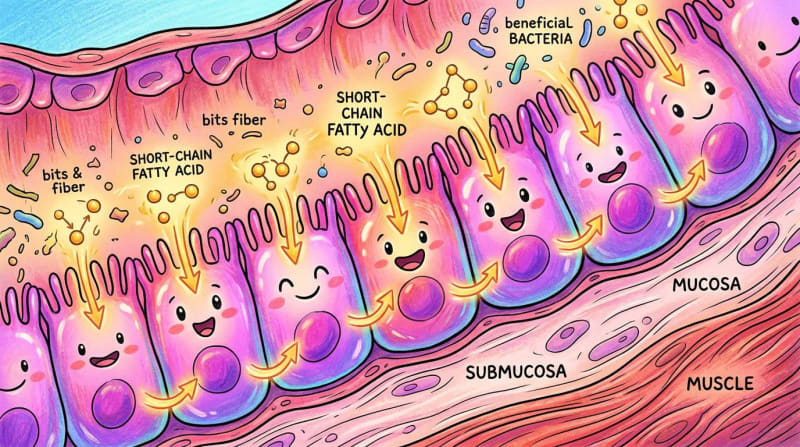
The second mechanism happens further downstream, in the large intestine. When the gel arrives largely intact, specific gut bacteria ferment it. That fermentation produces short-chain fatty acids — butyrate, propionate, and acetate. Harvard notes that butyrate specifically serves as the primary fuel for colonocytes, the cells lining your colon. Well-fueled colonocytes maintain a tight gut barrier, which is associated with lower systemic inflammation and reduced chronic disease risk.
There's also resistant starch — which Examine.com describes as behaving like a soluble prebiotic fiber and producing the highest butyrate yields of any fiber type. The interesting detail: cooked-and-cooled potatoes, rice, and legumes contain significantly more resistant starch than their hot counterparts. The cooling process reorganizes the starch structure into a form gut bacteria prefer. Same food, different preparation, genuinely different gut effect.
Your gut is running a fermentation system that produces some of the most protective compounds in human nutrition. The foods that feed it well are worth knowing by name.
Psyllium husk leads because it's essentially pure soluble fiber — which is why it appears in so many clinical trials on blood sugar and cholesterol management. But lentils and chia seeds are close behind and come packaged with protein, healthy fats, and micronutrients that psyllium alone doesn't offer. Whole food sources are the better long-term foundation.
What Insoluble Fiber Actually Does
What Insoluble Fiber Actually Does
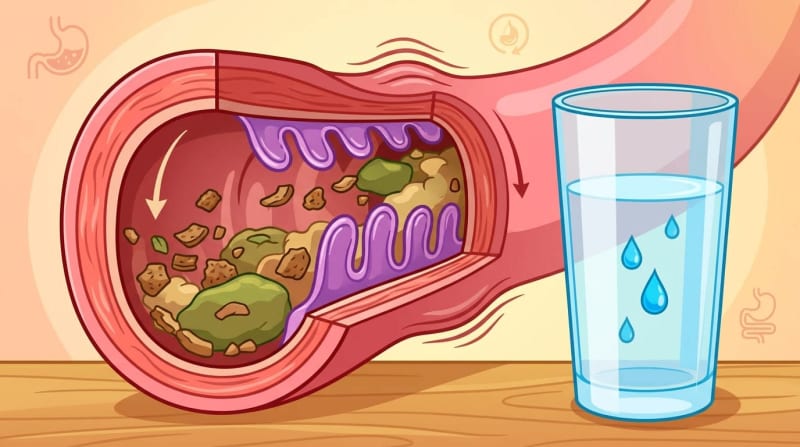
Insoluble fiber doesn't dissolve. It doesn't form a gel. It isn't fermented to any meaningful degree. Its job is physical rather than biochemical: it adds bulk and water to gut contents and keeps material moving at a reasonable pace through the intestinal tract.
That pace matters more clinically than it might seem. Research reviewed by Healthline notes that faster intestinal transit reduces the amount of time waste — and any carcinogens it carries — spends in contact with the colon wall. This is one of the proposed mechanisms behind the link between higher fiber intake and lower colorectal cancer rates, and insoluble fiber is likely doing more of that protective work than its soluble counterpart, even though it receives far less attention in the metabolic health conversation.
The more immediate practical role is regularity. If soluble fiber is the gut's fermentation fuel, insoluble fiber is its transit system. For sluggish digestion, it's usually insoluble fiber — paired with adequate water — that actually changes things. The hydration requirement matters: more insoluble fiber without more fluid can temporarily worsen constipation before improving it, because the added bulk needs water to move.
Wheat bran leads by a wide margin — it's nearly pure insoluble fiber. Black beans appear on both charts because they contain meaningful amounts of both types, which is a large part of why legumes consistently rank among the most gut-beneficial food categories in the research. Not everything fits cleanly into one column.
How to Use Both Types Strategically

How to Use Both Types Strategically
Once you understand the two mechanisms, the strategic logic follows naturally: match the fiber type to the outcome you're working toward.
For blood sugar management, emphasize viscous, gel-forming soluble fiber at meals with higher carbohydrate load. Harvard's Nutrition Source cites consistent clinical trial evidence that viscous fibers — psyllium and oat beta-glucan especially — blunt post-meal glucose spikes and improve longer-term glycemic markers. In practice this looks like: lentils alongside rice, a tablespoon of chia seeds stirred into yogurt, or oatmeal as a breakfast foundation instead of more refined cereals.
For constipation or sluggish transit, insoluble fiber is typically what's missing. Vegetable skins, wheat bran, whole grains, and nuts are the primary tools. The hydration requirement is non-negotiable: insoluble fiber needs water to do its job, and more fiber without more fluids can cause a short-term backslide before things improve.
For microbiome diversity, the research points clearly toward variety over volume. Examine.com's summary of the evidence shows that microbiome diversity increases with fiber source variety, not total fiber intake. Different bacterial strains ferment different substrates — some specialize in pectin from fruit, others in beta-glucan from oats, others in resistant starch from cooled legumes.
"Microbiome diversity correlates with the variety of fiber sources in the diet — not with how many total grams you're consuming."
Eating the same high-fiber food daily feeds the same bacterial community repeatedly. Rotating sources — lentils one day, oats the next, a cold potato salad, roasted vegetables with the skins on — keeps a broader range of beneficial bacteria active and well-fed.
These numbers from clinical trials summarized by Harvard's fiber research aren't an argument for specific supplements. They're signals about mechanism — and the whole foods richest in these fibers do similar work over time when eaten consistently.
Which of these sources are already showing up regularly in how you eat — and what would shift if you added one more with intention?
The Ratio Question: Do You Need Both?
The Ratio Question: Do You Need Both?
The short answer is yes — and the longer answer is that most whole plant foods already provide both types in varying proportions. Nature didn't separate them into neat categories before delivering them to your plate.
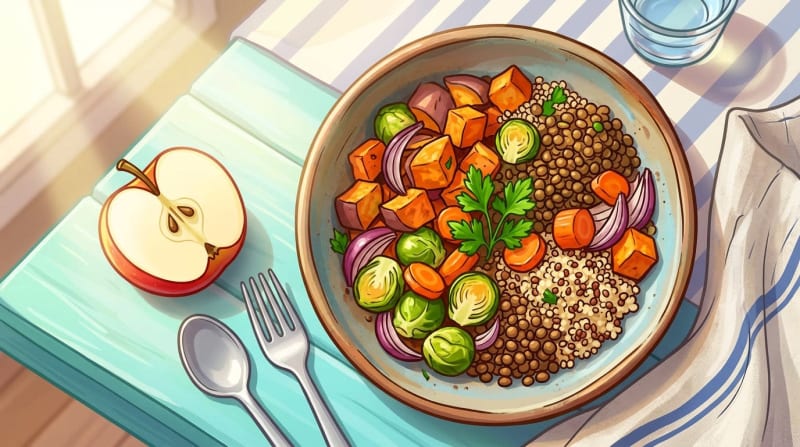
An apple contains pectin (soluble) and skin fibers (insoluble). Lentils offer prebiotic soluble fiber and meaningful insoluble bulk. A grain bowl with roasted vegetables provides fermentable and transit-supporting fibers in the same meal, without any deliberate category management required. The body uses what you give it. What you give it doesn't need to be perfectly engineered.
The place this balance most predictably breaks down is when eating patterns eliminate whole categories of plant food. low-carbohydrate diets specifically tend to remove the most concentrated soluble fiber sources — oats, barley, lentils, beans — while leaving insoluble fiber largely intact through vegetables, nuts, and seeds. Examine.com notes that microbiome diversity correlates with dietary variety rather than total fiber amount. Cutting whole food groups tends to narrow the fiber range available to gut bacteria, even when total grams remain adequate.
This isn't a case against any eating pattern. It's useful information: if you're working within constraints that limit certain foods, knowing which fiber type is more likely to have a gap — and what shorter-list options can help fill it (chia seeds, flaxseeds, avocado) — is worth having.
For most people eating broadly across plant foods, the practical approach is simpler than any formula suggests. Insoluble fiber tends to arrive automatically through vegetables at most meals. Soluble fiber benefits from at least one deliberate addition per day — legumes, oats, chia seeds, a piece of fruit with the skin on. You don't need to count grams of each type. You need to make sure both are showing up.
What has been appearing in your meals consistently — and which type might be the quiet gap worth noticing?
Content ID: aWmQC4QRvHxYgXffO0om2VlF
See an error? Tell us.
Keep Reading

What North Carolina's New Food Is Medicine Coalition Reveals About Building State Coalitions from Scratch

What the New FIMC Multi-State Evidence Report Reveals About FIM Cost Savings — and Why High-Acuity Patients Are the Key

Child Care Is the Largest Untapped FIM Delivery Platform — A New Report Shows What's Missing
Comments
Share with the Community