

Cysteine and Gut Healing: What the New MIT Research Actually Means for Your Intestinal Lining
The Short Version
- MIT researchers identified cysteine as the first named dietary amino acid that activates immune cells to trigger intestinal lining repair — giving a precise mechanism to recovery foods that have anchored cooking traditions for centuries.
- Cysteine works through two gut-repair pathways simultaneously: immune cell activation (the new MIT finding) and glutathione production, the body's primary antioxidant protection for intestinal lining cells.
- Cooking method matters as much as food choice — poaching and slow simmering preserve up to 93% of cysteine content, while high-heat grilling retains as little as 60%.
- Two eggs deliver 272mg of cysteine per serving; a 100g chicken breast provides 327mg; a half-cup of cooked lentils adds 139mg — the best sources are already in most kitchens.
- NAC supplements show mixed results in IBD research; the MIT study focused on dietary cysteine from whole foods, which remains the more evidence-aligned approach for most people without diagnosed gut conditions.
Something already happened in your kitchen this week that science is only now catching up to. The broth that simmered for hours while you recovered from a cold. The eggs you made because they were easy and felt right. The lentil soup that just seemed like what you needed. There is a reason recovery food traditions have looked the same across cultures for centuries — and a team of MIT researchers just gave part of that reason a name.
What the MIT Study Actually Found

What the MIT Study Actually Found
In May 2026, scientists at MIT identified cysteine as the specific amino acid that triggers intestinal repair through immune cell activation. This is not a general "protein supports gut health" claim — those are common and not especially useful. What this research named was a precise mechanism: dietary cysteine signals a class of immune cells called innate lymphoid cells (ILCs), which in turn activate the repair process for the intestinal lining.
The intestinal lining is not a passive membrane. It is an actively maintained structure that requires specific inputs to stay intact. When it is damaged — through illness, chronic stress, food intolerances, antibiotics, or inflammatory conditions — repair does not happen automatically. It needs signals. Cysteine, this research suggests, is one of those signals.
The conditions the MIT team was studying sit beneath a wide range of familiar gut complaints: what is popularly called "leaky gut," the gut dysfunction many people experience after a course of antibiotics, and the lining disruption associated with inflammatory bowel conditions. These are all downstream of the same basic problem — an intestinal lining that is not staying intact.
What is worth pausing on: the foods the researchers identified are not exotic. Meat, dairy, beans, and nuts — the foundation of communal cooking for as long as people have been cooking together. The chicken soup made when someone was sick. The egg dishes at every Sunday table. The bean soups that have fed communities affordably and well across every culture that has ever needed to do that. The mechanism behind those choices was unnamed. The instinct behind them was not.
According to USDA FoodData Central, these are the top dietary sources of cysteine — the same categories the MIT research identified:
What Cysteine Is and Why Your Body Needs It

What Cysteine Is and Why Your Body Needs It
Cysteine is what nutritional scientists call a conditionally essential amino acid. The body can synthesize it — converting it from methionine, another amino acid found in protein-rich foods — but that synthesis can fall short under conditions of high stress, illness, or existing gut damage. As Examine.com's independent nutrition research documents, cysteine requirements increase under oxidative stress and illness: at exactly the moment the gut is most damaged, the body's need for cysteine goes up while its capacity to absorb nutrients goes down.
This is one of the reasons gut recovery can be slow and non-linear. The conditions that make cysteine most needed are the same conditions that most compromise its delivery.
Cysteine's role in gut health runs through two pathways, not one. The MIT research identified immune cell activation as the first. The second is more established: cysteine is the rate-limiting precursor to glutathione, the body's primary antioxidant. Glutathione plays a known protective role for intestinal epithelial cells — the cells that line the gut wall. More available cysteine means more glutathione means more protection against the oxidative damage that contributes to lining breakdown in the first place.
Two repair pathways from one amino acid. That is worth sitting with, because it explains why cysteine keeps appearing in gut-health research even before the MIT finding gave it a specific name.
What else might these foods have been doing all along that we have not yet had precise language for?
The Foods That Actually Contain It
The Foods That Actually Contain It
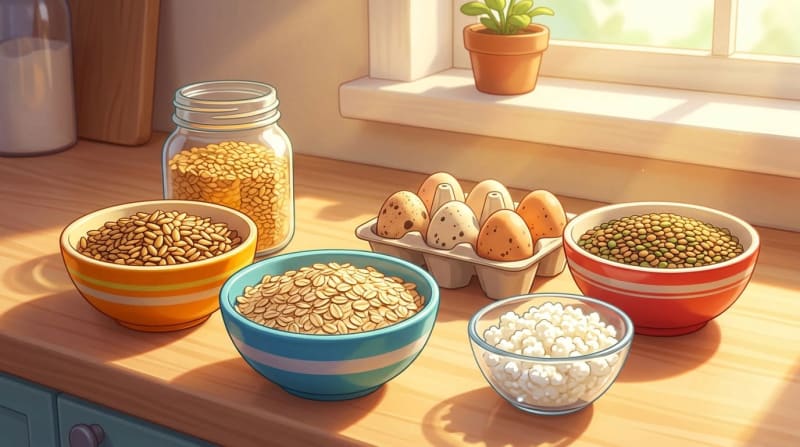
The distribution of cysteine across foods is broader than most people expect. Sunflower seeds and oats rank at the top of the per-100-gram comparison — which surprises people who assume animal proteins always lead on amino acid density. For plant-based eaters, Examine.com confirms that sunflower seeds, oats, and lentils all provide meaningful cysteine, making this a broadly accessible nutrient rather than one gated behind meat consumption.
The per-100-gram ranking is useful for comparison, but most people do not eat sunflower seeds by the hundred grams. A serving-size view of the same foods tells a more practical story about what an ordinary day of eating actually delivers:
A few things stand out in the serving-size view. Eggs deliver meaningful cysteine at an everyday portion. Oats — often thought of purely as a fiber food — contribute more cysteine per half-cup than cottage cheese. And lentils, frequently undervalued in protein conversations, provide solid cysteine content at the quantities people actually eat them. None of these are specialty foods. All of them are already in most kitchens.
How This Fits with What We Already Know About Gut Repair
How This Fits with What We Already Know About Gut Repair
Gut health research has been building toward a more specific picture for a long time. Zinc supports intestinal lining integrity through wound-healing pathways. Vitamin A supports the mucus-producing goblet cells that protect the gut wall. L-glutamine is the primary fuel source for intestinal epithelial cells directly. These are established findings with real research behind them.
Cysteine adds something the previous picture was missing: a named immune-mediation mechanism — one step upstream from where most gut-health nutrition advice has operated. The prior nutrients work largely at the cellular level, feeding and protecting the lining cells directly. Cysteine works by signaling immune cells to activate repair in the first place.
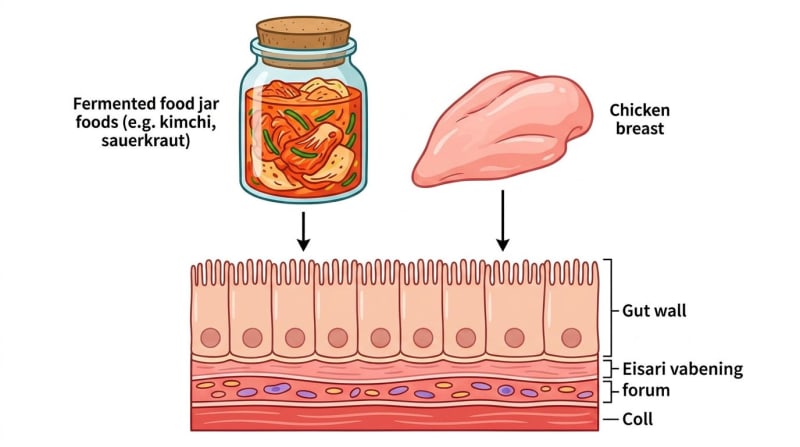
This distinction also clarifies something that creates genuine confusion: fermented foods are excellent for gut health, but for different reasons. Fermented foods support the microbiome — the bacterial population that influences digestion, immunity, and mood. Microbiome support and intestinal lining repair are related but distinct. Someone with active gut damage may need lining repair as the first priority. Combining both — cysteine-rich foods for lining repair, fiber-rich and fermented foods for microbiome support — addresses the gut at multiple layers simultaneously. Neither makes the other unnecessary.
Here is where cooking method enters the conversation in a way that matters. Cysteine is a sulfur-containing amino acid, and sulfur compounds are heat-sensitive. Research in food chemistry shows meaningful differences in amino acid retention across cooking temperatures:
This is one reason slow-simmered chicken soup is the more useful cysteine delivery vehicle during gut recovery, even when it starts with the same raw chicken as a grilled breast. Long, gentle simmering also extracts collagen peptides from connective tissue. The popular gut-healing claims about bone broth have often outrun the specific evidence, but the cysteine connection and cooking method together give that tradition a more precise foundation than it previously had.
"The foods associated with care and recovery — the long-simmered soups, the poached eggs, the soft dairy — were doing more than people had names for. They still are."
What have you noticed about how certain meals feel different during recovery — and are those instincts pointing somewhere the research is only now starting to confirm?
What This Means for a Gut-Healing Meal Plan

What This Means for a Gut-Healing Meal Plan
The practical translation of this research is simpler than it might appear. A gut-healing week does not require expensive supplements, specialty ingredients, or a reinvention of how you cook. It requires emphasizing foods already in most kitchens and applying the cooking methods that preserve what those foods contain.
Here is what a sample gut-healing day looks like in cumulative cysteine terms, based on USDA nutritional data:
The practical meal structure for a gut-healing week:
Breakfast: Poached or soft-scrambled eggs with a side of oatmeal. The gentle heat preserves more cysteine than a fried egg in a very hot pan. The oats add plant-based cysteine and soluble fiber for the microbiome.
Lunch: Slow-cooked chicken soup with broth. This is the highest-cysteine meal format that is also easy to tolerate when gut symptoms are active. Add lentils or white beans to increase the plant protein content.
Snacks: Cottage cheese or ricotta. Both provide meaningful cysteine with no cooking required and are generally well tolerated even when the gut is irritated.
Dinner: A bean or lentil soup with vegetables, slow-cooked rather than rushed at maximum pressure or heat. A piece of gently baked or poached fish alongside if you want additional protein.
What to minimize during active gut repair: ultra-processed foods containing emulsifiers — ingredients like polysorbate 80 and carboxymethylcellulose, found in many packaged foods — have been shown in gut lining research to disrupt both the lining and the microbiome. High-heat cooking that reduces cysteine content is a secondary concern. The primary issue is not adding insults to the lining while the repair process is trying to work.
The deeper gift in this meal plan is that it describes how people have always cooked for each other during illness and recovery. The chicken soup brought to a sick neighbor. The soft-boiled egg made for someone who was not quite well. The bean dish that stretched to feed everyone. These are not clinical interventions. They are acts of care that happened to have mechanisms behind them all along.
The Supplement Question: Do You Need NAC?

The Supplement Question: Do You Need NAC?
N-acetyl cysteine — NAC — is the supplement form most commonly marketed for gut health, immune support, and antioxidant production. It deserves a precise answer rather than a vague one.
The MIT research was conducted on dietary cysteine — the amino acid delivered through food. NAC is a synthesized, acetylated form that the body converts to cysteine. It has been studied extensively for respiratory conditions and liver support. In IBD contexts specifically, the evidence is mixed: some studies show benefit in reducing oxidative stress markers; others show limited effect on disease course. The dietary cysteine research the MIT team conducted is not NAC research.
As Harvard's Nutrition Source consistently emphasizes, whole-food protein sources provide benefits that isolated amino acid supplementation has not reliably replicated. The cysteine in a bowl of chicken soup comes packaged with other amino acids, fat, heat-extracted peptides, and the bioavailability advantages of a complete food matrix. A NAC capsule delivers isolated cysteine at a standardized dose that may or may not reflect what the body actually needs in context.
For most people eating a varied diet with adequate protein, NAC supplementation for routine gut support is not what the current evidence supports. The dietary cysteine approach is both more aligned with the research and considerably more enjoyable.
Who might have a different conversation with their doctor: people managing diagnosed inflammatory bowel disease, those in post-surgical gut recovery, or anyone whose gut damage is severe enough that absorbing dietary cysteine is itself impaired. In those cases, supplementation is a clinical decision made with medical context — not a general wellness choice.
For everyone else, the question worth sitting with is not which supplement to add. It is which meals to build, and how to cook them. Come back to those foods. The chicken soup, the slow-simmered broth, the poached egg made for someone who needed it. The research is finally naming what they were doing all along.
Content ID: scGW6X0UVRiFGnt1r29ik7xc
See an error? Tell us.
Keep Reading

What North Carolina's New Food Is Medicine Coalition Reveals About Building State Coalitions from Scratch

What the New FIMC Multi-State Evidence Report Reveals About FIM Cost Savings — and Why High-Acuity Patients Are the Key

Child Care Is the Largest Untapped FIM Delivery Platform — A New Report Shows What's Missing
Comments
Share with the Community