
What the New FIMC Multi-State Evidence Report Reveals About FIM Cost Savings — and Why High-Acuity Patients Are the Key
The Short Version
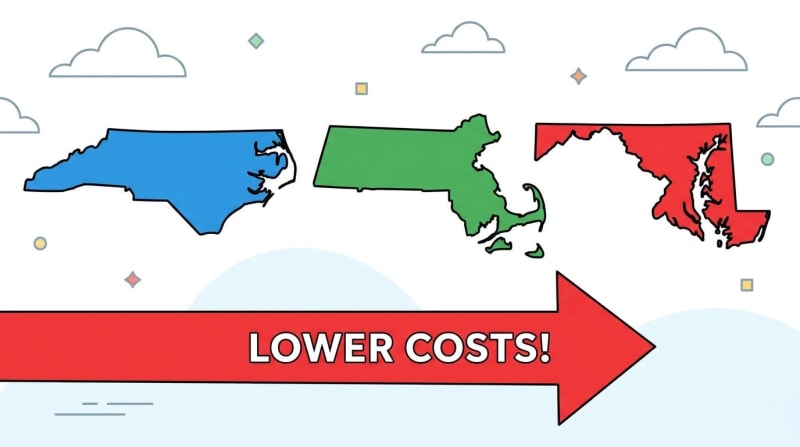
- The FIMC August 2026 report synthesizes food is medicine program data from North Carolina, Massachusetts, and Maryland — three different program structures, same directional result.
- Sustained FIM access produces durable reductions in healthcare utilization and cost — not a one-time effect, which is the critical distinction for payers evaluating multi-year contracts.
- The biggest cost savings concentrate among the highest-acuity, highest-cost patients — exactly who MTM and MTG programs already serve, making deep targeting the fiscally stronger choice.
- If all eligible Americans received medically tailored meals, the Rockefeller Foundation estimates $13.6 billion in annual healthcare savings.
- The report is structured as a standalone brief — state officers can share it directly with Medicaid CFOs and legislators who will not read a peer-reviewed paper.
A new multi-state evidence report from the Food Is Medicine Coalition, released in August 2026, gives FIM state officers something they have needed for a long time: cross-state cost data they can hand to a legislator or a Medicaid CFO and walk out of the room. The report synthesizes real-world program evaluations from North Carolina, Massachusetts, and Maryland — programs that differ in structure, payer type, and population served — and the finding that runs through all three is not ambiguous. Sustained food is medicine cost savings in Medicaid are real. They are durable. And they concentrate most heavily in the exact population that Medicaid payers spend the most to treat.
What the FIMC Report Found Across Three States
What the FIMC Report Found Across Three States
North Carolina, Massachusetts, and Maryland run different kinds of food is medicine programs, operate under different payer structures, and serve different population mixes. That diversity is the point. The FIMC report looked across all three and found the same directional result: sustained access to food is medicine interventions leads to lower healthcare utilization and reduced costs over time.
That "over time" phrase matters. The objection most often raised against FIM funding is that any savings are front-loaded or one-cycle — that you see the effect once and it fades. The cross-state data doesn't support that. The cost reduction is a durable relationship between sustained access and lower utilization, not a one-time hit. For payers considering multi-year contracts and legislators setting budget assumptions, that durability changes the math considerably.
Single-state evaluations — however well-designed — are regularly dismissed as local or anomalous. The Rockefeller Foundation has estimated that if all eligible Americans received medically tailored meals, annual healthcare savings would total $13.6 billion. The three-state FIMC report provides the cross-state empirical foundation that a projection of that scale needs.
The High-Acuity Finding: Where the Biggest Savings Actually Live

The High-Acuity Finding: Where the Biggest Savings Actually Live
The most actionable finding in the report is also the one most likely to shift how program designers think about eligibility. The greatest cost savings from FIM interventions concentrate among patients with the highest acuity and the highest costs — the medically complex patients who already drive a disproportionate share of Medicaid spending.
This directly addresses a recurring debate in FIM advocacy: whether programs should cast wide nets or target deeply. The evidence says depth beats breadth. The return on investment is highest in the population already most expensive to serve, which is precisely the population that medically tailored meal (MTM) and medically tailored grocery (MTG) programs are designed around.
For program designers, that's a targeting rationale that holds up in any budget conversation. Eligibility criteria focused on clinical complexity — rather than broad community enrollment — are not exclusionary. They are where the fiscal case is strongest. The question for most FIM state programs has not been whether to target high-acuity patients. It has been whether the evidence justified that targeting to payers. It does now.
How FIM State Officers Can Use This Evidence in Budget and Policy Conversations

How FIM State Officers Can Use This Evidence in Budget and Policy Conversations
The FIMC report's most usable sentence for advocacy work comes from the August 2026 findings:
"MTMs and MTGs are not just health care interventions – they are fiscally responsible policy."
— Food Is Medicine Coalition, August 2026
That phrase works in legislative testimony, in payer contract language, and in CFO briefings where a 45-slide clinical argument would not land. The report is structured as a standalone brief — short enough to share with decision-makers who will not read a peer-reviewed paper, and credible enough to cite in formal policy submissions.
State officers who have been making the FIM case from single-state data now have cross-state synthesis that generalizes in a way no individual evaluation can. Pairing this report with the FIMC MTM Sustainability Blueprint and actuarial modeling tools builds a three-layer case: the empirical evidence, the policy pathway, and the cost model. For Medicaid payers and budget committees deciding whether to move from pilot to sustained program, the full report is available at fimcoalition.org.
Content ID: QFUjwB8u7bNQPSBbpueXvyWt
See an error? Tell us.



Comments
Share with the Community