

Child Care Is the Largest Untapped FIM Delivery Platform — A New Report Shows What's Missing
The Short Version
- A Children's HealthWatch report from Boston Medical Center finds the current child care system falls short of meeting young children's nutritional needs — with insufficient funding and inadequate family resources as the documented cause.
- The reimbursement gap in child care nutrition mirrors what FIM state officers have already mapped in Medicaid produce prescriptions and medically tailored meal programs — same structure, same lever.
- CACFP, the federal nutrition program that reaches millions of children in child care settings, carries structural underfunding gaps that FIM state officers have the Medicaid relationships to address.
- A national CHW survey captured 231 community health workers across 45 states already connecting families to food programs — the infrastructure exists, but early care settings are outside the referral map.
- The report's top recommendation — cross-agency coordination — is the core work of FIM state officers, and adding child care providers to the next convening stakeholder list is the concrete first step.
A new Children's HealthWatch report from Boston Medical Center puts a number on something food is medicine practitioners working in early childhood education and child care have suspected for years: these settings are absent from the FIM delivery map, and the nutritional cost is real and measurable.
Children's HealthWatch — the public health research program based at Boston Medical Center — examined how child care providers and administrators in Massachusetts experience nutrition support in their daily work. What they found maps directly onto the cross-agency coordination work FIM state officers are built to do.
What the New Massachusetts Research Found
What the New Massachusetts Research Found
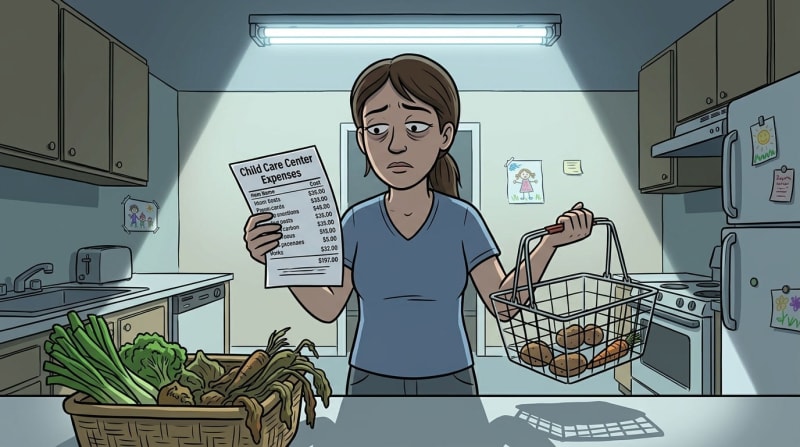
Researchers surveyed child care providers and administrators across Massachusetts, asking where nutrition support breaks down in early education settings. The core finding is clear: the current child care system falls short of meeting the nutritional needs of young children. The barriers are structural, not behavioral. Providers reported insufficient funding, limited nutrition education support for teaching staff, and inadequate resources to connect families with food assistance programs already available to them.
On reimbursement, the report's recommendation matches what FIM advocates have argued for other programs. It calls for reimbursement rates reflecting the true cost of providing high-quality nutrition in child care settings. The logic is the same as the case for Medicaid produce prescription reimbursement: when the rate doesn't cover actual costs, providers absorb the gap — and quality nutrition disappears from the offering.
Why Early Care Settings Are Absent from FIM Program Maps

Why Early Care Settings Are Absent from FIM Program Maps
Food is medicine programs are built around clinical referral pathways. A produce prescription gets triggered by a diagnosis in a clinical encounter. A medically tailored meal program attaches to hospital discharge. These are the delivery mechanisms FIM state officers know best — and they are not the settings where young children spend most of their days.
Child care centers and family day care homes serve children aged zero to five through trusted caregivers every weekday. The federal nutrition reimbursement mechanism for child care, CACFP (Child and Adult Care Food Program), exists and reaches millions of children. But it carries the same structural underfunding gaps that FIM state officers have spent years documenting in Medicaid nutrition programs. The result: a delivery platform with real scale and trusted relationships, with essentially no connection to food is medicine program infrastructure.
The FIM State Officer Opportunity: Cross-Agency Coordination

The FIM State Officer Opportunity: Cross-Agency Coordination
The Children's HealthWatch report's primary structural recommendation is enhanced coordination across state agencies to strengthen nutrition support in early care settings. That is a description of what FIM state officers do.
The community health worker infrastructure to support that coordination already exists at scale. A national survey from Share Our Strength and NACHW, hosted on the Medicaid Food Security Network resources page, captured responses from 231 CHWs and 50 employers across 45 states. CHWs are already serving as connective tissue between food programs and families. Whether early care settings are in scope for those relationships is the question FIM state officers need to answer next.
FIM state officers hold the Medicaid relationships and nutrition program connections that early care nutrition reform requires. The Children's HealthWatch research is peer-reviewed and actionable. The concrete first step: add child care providers — CACFP administrators, state child care licensing staff, early childhood program directors — to the stakeholder list at the next cross-agency nutrition convening.
Content ID: uLvcAQMHDBCXcFqV3FyMkkN4
See an error? Tell us.
Keep Reading

What North Carolina's New Food Is Medicine Coalition Reveals About Building State Coalitions from Scratch
What the New FIMC Multi-State Evidence Report Reveals About FIM Cost Savings — and Why High-Acuity Patients Are the Key

SNAP-Ed Is Being Defunded: What the H.R. 1 Nutrition Education Cut Means for Food Is Medicine Programs
Comments
Share with the Community