
What North Carolina's New Food Is Medicine Coalition Reveals About Building State Coalitions from Scratch
The Short Version
- NC's founding steering committee pays members $1,500 per quarter — a structural signal that cross-sector governance requires real time commitment, not volunteer hours.
- Three backbone organizations anchor the coalition, reducing the single-point-of-failure risk that ends most cross-sector efforts when lead organizations shift priorities.
- An estimated 14 million Medicaid enrollees, including 7 million children, are food-insecure — a scale that no single clinic, food bank, or health plan can address without coalition infrastructure.
- Diet-related healthcare costs run $1.1 trillion annually in the US — the same figure that makes the payer argument for recruiting health systems and insurers into state coalitions.
- States that build programs before governance find them hard to scale; NC's model starts with the steering committee design before committing to any specific intervention.
North Carolina has something most states don't: an actively forming food is medicine state coalition with open applications, paid governance, and three backbone organizations already in place. The NC Food Is Medicine Coalition is building its founding cross-sector steering committee right now — and the governance design is worth examining closely.
NC's Founding Steering Committee Model

NC's Founding Steering Committee Model
The coalition is structured as a cross-sector catalyst for collaboration, shared learning, and coordinated action across North Carolina. This isn't a program delivering produce boxes. It's infrastructure — the kind that makes programs possible at scale.
Applications are open to two distinct groups: individuals with direct food is medicine participation experience and institutions or organizations working in the space. Both tracks seat at the same table. Steering committee members receive a stipend of $1,500 per quarter in recognition of the time commitment. That's a deliberate structural choice, not a perk. The stipend communicates that lived experience carries the same weight as institutional expertise.
Three backbone organizations anchor the coalition: Population Health Improvement Partners (the founding administrative home), Caja Solidaria, and DAISA Enterprises. Distributing the backbone role across multiple organizations reduces the single-point-of-failure risk that ends coalitions when a lead organization shifts priorities or loses funding.
Foundational funding comes from the Blue Cross and Blue Shield of North Carolina Foundation, with additional support from Share Our Strength — the organization behind the Medicaid Food Security Network. A state health foundation paired with a national advocacy funder is a combination other states can replicate, particularly those with strong BCBS foundations.
Why State Coalitions Are the Missing Infrastructure for FIM

Why State Coalitions Are the Missing Infrastructure for FIM
Harvard's Center for Health Law and Policy Innovation documents the core problem: fragmented integration of food is medicine interventions into the healthcare system has led to inequitable access based on geography, insurance status, health care provider, and condition. Someone in one county gets a medically tailored meal program through their insurer. Someone with the same diagnosis in the next county gets nothing.
State coalitions are designed to close that gap — not by running programs directly, but by building the coordination layer that makes programs consistent and connected across a state.
The Center for Health Care Strategies names what's in the way: limited capacity, staffing challenges, and gaps in technical expertise are the primary barriers states face in FIM implementation. No single organization can solve all three alone. A coalition model distributes that load.
An estimated 14 million Medicaid enrollees, including 7 million children, are food-insecure. No single clinic, food bank, or health plan is positioned to reach that population. Cross-sector coordination isn't optional at this scale — it's the only architecture that fits.
What Other States Can Take from NC's Approach
What Other States Can Take from NC's Approach
Three design choices stand out as portable.
Pay the steering committee. Unpaid cross-sector governance fails — not because people aren't committed, but because commitment doesn't pay rent. A $1,500 quarterly stipend is the difference between a governing body that stays intact through year two and one that loses members by the third meeting. NC built the compensation in from the start.
Pair a local funder with a national network funder. The BCBS NC Foundation provides capital credibility in state. Share Our Strength provides national network access and advocacy weight. Foundation money without advocacy relationships produces isolated programs. Advocacy relationships without local capital produce plans without implementation.
Start with governance, not programs. The NC coalition is designing its own vision before committing to specific interventions. States that launch a produce prescription or medically tailored meal program before building the coalition underneath it find those programs are difficult to scale — there's no shared infrastructure below them.
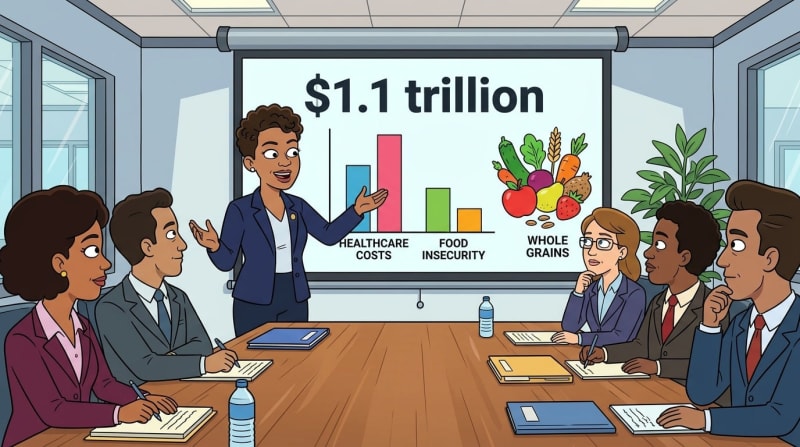
The Rockefeller Foundation puts the cost burden in terms payers respond to: $1.1 trillion per year in healthcare costs tied to diet. For FIM state officers making the case to health systems and insurers, that figure is the recruiting argument.
Applications for NC's founding steering committee are open now at ncfoodismedicine.org.
Content ID: MyGjpc1XFkRsjWSOPV8Dzcrz
See an error? Tell us.
Keep Reading
What the New FIMC Multi-State Evidence Report Reveals About FIM Cost Savings — and Why High-Acuity Patients Are the Key

Child Care Is the Largest Untapped FIM Delivery Platform — A New Report Shows What's Missing
SNAP-Ed Is Being Defunded: What the H.R. 1 Nutrition Education Cut Means for Food Is Medicine Programs
Comments
Share with the Community