

Healing My Stomach Lining After H. Pylori: What the Research Says About Hydration and Electrolytes
The Short Version
- H. pylori still infects roughly 44% of adults worldwide, yet most people who have it don't know until something goes wrong — and eradication by antibiotics is only the beginning, not the end, of recovery.
- PPI medications prescribed to protect the stomach during healing can deplete magnesium at nearly 80 times the rate seen with H2 blockers, triggering a cascade that also pulls down potassium and calcium — the exact minerals the mucosal repair process depends on.
- Zinc L-carnosine, an anti-ulcer treatment approved in Japan for over two decades, showed ulcer healing in 98.7% of patients when added to PPI therapy versus 79.3% with PPI alone in one blinded endoscopic trial — yet it barely comes up in standard US post-H. pylori care.
- Plain water can actually make things worse during gastric recovery: large boluses dilute already-depleted gastric secretions, while steady sipping of mineral-rich fluids like coconut water or bone broth addresses the electrolyte losses that inflammation and reduced intake compound.
- Atrophic gastritis caused by H. pylori showed histological improvement on biopsy — meaning the tissue itself visibly healed — in patients treated with oral zinc L-carnosine for at least twelve months, according to a 2025 case report.
The Diagnosis That Changed How I Think About Water

The Diagnosis That Changed How I Think About Water
I spent the first few weeks after my H. pylori diagnosis focused entirely on the antibiotics. Two of them, plus a proton pump inhibitor, twice a day for fourteen days. I followed the protocol. I finished the course. A second scope confirmed the bacteria were gone. Nobody mentioned that healing the stomach lining after H. pylori would be its own separate project — one the antibiotics don't do for you.
And then I waited to feel better.
The waiting was the part nobody prepared me for. The bacteria were gone — confirmed by the breath test — but my stomach was still raw, still reactive, still sending me pain signals that didn't match the "you're clear" news I'd received. I was exhausted in a way that sleep wasn't fixing. My thinking was foggy. I kept drinking water, convinced that hydration was part of the answer, and noticing that it wasn't doing very much.
It took me a while to understand why. Eradication is not the same as healing. The antibiotics that eliminate H. pylori don't repair the damage the infection leaves behind — the inflamed, compromised mucosal lining that is the actual tissue requiring months, not days, to rebuild. Healing the stomach lining after H. pylori is its own process, with its own nutritional requirements, and water alone is about as useful as pouring plain water on a garden with depleted soil. The minerals matter as much as the volume.
According to a 2024 meta-analysis published in Gastroenterology covering data from 111 countries, H. pylori currently infects roughly 44% of adults worldwide — down from over 52% before 1990, but still one of the most common chronic bacterial infections on earth. Most people who have it don't know it until something goes wrong. I was one of them.
What does it mean to treat the infection but leave the conditions for healing incomplete? That's the question I've spent the better part of a year trying to answer.
What H. Pylori Actually Does to Your Stomach Lining

What H. Pylori Actually Does to Your Stomach Lining
H. pylori doesn't damage the stomach lining all at once. It works gradually, over years, through a sequence of biological events that StatPearls at the NIH describes as one of the most important pathogenic cascades in gastroenterology.
The bacteria produce an enzyme called urease, which neutralizes stomach acid and allows H. pylori to survive in an environment that should kill it. Once established in the mucosal layer — the gel-like protective barrier coating the stomach wall — the infection triggers a chronic immune response. The body sends inflammatory cells to fight the bacteria. Those cells can't reach H. pylori, which is hidden in the mucosa, so the inflammation persists and turns on the tissue itself. The mucosal layer thins. The cells that produce protective mucus are damaged. Gastric acid, no longer properly buffered, reaches the epithelial lining beneath.
The progression is slow and, in many people, clinically silent until it isn't: normal mucosa → chronic superficial gastritis → chronic atrophic gastritis → intestinal metaplasia → dysplasia. This is why H. pylori is classified as a Group 1 carcinogen by the International Agency for Research on Cancer — not because infection inevitably leads to cancer, but because the cascade it initiates creates the conditions where cancer becomes possible if the inflammation is never resolved.
Eradication halts the progression. But halting is different from reversing. The mucosal tissue that has been damaged still needs to be rebuilt — cell by cell, layer by layer — and that process requires raw materials the body has to source from what you eat and drink. What are you giving it to work with?
Why Healing My Stomach Lining After H. Pylori Wasn't as Simple as Drinking More Water

Why Healing My Stomach Lining After H. Pylori Wasn't as Simple as Drinking More Water
During the worst months of active gastritis, before the diagnosis and during the antibiotic course, I wasn't eating much. Nausea made most foods unappealing. What I could manage was plain — crackers, broth, water. What I didn't realize was that a gut actively inflamed and impaired is also a gut actively losing electrolytes.
A foundational study on electrolyte balance in gastrointestinal disease, published in California Medicine and archived in PMC, established something important: even small losses of gastrointestinal secretions, when combined with reduced intake, can seriously disturb electrolyte balance. Loss of gastric contents results in excessive loss of chloride, alongside significant sodium and potassium loss that is consistently underestimated. The stomach secretes electrolyte-rich fluid as part of normal digestion. When that process is disrupted by inflammation, vomiting, or reduced intake, the losses compound.
Electrolytes aren't just hydration helpers. Sodium and potassium are the engine of the sodium-potassium pump — a protein embedded in nearly every cell membrane that moves three sodium ions out and two potassium ions in for every ATP molecule consumed. This pump maintains the electrochemical gradient your nerve cells use to fire, your muscles use to contract, and critically for our purposes, your gastric epithelial cells use to function and replicate. When sodium and potassium are depleted, that pump slows. Cell turnover slows with it.
The fog I was experiencing — the fatigue that didn't lift, the difficulty concentrating — wasn't a mystery once I understood this. A body running low on the minerals that power cellular function doesn't perform well. I was drinking water and diluting what little I had left.
The PPI Prescription Nobody Fully Explains

The PPI Prescription Nobody Fully Explains
After eradication, my gastroenterologist prescribed a proton pump inhibitor to help protect the stomach lining while it healed. This is standard practice and, for acid management, entirely appropriate. PPIs are among the most prescribed drugs in the world for good reason — they work, they reduce pain, and they give inflamed tissue a less hostile environment to recover in.
What the prescription didn't come with was a conversation about what PPIs do to your electrolytes.
The mechanism is specific. PPIs work by irreversibly blocking the H+/K+-ATPase enzyme — the proton pump — in the parietal cells of the stomach. This reduces acid secretion. But those same parietal cells and the transporter channels in the small intestine that depend on luminal acidity for magnesium absorption are also affected. A study of over 10 million FDA Adverse Event Reporting System records, published in Scientific Reports, found that hypomagnesemia was reported at almost eighty times the rate in PPI users compared to a matched H2 blocker control group. Hypokalemia and hypocalcemia followed — because magnesium depletion, as the research explains, disrupts parathyroid hormone function and increases urinary potassium loss downstream.
Sodium is part of the picture too. A US population-based case-control study published in PMC, drawing on 473,000 patient encounters over six years, found that PPI use for at least 30 days prior to admission was significantly more common in patients hospitalized with hyponatremia than in matched controls — an odds ratio of 1.6 (95% CI 1.3–2.0, p<0.001).
A 2025 case review published in Cureus and PMC described a patient on prolonged PPI therapy who presented with low magnesium, potassium, calcium, and elevated sodium — a multi-electrolyte derangement that fully resolved after stopping the PPI. The authors noted that this pattern is underrecognized, that magnesium levels are not routinely monitored in PPI patients, and that the cascade of secondary depletions — potassium falling because magnesium is low, calcium falling because PTH is disrupted — can develop silently over months.
I want to be clear: I am not arguing against PPIs. For someone managing active gastritis and a damaged mucosal lining, acid suppression is genuinely protective. The point is that if you are on a PPI during your recovery period — which most people post-H. pylori eradication are — you are also actively losing electrolytes that the mucosal repair process depends on. That gap deserves attention. For a deeper look at the magnesium-PPI connection specifically, the Magnesium Gap article on this site covers the mechanisms and the supplementation options in detail.
The cycle that nobody explains: H. pylori damages the mucosa → inflammation and symptoms → PPIs prescribed → PPIs deplete magnesium, potassium, and calcium → depleted electrolytes impair the cellular repair machinery → healing stalls. Understanding that loop is the beginning of being able to interrupt it.
The Zinc Connection: The Most Underreported Part of Gastric Recovery
The Zinc Connection: The Most Underreported Part of Gastric Recovery
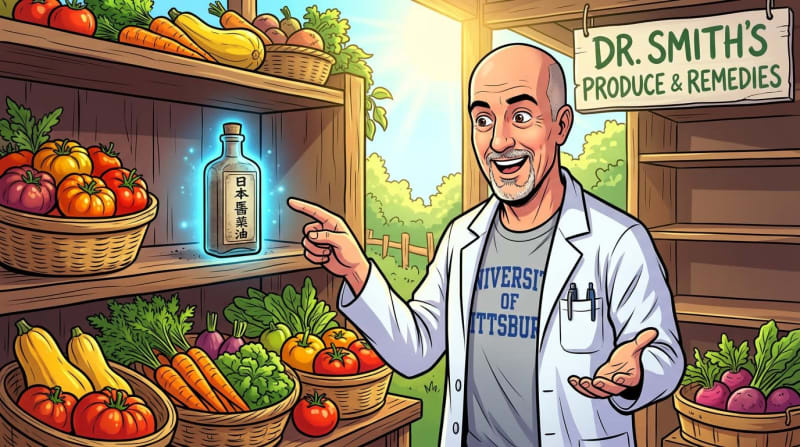
Of everything I found in the research, zinc surprised me most. It doesn't appear in the standard post-H. pylori conversation in the US, which tends to focus on acid management, probiotics, and dietary triggers. But the peer-reviewed evidence for zinc's role in mucosal healing is specific, substantial, and largely ignored outside of Japan, where a zinc compound called polaprezinc — or zinc L-carnosine — has been an approved anti-ulcer treatment for over two decades.
The mechanism is direct. A review published in PMC examining the role of zinc in mucosal health found that zinc stimulates cell migration and proliferation in gut epithelial tissue, improves regeneration of intestinal epithelium, and maintains the structural integrity of the mucosal barrier. Zinc deficiency, by contrast, causes ulcerations of the small intestine, alters membrane barrier permeability, and is associated with inflammatory cell infiltration that damages the gut membrane. These are not abstract effects. They are the difference between a mucosal lining that rebuilds and one that doesn't.
Zinc L-carnosine — the chelated compound that delivers zinc preferentially to damaged gastric tissue — has been studied in controlled human trials with endoscopic confirmation of outcomes. A 2022 review in ScienceDirect summarizing human studies reported on a 163-patient prospective study in which patients were randomized to either lansoprazole (a PPI) alone or lansoprazole plus zinc L-carnosine 150mg daily. Blinded endoscopic assessment at eight weeks showed significantly better ulcer healing in the combined group — protrusion of the ulcer base in only 1.3% of cases compared to 20.7% in the PPI-only group (p<0.001). A separate study found ulcer healing rates of 95.7% with zinc L-carnosine plus PPI versus 88.9% with omeprazole alone.
The H. pylori eradication data is also worth noting. A review published in Experimental and Therapeutic Medicine (PMC) reported that adding zinc L-carnosine to conventional triple therapy produced H. pylori eradication rates of 77% (intent-to-treat) compared to 58.6% for triple therapy alone. The zinc compound appears to enhance antibacterial activity through its chelating structure and its ability to adhere specifically to damaged mucosa.
And most recently, a 2025 case report published in PMC followed two patients with chronic atrophic gastritis — one autoimmune, one H. pylori-related — treated with oral zinc L-carnosine for at least twelve months. Both showed improvement not just in symptoms but in histological features on endoscopy. The tissue itself healed, confirmed by biopsy. The researchers noted decreased prominence of submucosal vessels, reduced atrophy scores, and improvements in gastric function markers including pepsinogen levels.
Zinc-rich foods are worth building into the recovery diet regardless of supplementation: pumpkin seeds, eggs, lentils, shellfish. The supplement form studied in most of the clinical literature is zinc L-carnosine specifically — not zinc sulfate or zinc oxide, which have different absorption profiles and less documented mucosal affinity. If you are considering supplementation, it is worth raising with your gastroenterologist, particularly given that zinc can interact with some antibiotics and affect copper absorption at higher doses.
How many people going through H. pylori recovery right now have never heard the word polaprezinc? My guess is most of us.
What I Actually Changed — and What the Research Backs

What I Actually Changed — and What the Research Backs
The shifts that made a difference for me were not dramatic. None of them required a protocol or a supplement stack. They were specific, consistent, and grounded in what the research actually says about healing stomach lining after h pylori and the nutritional conditions that support it.
The first was how I drank water. Not how much — how. I stopped treating hydration as a volume problem and started treating it as a timing and mineral problem. Sipping consistently throughout the day rather than drinking large amounts at once. Large boluses of plain water in an already-inflamed stomach can further dilute gastric secretions and temporarily worsen acid signaling. Smaller, steady intake was meaningfully easier on my system.
The second was mineral-rich foods. Coconut water became a daily staple — naturally high in potassium, gentle on an irritated stomach, and easy to manage when appetite was low. Bone broth added sodium and glycine, an amino acid that research suggests supports the integrity of the gut lining. Cooked leafy greens brought magnesium and folate. Pumpkin seeds brought zinc. None of these were expensive or difficult. They were just intentional.
The third was low-sugar electrolyte supplementation on the days when appetite and intake were genuinely inadequate — particularly during and immediately after the antibiotic course, when the gut was most disrupted. The key was finding a formulation without citric acid or high added sugar, both of which can aggravate an already-compromised stomach lining.
The foods that tend to be gentlest on an inflamed mucosal lining are also, not coincidentally, the ones highest in the nutrients that support repair: well-cooked legumes, eggs, soft fish, cooked greens, plain yogurt with live cultures. The protein considerations for anyone managing gastritis alongside the muscle loss that comes with reduced intake after 50 are covered in detail elsewhere on this site — the short version is that gastritis impairs protein absorption precisely when the body most needs protein for tissue repair, which makes food quality and digestibility especially important.
On the ultra-processed food side: the connection between processed food additives and gut microbiome disruption becomes acutely personal when you are trying to rebuild a microbiome that antibiotics have partially dismantled. This was where reading ingredient labels stopped being a wellness project and became practical necessity.
Still Healing — and What That Actually Looks Like

Still Healing — and What That Actually Looks Like
I'm not going to tell you I have this figured out, because I don't. Mid-journey means exactly that — progress that is real and uneven at the same time, good weeks and bad ones, symptoms that have shifted from constant to occasional without disappearing entirely.
What I can say is that the frame I was operating with at the beginning — eradication as the finish line, water as the default solution — was wrong in ways that cost me months. The bacteria were gone. The damage they left behind had its own timeline, its own nutritional requirements, its own logic that the prescription didn't explain and I had to piece together from the research myself.
The research points in a consistent direction. The mucosal lining heals when it has the conditions to do so: adequate electrolytes to power the cellular machinery, zinc to stimulate epithelial repair and suppress inflammatory signaling, mineral-rich fluids rather than plain diluting water, and an awareness of what the medications prescribed to protect healing are also doing to the very nutrients that healing depends on.
None of this is instead of medical care. It is alongside it — the gap between what the prescription covers and what the body actually needs to do the work. A lot of us are navigating that gap on our own, piecing things together long after the antibiotics are finished. We get handed a prescription, a list of foods to avoid, and a follow-up appointment six months out. What happens in between is largely up to us to figure out.
If you are somewhere in that gap right now, what's one thing you've noticed — a food, a shift in how you hydrate, something that helped — that you wish someone had told you earlier?
This article is for informational purposes only and does not constitute medical advice. If you are managing H. pylori infection or gastritis, work with a gastroenterologist to develop a treatment and recovery plan appropriate to your individual situation. Zinc L-carnosine and electrolyte supplementation should be discussed with your healthcare provider before use.
Content ID: 7sk3TlRcv7gX8LoTdWBw6jmQ
See an error? Tell us.
Keep Reading

What North Carolina's New Food Is Medicine Coalition Reveals About Building State Coalitions from Scratch

What the New FIMC Multi-State Evidence Report Reveals About FIM Cost Savings — and Why High-Acuity Patients Are the Key

Child Care Is the Largest Untapped FIM Delivery Platform — A New Report Shows What's Missing
Comments
Share with the Community