

The Nation's Largest Food as Medicine Evaluation of Food Banks — What the 161,000-Household Study Found
The Short Version
- The 2026 Feeding America / Elevance Health Foundation study is the largest Food as Medicine evaluation of food banks ever conducted — 1.45 million patients screened and 161,000 households connected across 13 states over three years.
- Participants saw self-reported hospitalizations fall 14% and emergency department visits fall 11% — the cost-avoidance metrics payers use when evaluating community health investments.
- Food security improved 47% among participants, and clinical markers — HbA1c, BMI, LDL cholesterol — all moved in the right direction.
- The dose-response finding matters: participants who attended more dietitian sessions saw greater clinical improvements, confirming that the relationship and education are as important as the food itself.
- Programs that embedded culturally competent staff achieved stronger engagement and better outcomes — a finding now shaping Feeding America's national nutrition curriculum and medically tailored grocery standards.
A three-year Food as Medicine initiative run by Feeding America and the Elevance Health Foundation released its evaluation results on July 8, 2026 — and the numbers make the case for the community food bank delivery model more clearly than anything published before. The study is the largest food bank food as medicine evaluation outcomes analysis ever conducted in the United States.
What the Evaluation Measured — and Why Scale Matters
What the Evaluation Measured — and Why Scale Matters
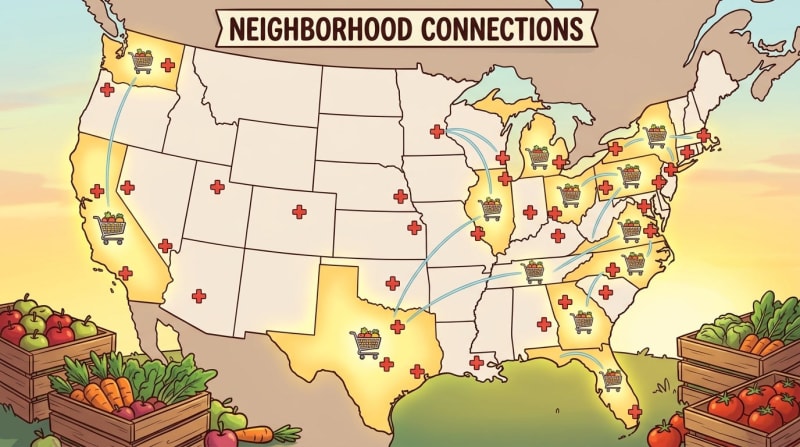
Over three years, the program screened more than 1.45 million patients for food insecurity and connected more than 161,000 households to nutritious food through 21 Feeding America network food banks and more than 50 health care sites across 13 states. The Elevance Health Foundation funded it with a $14.1 million grant — the largest in the Foundation's history.
That scale matters for a specific reason. Most Food as Medicine research is small, single-site, or focused on produce prescription programs and medically tailored meal delivery. This evaluation, conducted by the Center for Nutrition and Health Impact, examined the community food bank delivery model: food banks integrated with health care referrals, dietitian support, and community health workers. It is a model already operating in hundreds of communities with, until now, no population-level evidence base behind it.
The Numbers: Food Bank Food as Medicine Evaluation Outcomes

The Numbers: Food Bank Food as Medicine Evaluation Outcomes
The headline results are direct. Self-reported hospitalizations fell 14% and emergency department visit rates fell 11% among participants. Food security — the core measure of the program's own mission — increased 47%.
Here is how those three outcomes compare:
Among participants with both baseline and follow-up clinical data, HbA1c, BMI, and LDL cholesterol all improved meaningfully, with greater gains for those who attended more dietitian sessions. Structured nutrition education was consistently associated with better self-reported general health and fewer instances of missed or delayed care.
"Food as Medicine is not just a concept. It works."
— Melanie Hall, chief health, research and evaluation officer at Feeding America
The dose-response pattern — more dietitian contact, better outcomes — is significant on its own terms. The food alone is not doing all the work. The relationship, the follow-through, the education delivered in context: those are load-bearing parts of this model.
What This Means for Health Systems and Food Banks
What This Means for Health Systems and Food Banks
For health systems and Medicaid managed care organizations considering food bank partnerships, the hospitalization and ED reductions are the numbers that move decisions. Those are the metrics payers use to calculate ROI on community health investment. That Elevance Health Foundation — the grant-making arm of a major commercial insurer — committed $14.1 million and called it their largest grant on record makes the signal explicit: commercial payers are running this math and finding it favorable.
For food banks, the evaluation's dignity and design findings carry equal weight. Programs that embedded culturally competent staff — where participants had real choices and were served by people who understood their communities — achieved stronger engagement and better outcomes than food delivery alone. That finding is now shaping Feeding America's next steps: a national nutrition curriculum, stronger food sourcing standards, and medically tailored grocery criteria across the network.
The full evaluation report is available through Feeding America's press room. The study was released July 8, 2026.
Content ID: HVnHsYJ3LJWLKXwHHKG9uHMx
See an error? Tell us.
Keep Reading
What North Carolina's New Food Is Medicine Coalition Reveals About Building State Coalitions from Scratch
What the New FIMC Multi-State Evidence Report Reveals About FIM Cost Savings — and Why High-Acuity Patients Are the Key
Child Care Is the Largest Untapped FIM Delivery Platform — A New Report Shows What's Missing
Comments
Share with the Community