
Four States Just Got $100,000 Each to Build Food Is Medicine Into Medicaid — What the MFSPP Second Cohort Reveals
The Short Version
- Four organizations — New Growth (MO), NC Food Is Medicine Coalition, PHMC (PA), and WV Food and Farm Coalition — each received $100,000 over 18 months as MFSPP second-cohort grantees to build food is medicine capacity inside Medicaid.
- The funding is for capacity work, not direct service: coalition building, policy advocacy, legal consultation, and program design are what $100,000 over 18 months buys in a state FIM program.
- The MFSN released a micro-report on the first cohort's impact potential alongside this announcement, documenting what this level of investment produces across different state Medicaid environments.
- The four second-cohort states represent a deliberate mix — pilot history, managed care scale, active procurement timing, and acute population need — not a random distribution.
- Practitioners in neighboring states can use MFSPP grantee selection as a leading indicator of where FIM policy wins and replicable program models will emerge next.
In June 2026, the Medicaid Food Security Network announced four organizations as the second cohort of the Medicaid Food Security Partners Program — each receiving $100,000 over 18 months to build food is medicine capacity inside Medicaid. The MFSPP funds the structural work that precedes direct FIM service delivery: state policy groundwork, coalition relationships, and program architecture that allow nutrition interventions to become a covered Medicaid benefit rather than a grant-funded workaround. The announcement came alongside a micro-report on the first cohort's potential impact, together offering the clearest national picture yet of where FIM infrastructure is actively being built.
Who the Second Cohort Is and What Each Is Building
Who the Second Cohort Is and What Each Is Building
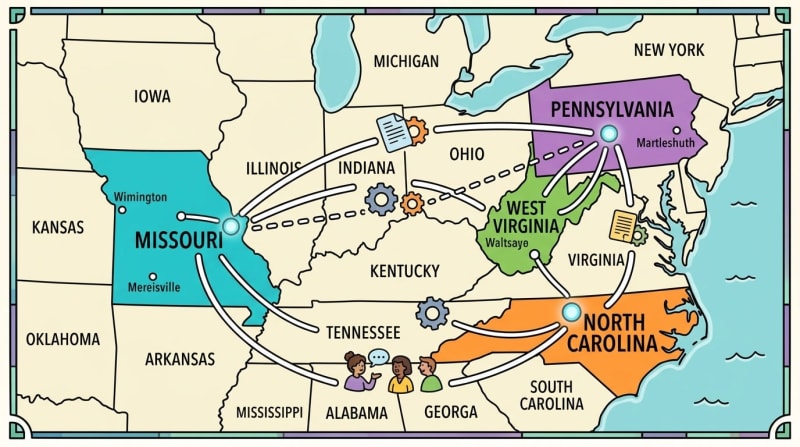
The four grantees represent four distinct state contexts. New Growth brings Missouri into the program, working in a state where managed care organizations are actively shaping their approach to nutrition-related benefits. The NC Food Is Medicine Coalition joins with North Carolina's established foundation in Medicaid-integrated nutrition work. The Public Health Management Corporation enters from Pennsylvania, a large managed care state where the challenge and the opportunity both operate at significant scale. West Virginia Food and Farm Coalition rounds out the cohort in a state where the intersection of food insecurity and chronic disease is among the most pronounced in the country.
Each organization receives $100,000 over 18 months. That scale is designed for capacity building, not direct service — coalition building, policy advocacy, legal consultation, and program design. These are the inputs that allow a food is medicine benefit to exist inside a Medicaid contract rather than running alongside it on temporary funding.
What the First Cohort Micro-Report Signals About Impact

What the First Cohort Micro-Report Signals About Impact
The MFSN released a micro-report on the first cohort's potential impact alongside the second-cohort announcement. The report documents what $100,000 over 18 months can produce in terms of concrete policy capacity — across states with different starting points, different Medicaid landscapes, and different degrees of existing FIM infrastructure.
The pattern across both cohorts matters as much as any single grantee. MFSPP has now moved from a single-round program to one with enough state coverage to reveal which types of organizations and which state environments are most positioned to turn this level of investment into durable Medicaid infrastructure.
What the MFSPP Grantee Map Tells Practitioners
What the MFSPP Grantee Map Tells Practitioners
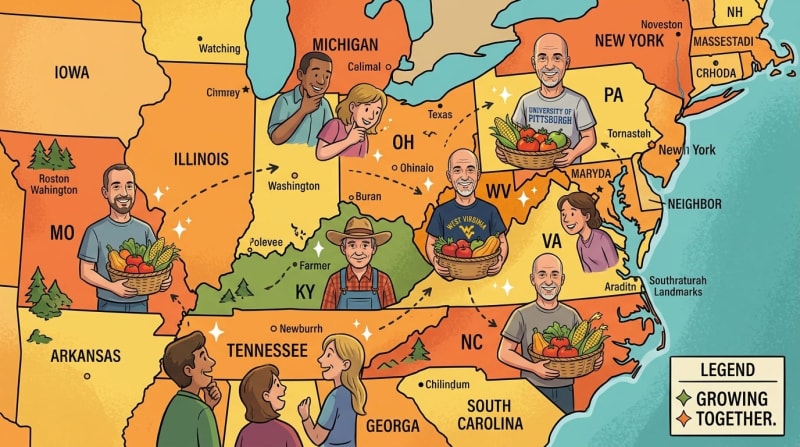
MFSPP investment clusters where policy windows are opening — managed care procurements, waiver renewals, new state legislation. The four second-cohort states represent a deliberate mix of readiness: NC with pilot history, PA with managed care scale, MO with active procurement context, and WV with a direct population-health case for FIM.
Practitioners in neighboring states can treat this grantee list as a leading indicator. MFSPP selection follows existing coalition capacity combined with near-term policy opportunity. The pilot designs, contract language, and program models that emerge from these four states over the next 18 months will have practical relevance well beyond their borders.
Content ID: nl9WeAUAggTW7lrmhLocADFB
See an error? Tell us.
Keep Reading

What North Carolina's New Food Is Medicine Coalition Reveals About Building State Coalitions from Scratch

What the New FIMC Multi-State Evidence Report Reveals About FIM Cost Savings — and Why High-Acuity Patients Are the Key

Child Care Is the Largest Untapped FIM Delivery Platform — A New Report Shows What's Missing
Comments
Share with the Community