

Summer EBT's Redemption Gap: Why Produce Prescription Operators Are the FIM Sector's Best-Positioned Partner to Close It
The Short Version
- Summer EBT now reaches 49 jurisdictions, and demonstration projects proved 98% redemption is achievable — the gap is a delivery failure, not a program flaw.
- Low redemption concentrates in CEP school communities — the highest-need households, and exactly where produce prescription programs and food pharmacies already operate.
- The primary barrier is awareness and trust, not access — families who knew about Summer EBT used it at near-universal rates in demonstration programs.
- State leaders closed gaps using trusted-messenger strategies: USDA outreach toolkits in Ohio, text alerts in Washington, and zip-code-targeted outreach through food bank partners in Arizona.
- Most FIM programs haven't answered two critical questions: whether their sites are authorized Summer EBT retailers, and whether their community health workers are part of state outreach coalitions.
The produce prescription network already knows where the families are. That structural advantage is why FIM operators — food pharmacies, produce prescription programs, community health worker networks — are the sector most naturally positioned to close Summer EBT's redemption gap. Not because they've been asked. Because they're already there.
Summer EBT in 2026: Near-National Reach, Real Implementation Gaps
Summer EBT in 2026: Near-National Reach, Real Implementation Gaps
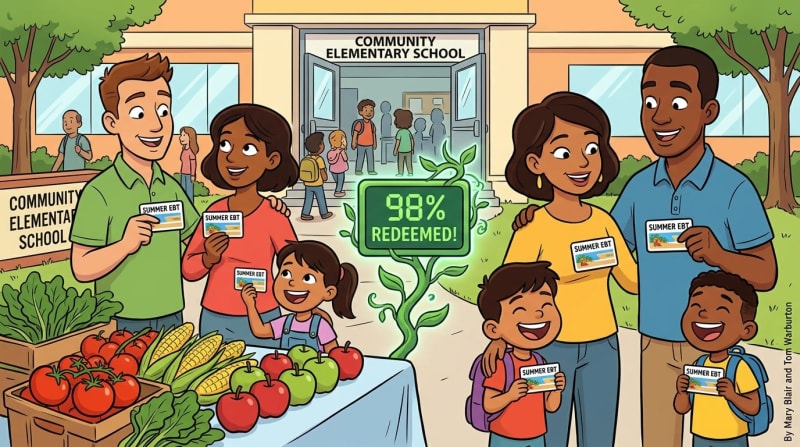
In its first near-national year, Summer EBT is reaching scale: 38 states, the District of Columbia, five Indian Tribal Organizations, and five U.S. territories are sending Summer Electronic Benefit Transfer benefits to families of school-age children — replacing school meals food-insecure kids lose when the academic year ends. 2026 is the first year with enough cross-jurisdiction data to understand concretely where Summer EBT produce prescription FIM operator integration opportunities live.
Demonstration projects established the ceiling: redemption rates as high as 98%. When families know the benefits exist and trust the delivery system, they use them. The gap is not a design failure — it is a delivery failure, concentrated in ways specific enough to address.
Where the Redemption Gap Is Concentrated
Where the Redemption Gap Is Concentrated
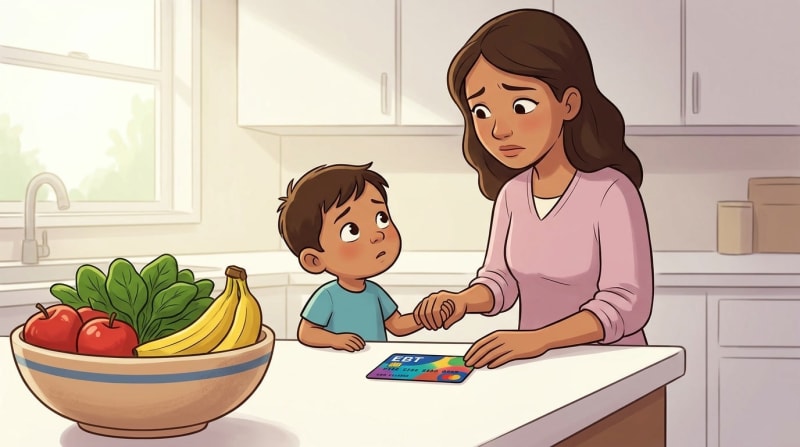
Low Summer EBT redemption rates occurred in Community Eligibility Provision communities — and traditional NSLP school communities — in both rural and urban areas. CEP schools serve concentrations of food-insecure children by federal definition. They are also, by design, where produce prescription programs and food pharmacies already operate.
The barrier is not infrastructure. Some eligible families simply didn't know about the program, or were hesitant when they did. An awareness and trust gap is fundamentally different from an access gap — and the FIM sector is, at its core, a trusted-messenger sector.
What State Implementers Are Doing to Close the Gap

What State Implementers Are Doing to Close the Gap
The FRAC July 2026 analysis documents three instructive approaches. Ohio built USDA-sourced outreach toolkits to equip local partners for direct family conversations. Washington created text alerts notifying families about benefit timelines, card delivery, and expiring balances. Arizona food bank partners used low-redemption zip code data to target outreach geographically — finding underuse in both CEP and non-CEP communities.
All three are implementable with existing FIM infrastructure. None requires building something new.
The FIM Integration Argument: Produce Prescriptions as Summer EBT Outreach Infrastructure
The FIM Integration Argument: Produce Prescriptions as Summer EBT Outreach Infrastructure
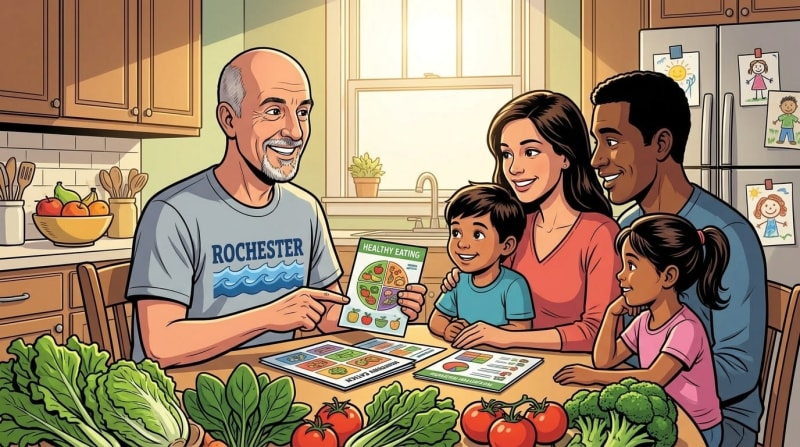
The produce prescription household and the Summer EBT household are often the same household. The overlap exists precisely in the CEP communities where redemption is lowest.
According to FRAC's July 2026 analysis of CEP participation, the pace of CEP growth slowed in 2025–2026. As school nutrition infrastructure stalls, FIM programs increasingly fill the gap.
"Free school meals reduce childhood food insecurity, improve diet quality, and support better health and educational outcomes."
Three questions most FIM programs have not yet formally answered: Are produce prescription redemption sites registered as authorized Summer EBT retailers? USDA authorization for Summer EBT is separate from SNAP authorization — a food pharmacy that accepts SNAP may not automatically qualify. Are community health workers included in state Summer EBT outreach coalitions? And does your existing benefit-navigation infrastructure carry Summer EBT outreach the same way it carries other co-enrollment?
The capacity is already present in the same communities, serving the same families, through the same trusted relationships. The opportunity has not yet been claimed.
Content ID: EZVyo035vypQFFDDPiarCHeC
See an error? Tell us.
Keep Reading
Child Care Is the Largest Untapped FIM Delivery Platform — A New Report Shows What's Missing
SNAP-Ed Is Being Defunded: What the H.R. 1 Nutrition Education Cut Means for Food Is Medicine Programs
Rhode Island Signs Food as Medicine Pilot Program Into Law — What the New Task Force and 1115 Waiver Authority Mean
Comments
Share with the Community