

The MAHA Health Agenda Promises What SNAP Delivers — So Why Are 5 Million People Losing It?
The Short Version
- H.R. 1 has cut SNAP access for more than 5 million people — shrinking the eligible population for every FIM produce prescription and medically tailored meal program in the country.
- SNAP-Ed nutrition education has been eliminated under H.R. 1, directly undercutting MAHA's stated goal of reducing chronic disease through better food.
- New SNAP retailer stocking standards will affect approximately 70 percent of all SNAP retailers, most of them small-format stores serving the communities FIM programs specifically target.
- FIM state officers can use the MAHA administration's own stated goals as the argument for protecting FIM and SNAP programs — the contradiction between MAHA's rhetoric and H.R. 1's cuts does the advocacy work.
- The CHCS July 2026 policy brief provides Medicaid-specific language for state officers making this argument in MCO contract negotiations right now.
The Make America Healthy Again agenda has a stated goal: reduce chronic disease through better food and lifestyle. That is, word for word, what Food is Medicine programs do — produce prescriptions for people managing diabetes, medically tailored meals for patients with heart failure, food-as-medicine infrastructure embedded in Medicaid at the state level. When the administration's own health agenda names food as the path to a less sick country, FIM state officers have something they rarely get in a policy fight: the other side's own language.
What "Make America Healthy Again" Promises for Food and Chronic Disease
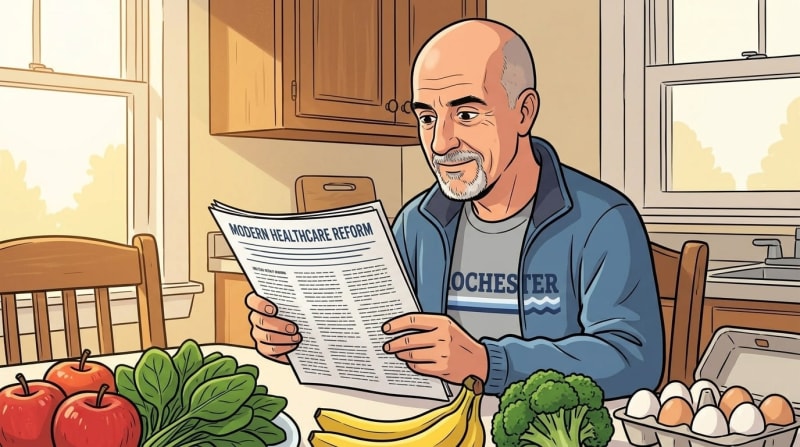
What "Make America Healthy Again" Promises for Food and Chronic Disease
MAHA's stated mission centers on reducing chronic disease in America, and food is central to that frame. The administration's rhetoric explicitly links poor nutrition to rising rates of diabetes, heart disease, and obesity — the exact conditions that FIM programs target through medically supervised food interventions.
According to FRAC, policies being advanced alongside the MAHA agenda are "making SNAP harder to access, administer, operate, and evaluate" — a direct contradiction of the chronic-disease-reduction goals the agenda names. That contradiction is the opening. When a policy framework pledges to reduce chronic disease through food, then implements cuts that restrict food access, the gap between promise and action becomes the argument.
FIM state officers can use the administration's own language to defend their programs in Medicaid negotiations and state budget conversations — not by attacking the agenda, but by holding it to its own stated goals.
Four Ways H.R. 1 Directly Undercuts MAHA's Stated Health Goals

Four Ways H.R. 1 Directly Undercuts MAHA's Stated Health Goals
The gap between rhetoric and reality is measurable. Since H.R. 1 passed, more than 5 million people have lost access to SNAP, according to FRAC. That shrinks the eligible population that FIM produce prescription programs can serve — the people most likely to benefit from food-as-medicine interventions are no longer in the system that connects them to those interventions.
SNAP-Ed nutrition education has been eliminated. FRAC is direct about what this means: cutting food benefits and nutrition education simultaneously for Americans with low incomes does not advance chronic disease reduction. It retreats from it.
New SNAP retailer stocking standards will affect approximately 70 percent of all SNAP retailers, a category that includes the small-format and convenience stores serving the highest concentrations of food-insecure households. FIM programs target exactly these populations. Restricting where SNAP can be redeemed limits the access infrastructure those programs depend on.
The timing adds a layer. Food-at-home prices rose 2.7 percent in June 2026 over the prior year, while SNAP benefits were cut in the same window. Rising prices and reduced benefits compound into an access squeeze that no FIM program can absorb without the underlying SNAP infrastructure intact.
How FIM State Officers Can Use This Frame in Medicaid Negotiations

How FIM State Officers Can Use This Frame in Medicaid Negotiations
"We cannot 'Make America Healthy Again' while dismantling SNAP."
— Food Research & Action Center, August 27, 2026
This is not a partisan argument. Chronic disease reduction has stated support across party lines. FIM state officers entering Medicaid MCO contract negotiations or state budget conversations can frame their programs as the operational layer that delivers what the MAHA agenda promises — produce prescriptions, medically tailored meals, food-as-chronic-disease-prevention at scale. The argument is structural: these programs do the work the agenda claims to want done.
CHCS published a July 2026 brief on State Policy Pathways for Advancing Food and Nutrition Strategies to Improve Health that gives FIM state officers the specific policy-pathway language for Medicaid negotiations. The CHCS FIM State Officer Program runs through 2028, providing three years of funding and technical support for exactly this kind of advocacy work.
The frame is straightforward: if the administration's stated goal is a healthier America through better food, then cutting the programs, participants, and infrastructure that advance food access undermines that goal. State officers don't need to argue against MAHA. They need to argue that SNAP and FIM programs are how MAHA gets done.
The CHCS brief is dated July 2026. The FRAC analysis is dated August 27, 2026. Both are citable now.
Content ID: IN4RcgCsSVZEkpbzSjBvpIMD
See an error? Tell us.
Keep Reading

What North Carolina's New Food Is Medicine Coalition Reveals About Building State Coalitions from Scratch
What the New FIMC Multi-State Evidence Report Reveals About FIM Cost Savings — and Why High-Acuity Patients Are the Key
Child Care Is the Largest Untapped FIM Delivery Platform — A New Report Shows What's Missing
Comments
Share with the Community