

The Surprising Problem With Sugar-Free Diets: What the New Research Says
The Short Version
- A 2022 landmark study in Cell from the Weizmann Institute found all four major artificial sweeteners — saccharin, sucralose, aspartame, and stevia — significantly altered gut microbiome composition within just two weeks in healthy adults who had not previously consumed them.
- Those microbiome changes can paradoxically impair glucose tolerance, meaning sweeteners designed to support better metabolic health may undermine it through a pathway the original safety research was never designed to measure.
- Sucralose, the most widely used sweetener in US food products, shows the most consistent evidence for triggering cephalic phase insulin response — the pancreas releasing insulin in anticipation of sugar that never arrives, a finding documented in a 2013 Diabetes Care study.
- This research does not say sugar is better than artificial sweeteners; it says habitual, daily sweetener consumption carries real metabolic complexity the original GRAS safety designations were not built to detect.
- The most research-supported path forward is reducing overall sweetness exposure rather than finding a better sweetener — whole fruit stands in a genuinely different metabolic category, with fiber that feeds beneficial bacteria rather than disrupting them.
The sugar-free yogurt, the diet soda, the protein powder sweetened with sucralose — these were choices made with intention. You picked them because you were paying attention, because you understood that excess sugar was a problem and this looked like a reasonable solution. That instinct is exactly right: caring about what you eat, and making considered choices in service of your health, is a gift you bring to every meal. What's evolved is the science underneath one specific assumption. And the picture of sugar-free diet problems emerging from that new research is considerably more complex than what fits on a food label.
Why Sugar-Free Became the Default and What We Assumed About It
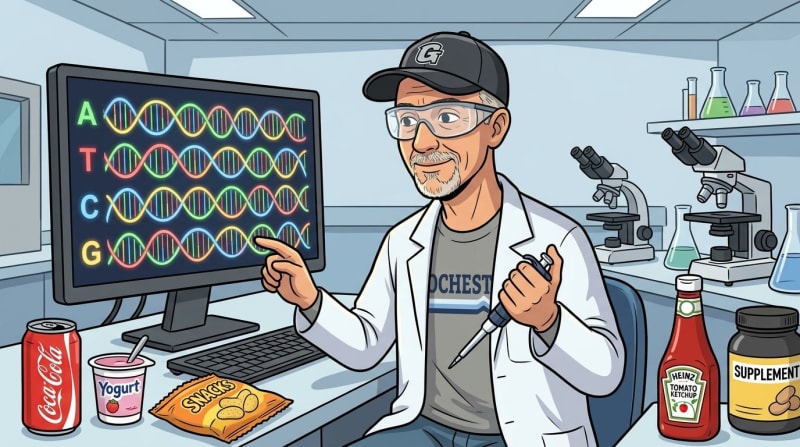
Why Sugar-Free Became the Default and What We Assumed About It
The logic was straightforward and, for a long time, well-supported. Saccharin has been approved for food use since the 1970s. Aspartame entered the US market in 1981. Sucralose followed in 1998. Early research comparing sweetener users to sugar users found reduced caloric intake and modest weight management benefits. The FDA's current assessment holds that approved non-nutritive sweeteners are safe at typical consumption levels — and that hasn't changed.
What the research wasn't asking — because the tools to ask it didn't yet exist — was what happens to the gut. High-throughput DNA sequencing, which makes it possible to map the full composition of the gut microbiome, became widely available to researchers only in the last fifteen years. That technology opened a new window on how food actually interacts with the digestive ecosystem. And what researchers found when they applied those tools to artificial sweeteners has complicated the simple arithmetic of zero-calorie substitution.
According to the International Food Information Council, roughly one in four Americans now consumes low-calorie or no-calorie sweeteners on a daily basis. They appear across beverages, dairy products, packaged snacks, condiments, and dietary supplements. The assumption embedded in all of them was that zero-calorie sweetness was metabolically neutral. That assumption was reasonable. It just turned out to be incomplete.
The Gut Microbiome Finding That Changes the Picture

The Gut Microbiome Finding That Changes the Picture
In August 2022, a team led by immunologists Eran Segal and Eran Elinav at the Weizmann Institute of Science published a landmark study in the journal Cell. They recruited 120 healthy adults who had not consumed artificial sweeteners in the previous six months, divided them into groups consuming saccharin, sucralose, aspartame, or stevia at levels within FDA acceptable daily intake guidelines, and tracked their gut microbiome alongside a control group receiving no sweeteners.
All four sweetener groups showed significant changes in gut microbiome composition within two weeks. The control group did not.
To understand why that matters, it helps to know what the microbiome actually does. The roughly 38 trillion microorganisms living in the human digestive tract — bacteria, archaea, fungi — play a direct role in metabolizing food, modulating immune function, and regulating how the body responds to glucose. When the researchers transferred gut microbiome samples from sweetener-consuming participants into germ-free mice, the mice showed impaired glucose tolerance. The microbiome changes were functional, not just compositional. Saccharin and sucralose produced the most pronounced downstream effects on glucose metabolism.
The chart below represents the relative severity of disruption observed across sweetener types based on the Suez et al. findings — a qualitative ranking of the study's conclusions, not absolute measured scores from a single metric.
The proposed mechanism involves shifts in specific bacterial populations — particularly Akkermansia muciniphila and members of the Bacteroides family, which support gut lining integrity and mediate carbohydrate metabolism. When those populations change, glucose regulation can follow in ways that undermine the very goal the sweetener was meant to serve.
This is the core finding that caught the scientific community's attention: the compound designed to avoid affecting blood sugar was, through a gut-mediated chain of effects, affecting blood sugar.
What does it mean that this was happening without anyone detecting it for forty years? And what else in our food supply might we be measuring too narrowly?
The Insulin Response Complication

The Insulin Response Complication
There is a second mechanism at work, separate from the microbiome pathway. Your body evolved to associate sweetness with incoming energy. When you taste something sweet, the brain and pancreas begin preparing before the food arrives: saliva increases, gastric secretions release, and the pancreas starts producing insulin in anticipation of the caloric load it has learned to expect from sweet taste. This is called the cephalic phase insulin response — the body's startup sequence for processing a sweet meal.
Artificial sweeteners deliver the sweetness signal without the caloric payload. In most cases, this mismatch is modest. But sucralose, the most widely used sweetener in US food products, has shown up across multiple studies as a trigger for measurable cephalic phase insulin response — particularly in habitual consumers. A 2013 study by Pepino et al. in Diabetes Care found that sucralose consumption increased peak plasma insulin levels by approximately 20% in obese subjects who consumed it before an oral glucose load. A review by researcher Susan Swithers in Trends in Endocrinology and Metabolism the same year described this as a "counterintuitive" outcome: repeated sweet signals without caloric follow-through may eventually loosen the body's learned connection between sweet taste and satiety, potentially producing stronger sweet preferences over time rather than weaker ones.
If your relationship with sweetness has intensified rather than moderated since you started regularly using sugar-free products, this research offers one explanation for why — and what would it mean to treat that observation as useful data rather than a personal failing?
What These Findings Mean for Sugar-Free Diet Choices

What These Findings Mean for Sugar-Free Diet Choices
Here is what this research does not say: that sugar is better than artificial sweeteners. It isn't. Chronically elevated blood glucose from excess refined sugar carries well-documented risks for cardiovascular disease, type 2 diabetes, and metabolic syndrome. This is not an argument for switching back to regular soda. Someone managing blood glucose with the help of sugar-free products should not read this research as a reason to abandon what has been helping them.
What the research does say is that the assumption of perfect metabolic neutrality doesn't hold. Both sugar and artificial sweeteners carry complexity — different complexities, different risk profiles, different relevant contexts. The Harvard T.H. Chan School of Public Health characterizes the long-term metabolic effects of artificial sweeteners as "an active area of research with mixed findings." That nuance is honest and important. The findings are consistent and concerning enough to take seriously. They are not settled enough to produce a single universal prescription.
Context matters significantly. The microbiome findings matter most for habitual, high-volume sweetener use: two diet sodas every day, sugar-free yogurt six mornings a week, sucralose-sweetened protein supplements as a daily staple. These are the consumption patterns the studies were actually measuring. The occasional diet soda at a summer cookout is a different exposure level entirely.
The foods where this conversation has the most practical weight: daily diet beverages, sugar-free flavored yogurts eaten most mornings, and heavily sweetened dietary supplements. These are where habitual exposure compounds into the volume the research was actually studying.
Better Alternatives the Research Does Support

Better Alternatives the Research Does Support
The most actionable finding from this body of research is also the simplest: the goal is reducing overall sweetness exposure, not finding a better sweetener. This is not about deprivation — it is about recalibrating what "sweet enough" means in everyday eating, rather than continuously swapping one source of sweetness for another and wondering why the craving level stays constant.
whole fruit appears to occupy a genuinely different metabolic category than either refined sugar or artificial sweeteners. The fiber matrix surrounding natural sugars in fruit slows glucose absorption, feeds beneficial gut bacteria, and produces short-chain fatty acids that support exactly the metabolic function sweeteners appear to disrupt. Research summarized by the Harvard T.H. Chan School of Public Health consistently finds that whole fruit is associated with healthier metabolic and gut microbiome outcomes than refined sugar — the fiber buffers the sugar, feeds beneficial bacteria, and helps maintain gut lining integrity in ways a sugar-free product cannot replicate. The World Health Organization's 2023 guideline on non-sugar sweeteners, based on a systematic review of more than 50 studies, recommends against using them as a primary weight management strategy, citing the absence of robust long-term benefit.
Practical swaps that honor the spirit of eating with intention: sparkling water with a squeeze of citrus instead of daily diet soda; full-fat plain yogurt with actual berries instead of sugar-free flavored yogurt; a smaller amount of real honey or maple syrup in a recipe instead of a sucralose-sweetened substitute used in greater volume. These are not sacrifices — they are recalibrations. Adjusting the baseline for what "sweet enough" means, so the palate works with you rather than around you.
"The goal isn't to outsmart the body. It's to work with what the body already knows how to do."
The people who eat well over the long run are rarely the ones who found the most efficient workarounds. They are the ones who gradually changed what they wanted — and found the wanting itself adjusted. That shift does not happen overnight, and it does not require perfection. It requires direction.
What would it look like to spend one month reducing the number of sweet-tasting things you consume each day — not eliminating them, just reducing — and pay attention to what your palate tells you at the end of it?
Content ID: NwAq4jPC3TYeYgYX68dlsNIO
See an error? Tell us.
Keep Reading

What North Carolina's New Food Is Medicine Coalition Reveals About Building State Coalitions from Scratch

What the New FIMC Multi-State Evidence Report Reveals About FIM Cost Savings — and Why High-Acuity Patients Are the Key

Child Care Is the Largest Untapped FIM Delivery Platform — A New Report Shows What's Missing
Comments
Share with the Community